
 EN
EN
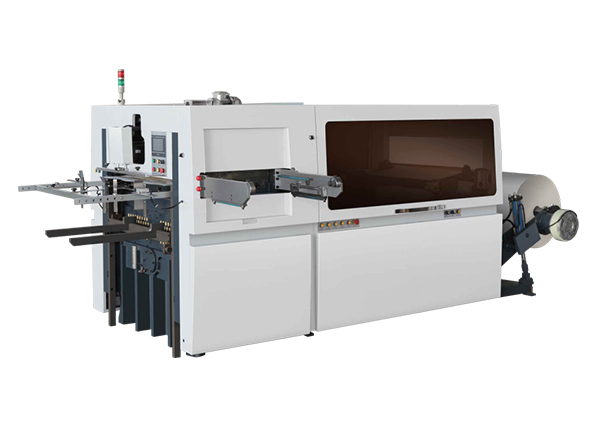
High Quality Output and Consistent Precision
Due to the accuracy of the edges and dimensive layouts of the paper roll die cutting system, the perks of the product speak for themselves. Free or semi-automatic cutting leads to uneven edges, misaligned outlines, and inconsistent does, which leads to subpar functionality and aesthetics of the final product. Modern printing paper Die cutting machines utilize closed loop control with precision tensioning and servos to minimize part to part variances. By leveraging data curve and field experience, automated die cutting achieves a stable dimensional variance of less than 0.1mm for cutting blanks and components to ensure that all blanks and components are in compliance with international trade packaging guidelines. Consistency is crucial to food service and retail containers and products, where a lack of stability ultimately leads to a stability degradation of consumer trust in the brand. Reports and data gathered from the packaging and paper converting industries (serving the packaging and paper markets) indicate that manufacturers who replace focused roll die cutting machines experience a dramatic reduction in their reject rates of greater than 98%.
Enhanced Production Speed and Throughput
Speed is a critical advantage of continuous roll paper die cutting machines in competitive production settings. These machines can print paper rolls die cutting continuously without the need for adjustments or post-production sheet handling. An uninterrupted workflow is achieved. Some machines can reach linear speeds of several hundred meters a minute. Depending on the size and complexity of the end products, these machines can die cut several thousand products in an hour. The continuous workflow of roll fed die cutting during peak order processing is a notable improvement over the manual or sheet fed processes that halt to load, align, and unload. Visits and real world experiences suggest that a switch from manual to automated roll die cutting achieves a sustained fully automated labor cutting rate that is 300% greater than the previously fully manual rate. The bypassed throughput constraints on businesses allow for the acceptance of larger batch orders, the maintenance of tight lead times, and the onboarding of new customers. All of this is accomplished without the adding of new physical floor space or the scheduling of new shifts.
Cost-effectiveness and the Reduction of Material Waste
Cutting machines that work with paper rolls keep raw material waste to a minimum and thus enhance the long-term savings of the business. Conventional cutting methods result in a lot of waste from misalignments, faulty cuts, and inefficient nesting. New systems that use die cutting rely on pattern nesting, web guiding, and kerf technology to optimize material utilization. Recent research in the technology of the automation of die cutting and roll systems shows that the use of die cutting to the automated systems may be used to reduce the material waste from a range of 8 to 12 percent to a value of 2.5 percent and in some instances to less. This waste reduction over a period of months and years will result in a significant cost reduction for a business. Reduced waste reduces the fees of scrap disposal, the amount of work-done-time that is used to segregate the waste, and will enhance the efficiency of the flow of materials in the system. Any business that wants to enhance its profitability without a rise in the price of its services will be able to achieve an immediate and measurable return on its investment by using roll die cutting systems.
Flexibility for All Functions and Substrates
Today's paper roll die cutters are very adaptable for all types of paper products, paper thickness, and product designs. They efficiently handle all forms of paper from coated and kraft papers, cardboard, food-safe paper, and all types of paper products used in the retail and food service industries. With the addition of quick-change tooling and adjustable settings, manufacturers can easily modify product shapes, sizes, and designs in record time. Many of these units are built to perform all three functions, i.e. creasing, embossing, and cutting, at the same time, providing value to customers without the addition of other equipment or steps. This capability helps businesses enter new market segments and expand their product offerings. As an example, manufacturing custom packaging, disposable drafts, retail tags, or promotional displays all helps businesses to personalize and modify their offering in response to products and individual customer demand, while simultaneously providing cutting and creasing functions.
Labor Optimization and Workplace Safety
Automated cutting of paper roll die absorbs less manual labor and optimally distributes the labor. It also reduces labor costs. The operator avoids cutting and focuses on setting up jobs, checking the quality, and controlling workflows. Automation does all the cutting. Sharp tools and moving parts on the machines are less interacted with by people, resulting in fewer worker accidents. The machines have features such as safety stops and guards that ensure safety. The machines also detect faults and intervene to stop the machines. The quality of the machine parts is not compromised by less direct manual cutting. This results in fewer defects and damage to the machine. The per unit production costs reduce in the long term. The work environment is made safe and less labor intensive. Manufacturers often observe more work satisfaction and retention when cutting tasks are automated.
Long Term Reliability and Operational Stability
Quality paper roll die cutting machines are made work for reinforced continuous industrial use. Downtime and maintenance is minimal construction. Machine manufacturers design machines to work around the clock. Long term reliability means production schedules are more predictable, orders are less likely to be delayed, and customer satisfaction is improved. RUIDA have designed and built paper roll die cutting machines to work for reinforced continuous industrial use. This, coupled with egde precision machine parts of the industrial die cutting machines and modern control systems, ensures longevity. The machines are stable and industrial die cutting machines are low maintenance. This means that their value is sustained for a long time and paper businesses also have a lot of sustained value.