
 EN

How Paper Machine Suppliers Deliver Units?
For a production buyer, delivery begins long before a machine reaches the port. Reliable paper machine suppliers turn a purchase order into a controlled handover: they freeze the specification, build to agreed drawings, document tests, protect the unit for transport, and define who owns each logistics task. That sequence matters whether you are comparing a line for food-service packaging or reviewing paper container machine suppliers for a new converting project.
The useful question is not simply, “Can the supplier ship?” It is, “What evidence will show that the unit delivered is the unit we approved, and how will responsibility pass from factory to site?” This guide gives procurement and project teams a practical way to evaluate that process.
1. Start with a delivery-ready technical specification
Before fabrication, good paper machine suppliers convert commercial discussions into a mutually reviewable specification. The document should identify the finished product, material range, tooling or mold scope, utilities, electrical requirements, control-language needs, safety expectations, packing method, and acceptance criteria. It should also state what is included and what remains the buyer’s responsibility, such as local foundations, air supply, installation labor, or import permits.
This stage prevents a common delivery problem: a machine may leave the factory intact yet still be hard to commission because the buyer expected a different voltage, interface, or scope of supply. Ask for a revision-controlled drawing and a bill of supply before production starts. If the project involves disposable bowls, cups, or trays, make sure the intended material and output format are recorded rather than left in email threads.
2. Confirm milestones while the unit is being built
Delivery control is easier when the supplier shares milestones instead of sending only a final shipping notice. A practical plan can include design confirmation, major component completion, assembly, dry running, factory acceptance, packing, and dispatch. The buyer does not need to supervise every operation, but should know when decisions become expensive to change.
For disposable paper machine suppliers, this is especially helpful when change parts, forming tools, feeding arrangements, or printing integration are involved. At each milestone, request clear photos or video and ask the supplier to identify any approved deviation. The point is traceability, not excessive reporting.
3. Use factory acceptance testing as the handover checkpoint
A factory acceptance test (FAT) gives both sides a structured checkpoint before export packing. The test protocol should be agreed in advance and should distinguish witnessed results from items that can only be confirmed after installation. Typical evidence includes the tested configuration, trial material used, operating observations, recorded settings, photos or video, and a list of open items with owners and dates.
Paper machine suppliers should avoid presenting a generic demonstration as proof that every requirement is met. Buyers should avoid demanding unplanned tests that require unavailable site conditions. A better approach is to link the FAT to the original acceptance criteria, sign the record, and state how any pending item will be resolved. This record becomes valuable if a question arises after arrival.
4. Define packing, preservation, and loading responsibilities
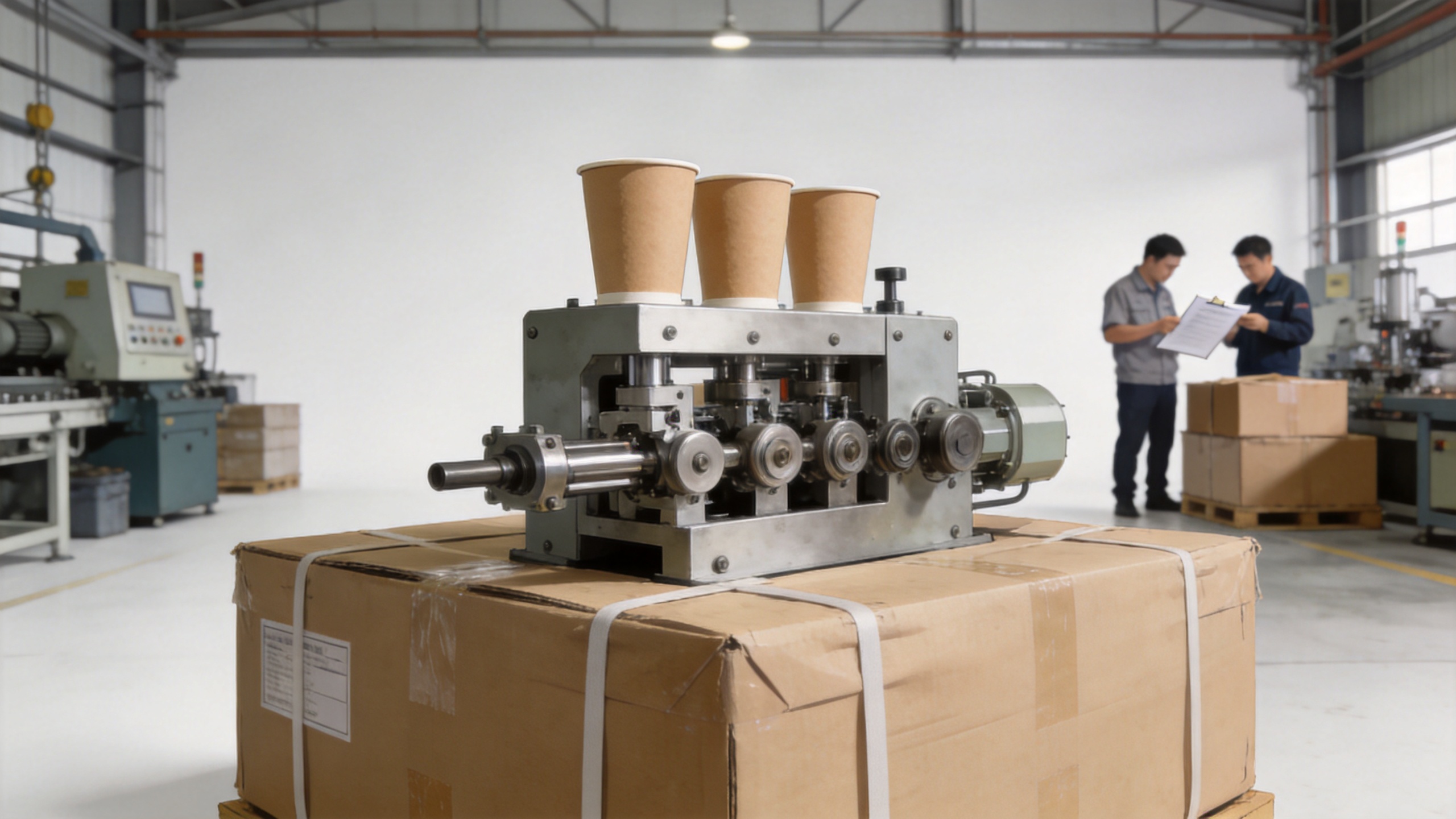
Industrial equipment can be exposed to vibration, moisture, handling equipment, and long dwell times. Ask the supplier for a packing list that maps each crate, pallet, or case to its contents and identifies loose accessories, manuals, spare parts, and electrical cabinets. Photos taken before sealing and loading give the receiving team a useful reference.
Where solid-wood packaging is used for international shipment, buyers should ask how the supplier will address applicable ISPM 15 requirements. The standard regulates wood packaging material in international trade, so marking and packaging choices should be confirmed before the crate is closed. That does not mean every shipment uses the same packaging; it means the packing plan must fit the route, cargo, and destination requirements.
For ocean or multimodal transport, verify whether moisture protection, corrosion protection, lifting points, and center-of-gravity markings are needed. A supplier that explains the plan clearly helps the buyer prepare suitable unloading equipment and storage space.
5. Put the logistics handover in the contract
The delivery term is not a footnote. Incoterms® 2020 contains 11 rules that allocate buyer and seller responsibilities for transport, insurance, documentation, customs clearance, and related logistics. Paper machine suppliers and buyers should name the agreed rule and the precise named place or port in the contract, then align the packing, booking, insurance, and document checklist with that choice.
For example, the parties may need to establish who books the main carriage, who prepares export documents, who supplies cargo insurance, and at what point risk transfers. The right answer depends on the project and the buyer’s logistics capability; it should not be assumed from a vague phrase such as “shipping included.” Confirm the commercial invoice, packing list, transport document, origin documentation if required, and any agreed inspection records before dispatch.
6. Plan receiving and installation before the shipment arrives
A smooth arrival depends on work completed at the destination. The buyer should nominate a receiving contact, confirm crane or forklift capacity, reserve a dry staging area, and compare the crate count against the packing list at delivery. Record visible damage on the carrier paperwork and photograph it immediately. Do not discard packing evidence until the condition check is complete.
Paper machine suppliers can support this phase by supplying an installation checklist, layout information, utility requirements, and a clear escalation contact. For a compact packaging line, this may be a short sequence. For a larger project, it may involve a site readiness review and a staged commissioning plan. In either case, written responsibilities reduce avoidable delays.
7. Close the project with commissioning and service records
Physical delivery is not the end of delivery. The closing package should identify what was shipped, what was accepted at FAT, what was installed, what training or remote support was provided, and which documents the operating team received. Keep copies of wiring diagrams, parts lists, operating guidance, and the agreed support channel together with the purchase records.
This final discipline is one way to distinguish paper machine suppliers that manage delivery as a project from those that only arrange freight. It also gives the buyer a better starting point for preventive maintenance, future tooling discussions, and a clear response if an issue appears after commissioning.
A practical pre-dispatch checklist for buyers
- Approved technical specification, drawings, and defined supply scope
- Agreed production milestones and a written FAT protocol
- Signed test record plus an owner and date for every open item
- Packing list, crate identification, and pre-loading photographs
- Confirmed packaging compliance, route-specific protection, and lifting information
- Named Incoterms® 2020 rule, named place or port, and document responsibilities
- Destination receiving plan, site utilities, installation resources, and support contacts
Choose a supplier by the evidence they can provide
When evaluating paper machine suppliers, ask to see the delivery workflow they use rather than relying on a broad promise of export experience. A credible partner can explain how specifications are frozen, how testing is documented, how packing is controlled, and how the buyer receives support after arrival. For buyers comparing paper container machine suppliers or disposable paper machine suppliers, that evidence is often more useful than an unstructured quotation because it reveals how the supplier will manage the project after the deposit is paid.
Use the checklist during quotation review, attach the agreed items to the order, and keep the acceptance and shipping records together. The result is a clearer path from factory floor to operating equipment—and fewer surprises at every handover.
 ONLINE