
 EN

What Processing Tasks Suit Paper Converting Machine?
A paper converting machine is equipment that changes a paper web, sheet, or blank into a usable intermediate or finished product. The right answer is not simply that it ‘processes paper.’ A buyer needs to match the task to the material, product format, production flow, quality expectation, and safety controls. From a packaging-equipment selection perspective, that order matters: first define the work, then verify the operating conditions, and only then compare a configuration.
In practice, paper converting machinery may be used for web handling, cutting, printing, creasing, folding, coating, laminating, forming, or packing. A single machine rarely performs every activity. Some systems are designed around one core operation, while a converting line links several stations. The most useful starting question is: what must enter the process, what condition must it leave in, and what has to happen in between?
Start With the Material Movement Task
Many paper converting tasks begin with handling a roll or web. A paper converting machine can unwind stock, guide it through tension-controlled sections, align the web, and rewind it after treatment or slitting. These tasks suit products supplied in rolls, including paper for cups, bags, labels, wrapping, or other packaging components. The required unwind diameter, roll weight, core size, web width, and tension range should be clarified before a machine is selected.
Rewinding is useful when the process needs roll inspection, length correction, roll splitting, or preparation for a downstream machine. Slitting divides a wide web into narrower rolls; it is often paired with rewinding so that the finished rolls can feed another operation. For a stable result, the question is not only how fast the web travels. Material thickness, moisture behavior, coating, curl, dust, and the desired roll hardness can all affect the setup. This is one reason paper converting equipment should be reviewed as a material-handling system rather than only as a speed rating.
Cutting, Sheeting, and Die-Cutting Tasks
When the output needs to be a sheet or a shaped blank, a paper converting machine may perform cross-cutting, sheeting, trimming, or die-cutting. These tasks are common where rolls must become paper blanks, carton components, cup fans, labels, sleeves, or shaped inserts. OSHA’s paper-industries machinery classification includes cutting and folding machines as well as die-cutting and stamping machinery, which illustrates how broad the converting family can be.
Die-cutting is appropriate when the final piece needs a repeatable outline, opening, tab, or window. It may be followed by waste stripping, stacking, or delivery. However, an outline alone does not define suitability. The die, stock stiffness, print registration requirement, and acceptable edge quality need to be checked together. If printed graphics must align with the cut, registration controls become part of the task definition. If the product is food-packaging related, the buyer should also clarify the applicable material and production requirements rather than assume a generic setup is sufficient.
Printing and Surface-Treatment Tasks
A paper converting machine may include or feed printing stations when the job requires branding, coding, patterning, or graphics before later converting steps. Flexographic printing is one common route for roll-fed packaging materials, but the appropriate process depends on ink, substrate, image requirement, drying method, and downstream forming process. ISO graphic-technology work includes process-control and safety subjects related to printing and paper converting machines; that is a useful reminder to verify the relevant requirements for the actual process and destination market.
Surface tasks can also include coating, varnishing, laminating, embossing, or adhesive application. These operations suit products that need a functional layer, a visual finish, a barrier-related construction, or a bonding surface. They should not be treated as add-on features without a materials review. For example, a coating can change drying needs, friction, stiffness, and later folding or forming behavior. The paper converting machinery choice should therefore consider the whole sequence, not an isolated station.
Folding, Creasing, and Forming Tasks
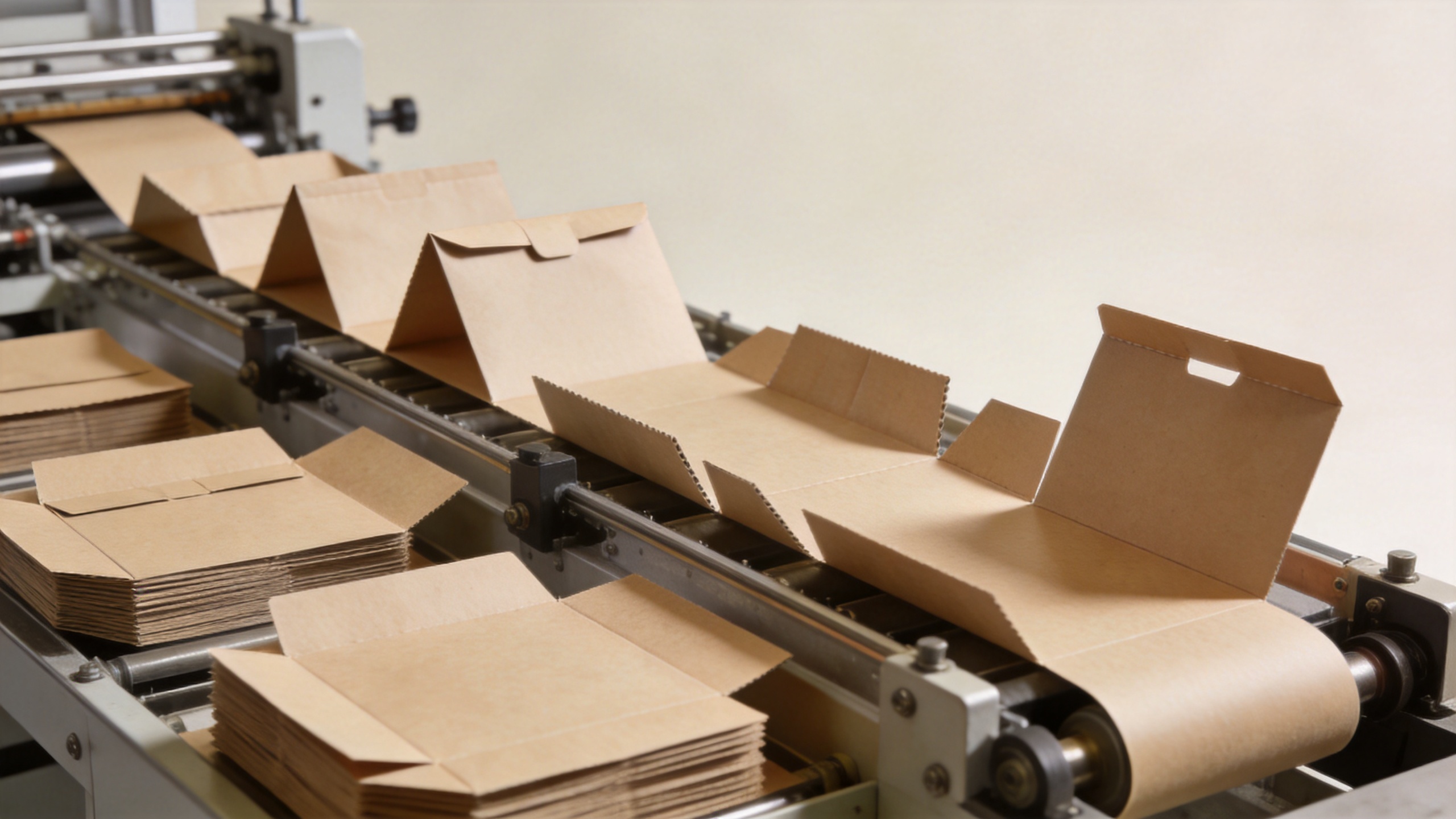
For products that must become a three-dimensional item, the paper converting machine can prepare and form blanks through creasing, folding, gluing, heat-related sealing, curling, or mechanical shaping. Paper cups, sleeves, envelopes, bags, cartons, and some food-packaging components all involve different combinations of these operations. The task is suitable only when the machine’s forming method matches the substrate construction and the target geometry.
In a paper-cup workflow, for instance, a printed or unprinted cup blank may need feeding, side-seam joining, bottom insertion, knurling, curling, and discharge. The exact configuration depends on cup size, shape, paper type, coating, and output target. It is more accurate to ask whether the chosen paper converting equipment supports the required sequence than to ask whether it can make every cup format. Frequent format changes may put more weight on tooling access, setup procedures, and operator workflow than a stable single-format run.
Inspection, Counting, and End-of-Line Tasks
A converting line can also support inspection, defect separation, counting, stacking, bundling, or packing. These functions suit operations where the downstream customer expects a defined count, controlled bundle, traceable batch, or visual-quality check. They can reduce handling between stations, but they must be integrated with the actual output condition. A delicate folded product, for example, may need gentler delivery than a flat blank.
Safety deserves its own review in any task involving rolls, blades, dies, heated parts, or moving shafts. Machine guarding, emergency stops, safe roll loading, and lockout procedures should be evaluated with the applicable safety program and local requirements. These are not optional details added after throughput is discussed; they are part of whether a process can run reliably.
How to Decide Whether the Task Fits
Use a simple requirements-to-configuration checklist before comparing a paper converting machine:
- Input: What substrate, width, thickness, coating, and roll or sheet format will enter?
- Transformation: Does the job require slitting, cutting, printing, coating, folding, forming, or several linked steps?
- Output: Is the target a roll, sheet, blank, shaped component, or packed finished item?
- Quality: What tolerances, registration, edge quality, seal integrity, or appearance criteria must be verified?
- Production flow: Will the unit feed an existing line, run as a stand-alone cell, or need counting and packing afterward?
- Changeover and support: How often will sizes or materials change, and what tooling, training, spares, and maintenance access are needed?
The practical conclusion is that paper converting machinery suits a wide range of value-adding tasks, but suitability comes from process fit, not from a broad equipment label. Define the product and material path first. Then ask a supplier to review the processing sequence, necessary controls, and verification points against your actual sample and production plan. That approach gives a more useful basis for choosing a paper converting machine than comparing headline capacity alone.
 ONLINE