
 EN

Cup Making Machine Future Trends
For converters and food-packaging investors, the next purchase question is no longer simply whether a cup making machine can form a cup. It is whether the line can keep quality visible, support changing material plans, and give technicians useful control when demand shifts. A modern forming line sits at the meeting point of forming, sealing, inspection, maintenance, and traceable production decisions.
From a manufacturing-planning perspective, the useful trend is not automation for its own sake. A cup making machine should help a plant make repeatable decisions about cup format, substrate, workflow, and acceptance criteria. That is especially relevant for buyers reviewing a beverage cup making machine for changing drink-service programs or a blister cup making machine for a more distinct forming application.
1. Servo-led control will move from a feature list to an operating discipline
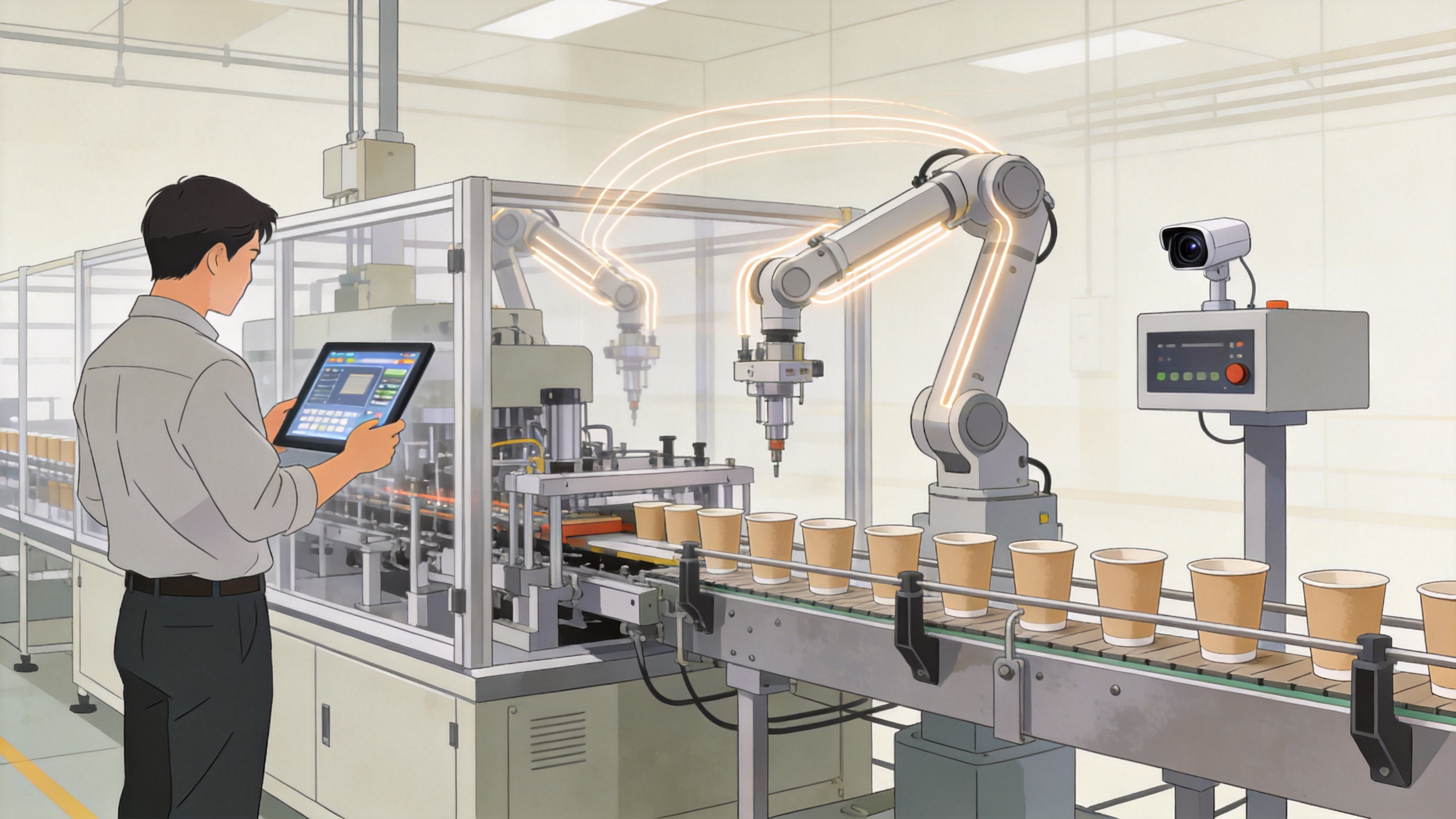
Servo-driven motion and digital controls are increasingly associated with more consistent output and lower material loss across production cycles. For a cup making machine, the practical value lies in controlled timing between feed, forming, heating, curling, and ejection—not in a headline speed figure alone. Buyers should ask how settings are stored, how an operator verifies a change, and what happens when a sensor detects an abnormal condition.
The future-ready line is therefore one that makes process variation easier to see. Operators need clear status information, sensible alarm logic, and a way to distinguish a material issue from a mechanical or setup issue. This can shorten troubleshooting discussions and make production handovers more disciplined.
2. Flexibility will be judged by changeover risk, not by claimed versatility
Many packaging teams now work with shorter runs, seasonal graphics, and more than one cup format. That changes how a cup making machine should be evaluated. A credible review looks at the tooling plan, material path, setup references, and the checks needed after a format change. It also asks which adjustments require trained personnel and which can be guided by the control screen.
A beverage cup making machine may need to accommodate different cup sizes or application requirements, while a blister cup making machine may raise different questions about forming geometry and downstream handling. These are not interchangeable use cases. Define the intended cup range before comparing machinery, then request a documented trial plan that reflects the actual material and cup design.
3. Material transition will make upstream coordination more important
Material choices are becoming a central planning issue for every cup making machine. Coatings, paperboard behavior, printing, die-cutting quality, and storage conditions can influence forming stability. Rather than treating material as a purchasing afterthought, teams should create a shared specification between procurement, converters, and machine operators.
For food-contact cups destined for the European market, Regulation (EC) No 1935/2004 is a useful compliance reference for materials and articles intended to contact food. It does not certify a cup making machine; instead, it reminds buyers to connect equipment trials with the material supplier’s documentation and the finished cup’s intended use. The machine supplier, converter, and material provider should agree on what evidence is needed before commercial production begins.
4. Quality inspection will become part of process learning
Future investment in a cup making machine will increasingly focus on how a line detects and responds to variation. Inspection can support checks around cup shape, seams, rim quality, or other agreed acceptance points. The appropriate system depends on the cup, the production environment, and the customer’s quality plan; it should not be selected as a generic add-on.
The key question is what happens after a deviation is found. A useful cup making machine workflow records the event, helps isolate affected output, and gives the team a basis for corrective action. Over time, those records can expose recurring setup errors, material inconsistencies, or maintenance needs. That is more valuable than collecting data with no owner or response procedure.
5. Maintainability will be treated as production capacity
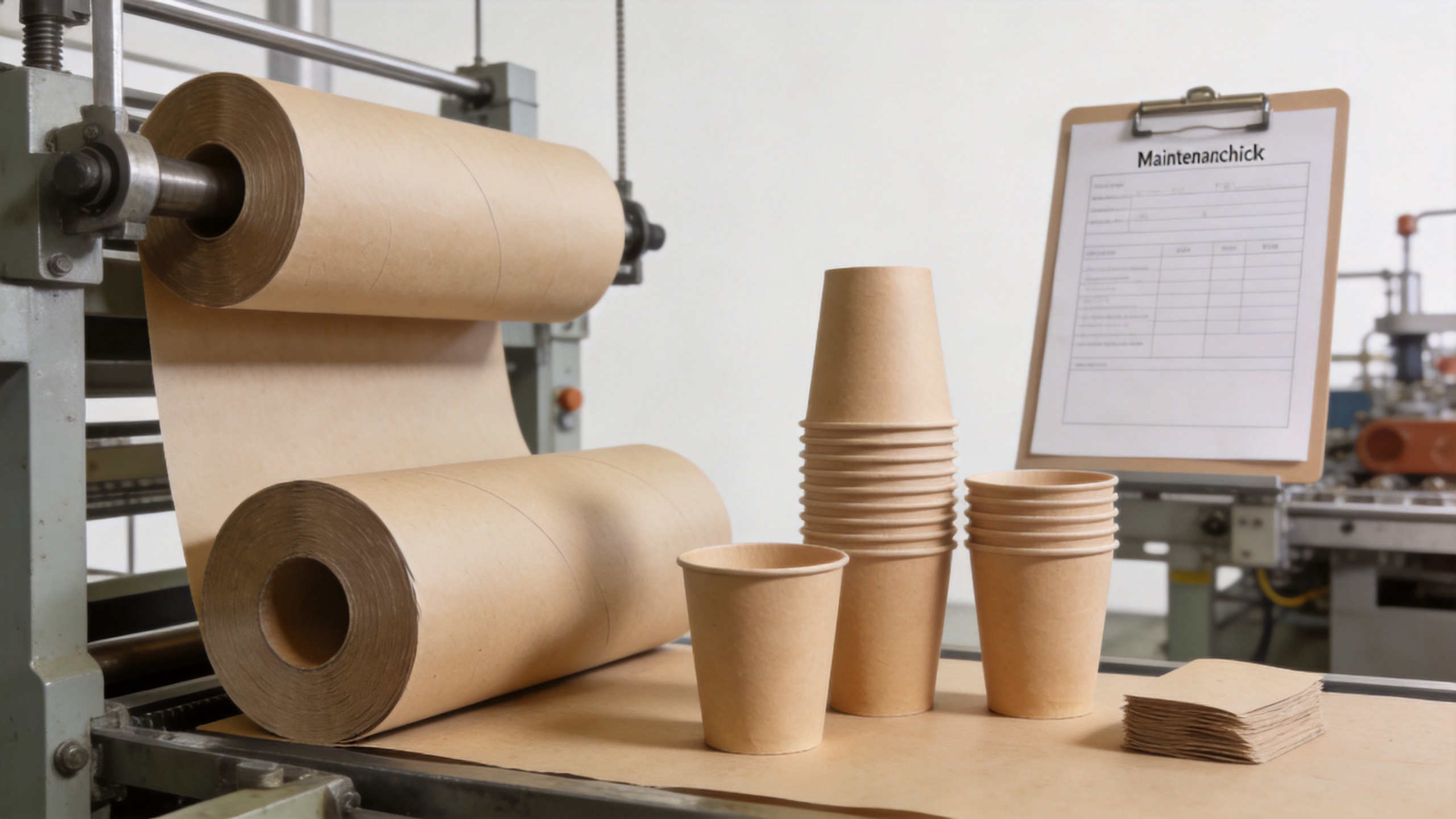
High output has little value if service access or routine checks are poorly planned. A future-oriented cup making machine review should cover lubrication points, wear-part identification, cleaning access, diagnostic guidance, and the availability of spare-parts information. During supplier discussions, ask for a maintenance schedule tied to actual operating conditions rather than a generic promise.
Remote support and digital documentation may also change the service model, but they work only when the plant keeps accurate machine records and trains its own team to describe a fault clearly. For many buyers, equipment with understandable maintenance routines is a sounder long-term choice than a line whose controls are difficult to interpret.
6. Purchasing teams will compare total operating fit
When selecting a cup making machine, compare more than nominal capacity. Build a decision sheet that covers cup specification, material compatibility, expected changeovers, control functions, inspection points, utilities, maintenance access, operator training, and trial acceptance conditions. Include how the line fits printing, die-cutting, packing, and quality-release procedures.
This approach is useful whether the project centers on a beverage cup making machine or a blister cup making machine. The objective is to establish the evidence needed for the intended production environment. It also gives suppliers a clearer basis for technical communication and helps internal stakeholders avoid comparing unlike proposals.
A practical next step
The direction of travel is clear: the cup making machine is becoming a more connected production asset, with greater attention to controls, material coordination, inspection, and service planning. Buyers do not need to predict every technology change. They do need a disciplined way to test whether proposed equipment supports the formats, materials, and operating routines they expect to manage over the next several years.
Start with a written application brief, define measurable trial criteria, and involve operations early. That process turns broad future trends into a usable equipment decision.
 ONLINE