
 EN

Why Cup Making Machine Increases Efficiency?
When a plant asks whether a cup making machine increases efficiency, the useful answer is not simply “because it runs faster.” In a paper-cup operation, efficiency is the share of planned production time that becomes acceptable cups with manageable labor, material loss, and interruption. A cup making machine can improve that result when its feeding, forming, heating, bottom sealing, rim finishing, discharge, and inspection activities work as one repeatable sequence.
From an operations viewpoint, the first question is not the rated speed. It is whether the cup making machine matches the target cup size, paper specification, print layout, shift pattern, and changeover frequency. If those conditions are defined, automation can make the production rhythm easier to control. If they are not, a higher rated figure may only move the bottleneck to another station.
Efficiency Means More Than a Faster Cycle
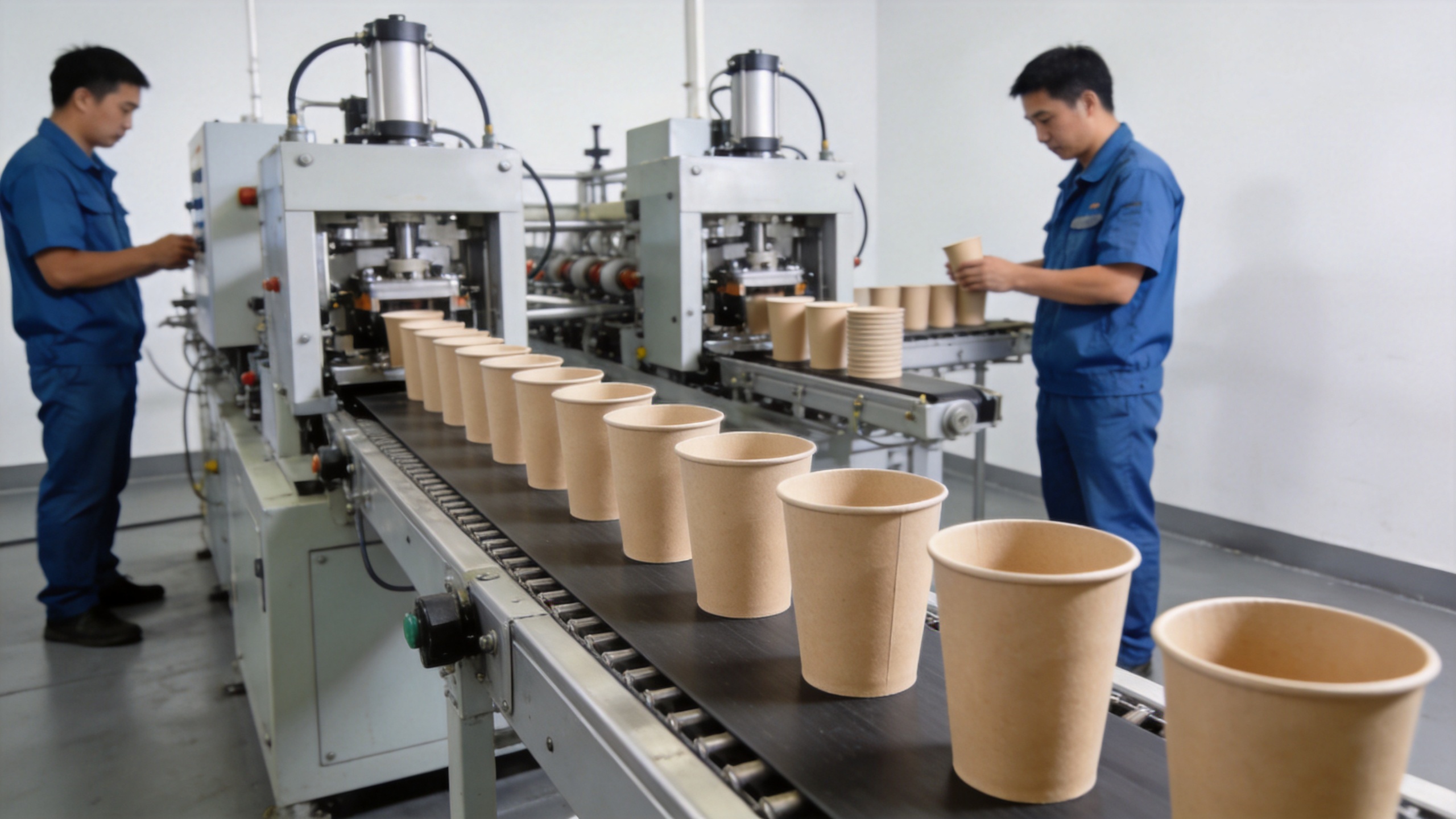
A cup making machine is productive when it converts prepared paper stock into stable, usable cups with few avoidable pauses. The cycle typically combines paper feeding, side sealing, bottom insertion and heating, knurling, rim curling, cup discharge, and collection. Coordinating these actions matters because a delay at one point can interrupt the entire flow.
Manual or loosely coordinated handoffs introduce small variations: an operator may replenish material at a different moment, finished cups may collect unevenly, or an adjustment may be noticed only after several imperfect pieces have passed through. A properly configured cup making machine standardizes sequence timing. That can reduce waiting between stages and make the line easier to observe. It does not mean that every project will obtain the same gain; actual output still depends on materials, tooling condition, setup discipline, and the planned cup format.
Where a Cup Making Machine Can Improve the Workflow
1. Consistent material feeding and forming
Paper blanks that enter the forming area at a controlled rhythm give downstream stations a more predictable workload. With a cup making machine, the feed mechanism, forming mold, and heating sequence are intended to operate in a defined order. This helps the team identify whether a disruption begins with the paper blank, the cup body, or a later finishing step. For a foam cup making machine or a paper-based system, material behavior must still be checked against the specific process rather than assumed from the machine category alone.
2. Fewer handoffs between core steps
Efficiency often improves when the cup body does not need repeated manual transfer between core operations. A cup making machine can link forming, bottom sealing, rim work, and discharge into one sequence. The benefit is operational: fewer routine transfers can mean fewer timing mismatches and a clearer responsibility for monitoring the line. Operators are then better placed to watch paper alignment, sealing appearance, cup release, and collection instead of continuously carrying work between stations.
3. A steadier basis for quality checks
Stable process timing makes inspection more useful. When the cup making machine repeats a known sequence, a team can inspect defined checkpoints: seam appearance, bottom integrity, rim shape, cup dimensions, and stacking condition. An observed issue can be linked back to a stage and verified after an adjustment. This is more practical than treating every defect as an isolated event. Material quality, mold condition, temperature settings, and operator procedures still need review before assigning a cause.
The Conditions That Decide Whether the Gain Is Real
A cup making machine is not a stand-alone answer to every production problem. The following conditions determine whether its automated cycle becomes useful output:
- Cup geometry: Diameter, height, wall taper, and rim requirements influence the tooling and adjustment window.
- Paper and coating behavior: Stock thickness, stiffness, print treatment, and sealing requirements affect feed stability and forming consistency.
- Product mix: A plant making one stable specification faces a different workflow from a plant with frequent size or artwork changes.
- Upstream readiness: Blanks, bottoms, and packaging materials must be available at the pace the cup making machine is expected to run.
- Maintenance practice: Cleaning, lubrication where applicable, inspection of wear items, and documented adjustments help address minor conditions before they become longer stops.
This is why a line review should begin with usage requirements rather than a speed comparison. Do you need stable production of one cup type, or do you need frequent changeovers? The answer changes what “efficient” means for the project.
Why Changeovers Deserve Special Attention
For a paper cup plate making business, production plans can involve different cup sizes, artwork, paper stock, or customer requirements. In that environment, the value of a cup making machine is partly determined by how clearly the changeover is prepared. A machine may run smoothly after setup, but the surrounding process loses time if tooling, materials, settings, and inspection criteria are not organized before the next order begins.
Use a repeatable changeover checklist. Record the target cup drawing, paper specification, approved sample, required tooling, initial settings, first-piece inspection points, and responsible person. This does not turn changeovers into a zero-time task. It makes the work visible, which gives the team a better basis for finding delays and comparing one setup with the next.

A Practical Way to Evaluate a Cup Making Machine
Before selecting or adjusting a cup making machine, ask the supplier and internal production team to review the same operating conditions. A useful discussion includes the target cup samples, material details, expected product mix, desired collection method, available utilities, operator training plan, and acceptance criteria. For example, rather than asking only for a capacity figure, ask how the proposed configuration handles the intended cup range and which conditions should be confirmed during a trial.
- Define the cup sizes, paper grades, coatings, and print conditions to be used.
- Map the full line: blank preparation, forming, inspection, packing, and material replenishment.
- Identify the likely interruption points before setting an output target.
- Agree on first-piece and in-process inspection checks.
- Document startup, changeover, cleaning, and maintenance responsibilities.
- Review trial results against the agreed conditions, not against an unsupported universal claim.
For buyers comparing automatic paper cup equipment, a technical conversation can clarify which requirements need confirmation for a particular cup project. ZheJiang RUIDA Machinery focuses on paper-cup and food-packaging equipment, including automatic paper cup machine and servo paper cup former directions; project suitability should be discussed against the actual cup, paper, and production plan.
Conclusion: Efficiency Comes From a Controlled Production Rhythm
A cup making machine can increase efficiency by coordinating forming and finishing steps, reducing unnecessary routine handoffs, and giving operators clearer checkpoints for control. The strongest outcome comes from pairing the machine with compatible paper, suitable tooling, a prepared changeover process, and disciplined inspection. In other words, evaluate a cup making machine as part of a production system. When the conditions are aligned, it can support a steadier flow of acceptable cups and a more informed approach to continuous improvement.
 ONLINE