
 EN

Cup Making Machine Applications in Sector
When buyers discuss a cup making machine, the useful question is rarely “Which model is fastest?” It is “Which cup application is being planned, and what conditions must the equipment support?” From a food-packaging application perspective, the answer starts with the cup’s use, paper or board specification, geometry, production rhythm, and the checks required before a line is accepted.
A cup is a simple-looking product, but its application changes the production conversation. A café takeaway cup, a tasting cup, an ice-cream cup, and a promotional beverage cup can each call for different sizes, sidewall blanks, rim expectations, bottom-seam checks, and changeover planning. A cup making machine should therefore be assessed as part of a production workflow rather than as an isolated speed figure.
Why the application comes before the machine
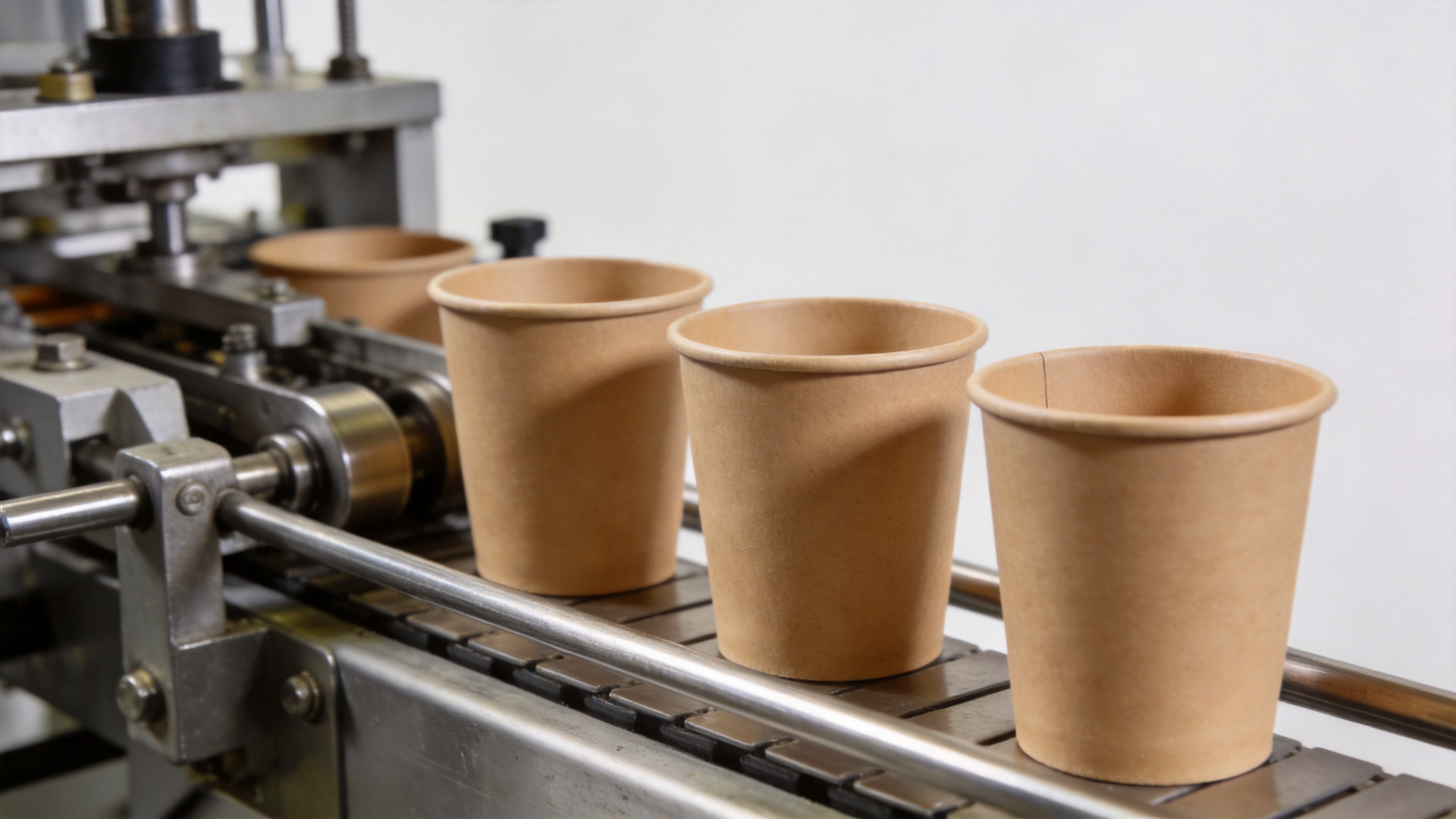
Paper-cup forming is commonly discussed as a sequence of sidewall forming, bottom insertion and joining, bottom knurling, and rim curling. The precise process and settings depend on the paper stock, coating, cup geometry, and tooling. That is why the same nominal cup volume does not, by itself, define a suitable production setup.
For food-contact uses, the material conversation also matters. In the United States, paper and paperboard components used in food-contact applications are addressed under 21 CFR Part 176. This does not establish compliance for a specific cup, paper, coating, or destination market; it signals that buyers should verify the applicable material documentation and local requirements before production decisions are finalized.
Where cup making equipment is used
Hot-drink and takeaway service
Coffee shops, tea counters, quick-service outlets, and office beverage programs commonly need cups that support a defined drink size and service format. For these applications, a cup making machine discussion should cover paper structure, the intended beverage temperature, lid fit, print requirements, and the expected mix of cup sizes. If a producer changes between several sizes during the week, the frequency and practicality of changeover deserve as much attention as hourly output.
Cold beverages, sampling, and event service
Cold-drink cups, tasting cups, and event-service cups often bring different priorities. A short-run promotional job may require frequent artwork changes or a compact size range. A sampling program may need small cups with repeatable forming quality even though total volume is modest. Here, cup dimensions, blank supply, bottom-seam inspection, and collection after forming should be reviewed together. A small scale paper cup making machine can be relevant when the production plan is narrower, but capacity, tooling, staffing, and material availability should be checked against the actual order pattern rather than assumed from the label.
Ice cream, dessert, and specialty food packaging
Dessert and frozen-food applications place the cup within a broader packaging system. The producer may need to consider fill conditions, storage, graphics, matching lids or sleeves, and the behavior of the selected material in use. The cup-forming line cannot answer every packaging question alone. Instead, the buyer can prepare samples, material specifications, and the intended end-use conditions for a coordinated discussion with material and equipment stakeholders.
Double-wall beverage cups
A double wall cup making machine is relevant when the required cup construction includes an additional outer layer. That application should begin with the finished-cup design: inner and outer cup dimensions, the method for applying the outer layer, visual registration expectations, and the planned production flow. Buyers should confirm whether the process is intended to make the inner cup, add an outer wrap, or coordinate separate stations. Treating a double-wall cup as merely a standard cup with extra paper can leave unanswered questions about handling, tooling, alignment, and inspection.
Application factors that shape selection
Instead of starting with a generic feature list, compare options against the operating conditions below:
- Cup format: Record rim diameter, bottom diameter, height, wall style, and whether one or several formats will be produced.
- Material conditions: Identify the paper or board grade, coating or barrier structure, blank quality, and the documents that need verification for the target market.
- Production mix: Clarify forecast volumes, short-run versus repeat work, and how often size or artwork changes are expected.
- Quality checkpoints: Define how the bottom seam, rim, cup shape, and finished-cup handling will be reviewed during trials and routine operation.
- Line coordination: Consider printing, die cutting, blank storage, packing, and downstream filling as part of the production rhythm.
These questions are practical because cup issues are not necessarily attributable to the machine alone. Material variation, blank preparation, tooling condition, heat-related settings, and operator routines can all influence the result. Observing the formed edge and bottom seam during a trial gives the team useful evidence, but it should be interpreted against the agreed material and cup specification.
A decision path for sector applications
- Describe the end use. Identify the drink or food category, service temperature, market, and packaging format.
- Define the cup family. List sizes, wall construction, print needs, and expected changeovers.
- Prepare materials and samples. Share representative blanks or specifications where possible, then identify open questions rather than treating assumptions as settled facts.
- Set trial criteria. Agree on what will be inspected: cup dimensions, seam appearance, rim condition, forming consistency, and finished-cup handling.
- Plan the operating context. Include maintenance access, operator training, spare-part planning, and the connection to upstream and downstream processes.
Using the sector view to improve machine discussions
For buyers, an application-first approach brings clarity. It distinguishes a high-volume beverage program from a flexible specialty run and surfaces questions that are easy to overlook: Will frequent format changes be required? Is the paper specification stable? Who will inspect the first production samples? What information is needed for the destination market?
For manufacturers and converters, the same approach creates a more useful inquiry. Rather than requesting only a speed target, the team can discuss cup construction, material compatibility, production mix, and trial conditions. ZheJiang RUIDA Machinery focuses on paper-cup and food-packaging equipment directions; project-specific capability, configuration, documentation, and support scope should be confirmed during the technical review.
Conclusion
A cup making machine serves different sectors when its configuration and operating plan match the intended cup application. Whether the need is a small scale paper cup making machine for a focused product range or a double wall cup making machine for layered beverage cups, start with use conditions, material details, cup geometry, and validation criteria. That gives the purchasing and technical teams a shared basis for a more informed next step.
 ONLINE