
 EN

How to Pick Cup Making Machine for Business?
Buying a cup making machine is a production decision, not simply a speed comparison. From a procurement viewpoint, the useful question is whether a cup making machine matches your cup format, paper structure, operating rhythm, and acceptance plan. A machine that looks suitable on a quotation can still create costly rework if those conditions remain unclear.
Start by turning the product brief into a one-page requirement sheet. List the cup’s top diameter, bottom diameter, height, paper grade and coating, intended beverage or food use, print position, target shift output, and expected changeovers. This sheet gives suppliers a consistent basis for recommending a cup making machine and for preparing a meaningful sample trial.
1. Define the cups before comparing a cup making machine
A cup making machine should be evaluated against the cups you plan to sell, not against a generic cup category. Coffee, cold-drink, tasting, soup, and ice-cream formats can place different demands on geometry, paper behavior, sealing, and rim finish. If you expect frequent changes between sizes, write that requirement down rather than treating it as an afterthought.
The same rule applies to adjacent formats. A cup cake manufacturing machine may describe a line aimed at a particular bakery-style cup application, while an edible cup machine can refer to a materially different process and product concept. Do not assume either term means the same thing as a paper cup making machine. Ask the supplier to identify the material, forming method, tooling, and finished-product test that each application requires.
Questions to settle first
- Which cup sizes and shapes must the cup making machine run at launch?
- Which paperboard grades, coatings, and blanks will be supplied for trials?
- Will the line run one stable format or require regular tooling changes?
- What defects are unacceptable: leaks, poor bottom knurling, an uneven rim, print misalignment, or deformation?
- Which destination-market food-contact and labeling obligations apply to the finished cup?
2. Map the forming process to your quality checkpoints
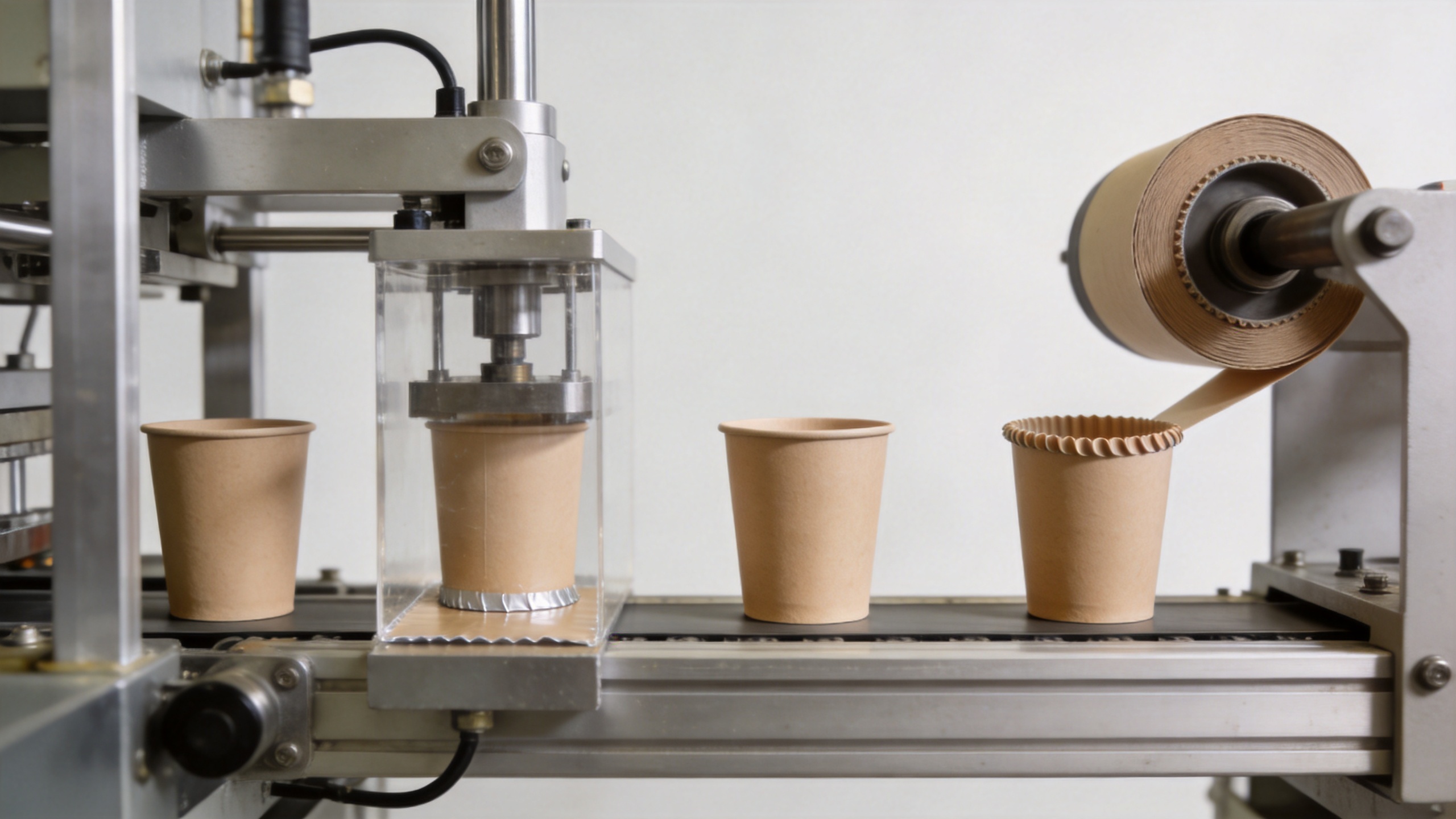
A paper cup making machine performs a sequence of linked operations rather than one isolated action. Search and process references commonly describe sidewall and bottom joining, bottom sealing or knurling, and top curling as separate checkpoints. A process study also notes that rim formation can involve two or three stages. That is why a trial should inspect the seam, bottom, and rim separately instead of accepting a cup based only on its appearance from a distance.
For each proposed cup making machine, ask for a process explanation tied to your sample blank. Clarify how the blank is fed, how the side seam and bottom are formed, how heat or other joining conditions are controlled, how the rim is curled, and how cups are collected. The supplier does not need to disclose proprietary details for you to obtain a practical test plan.
Where cups contact food, material compliance is also a system question. For example, 21 CFR 176.170 addresses components of paper and paperboard in contact with aqueous and fatty foods under defined conditions. It does not make a machine or a finished cup automatically compliant. Confirm the applicable destination rules, the paper and coating documentation, inks where relevant, and the finished-cup verification route with appropriate technical and regulatory parties.
3. Compare usable output, not a headline number
When comparing a cup making machine, separate theoretical cycle rate from usable production. Usable output depends on material consistency, startup adjustments, quality checks, planned stops, changeovers, and the proportion of cups that meet your acceptance standard. A clear production target should therefore include target good cups per shift, expected format mix, staffing, and a realistic allowance for setup and inspection.
Ask suppliers to state the conditions behind any output figure: cup dimensions, blank material, tooling, operating hours, and test method. Then use your own cup sample during the acceptance discussion. This changes the conversation from “How fast is the cup making machine?” to “How many acceptable cups can this configuration produce under our stated conditions?”
4. Evaluate tooling and changeover as a business decision
Tooling has a direct effect on flexibility, capital planning, and lead time. If one format will dominate, a focused cup making machine setup may be easier to stabilize. If seasonal or customer-specific formats matter, compare the tooling list, changeover steps, storage needs, and validation process for each format. Do not assume that a request for a second cup size is minor; it may affect blanks, molds, settings, inspection criteria, and operator instructions.
Before comparing speed, write the changeover requirement clearly. Is a rapid switch necessary, or would scheduled production batches be workable? The answer influences what you should request in a quotation and what should be demonstrated before shipment.
5. Review controls, maintenance, and operator workflow
A cup making machine should be straightforward for the team that will load materials, observe forming quality, remove rejected cups, and carry out routine checks. During a technical review, ask how operators see alarms, what adjustments they are expected to make, and which inspections are scheduled daily. Also ask how access is arranged for cleaning, lubrication, wear-part replacement, and fault diagnosis.
Do not compare the purchase price alone. The scope of spares, documentation, remote support, installation guidance, and training can affect the total cost of operating a cup making machine. Request a recommended spare-parts list, typical consumable categories, service response process, and the documents supplied with the line. These answers are useful even when final specifications still need technical confirmation.
6. Turn the supplier discussion into acceptance criteria
The most useful quotation is linked to measurable acceptance conditions. For your cup making machine, define the approved cup sample, material source, cup dimensions, visual-quality standard, seam and bottom checks, rim condition, run duration, output-measurement method, included tooling, delivery boundary, commissioning scope, and document list. Record which party supplies each item and when a deviation must be reported.
This approach supports a fair comparison between proposals. It also gives both sides a shared basis for technical communication before a deposit, before shipment, and during commissioning. If a supplier proposes alternatives, ask them to show what requirement changes and why.
Practical cup making machine checklist
- Define the finished cup, paper, coating, and target market.
- Describe expected format changes and batch sizes.
- Request a process map for the proposed cup making machine.
- Use your own blanks or approved samples for validation where practical.
- Measure acceptable output using agreed conditions, not an isolated headline rate.
- Confirm tooling, spares, training, documents, support, and acceptance terms in writing.
A cup making machine selection becomes more reliable when the cup specification leads the discussion. ZheJiang RUIDA Machinery focuses on paper-cup and food-packaging equipment communication; for a project inquiry, prepare your cup drawings or samples, paper details, target output, and changeover expectations so the technical conversation can start with the conditions that matter.
 ONLINE