
 EN

What Is Cup Making Machine and Its Uses?
A cup making machine is production equipment that turns prepared cup material into formed cups through a repeatable sequence of feeding, shaping, joining, bottom forming, and rim finishing. In paper-cup work, the material is commonly supplied as fan-shaped sidewall blanks and bottom discs or as stock prepared for those parts. The cup making machine forms the body around tooling, closes the side seam, joins the bottom, and rolls the drinking edge. That basic definition is useful, but it is only the start of a purchasing discussion.
From a packaging-equipment technical-advisor perspective, a cup making machine should first be matched to cup geometry, paper or barrier material, intended beverage, and production rhythm. Only then does it make sense to discuss a particular configuration. A line that forms a small tasting cup is not automatically the right starting point for a tall coffee cup, a heavier paperboard format, or a layered insulation design.
What does a cup making machine do?
The central job of a cup making machine is to convert flat or pre-cut components into a container with controlled joints and a usable rim. In a typical paper-cup process, a sidewall blank is wrapped into a tapered shape and its overlap is joined. A bottom piece is placed and secured at the lower edge. The finished opening is curled into a smoother, stronger rim before the cups are collected for inspection and packing.
Each station has a separate purpose. The side seam creates the wall; the lower joint must contain liquid; and the rim affects drinking comfort, nesting, and lid engagement. Evaluate the equipment as a forming system rather than by one speed figure. A change in cup specification can change material behavior, tooling fit, forming conditions, and checks.
How the paper-cup forming sequence works
- Prepare the cup components. Printed or plain cupstock is cut into sidewall blanks, while bottoms are supplied or cut to suit the cup design.
- Feed and shape the sidewall. The cup making machine transfers a blank to a forming tool and wraps it into the required taper.
- Join the side seam. Compatible seal surfaces are activated by the process used for the selected material, then pressed together at the overlap.
- Insert and form the bottom. A circular bottom is centered, and the lower edge is folded around it.
- Seal the base joint. A patterned or otherwise controlled forming operation compresses the lower joint so the wall and bottom hold together.
- Finish the rim and inspect. Rim-forming tools roll the upper edge. Operators or quality systems then check relevant dimensions, seam appearance, cleanliness, and pack readiness.
The exact sequence, energy source, tooling, and inspection plan depend on the material and cup design. For that reason, a cup making machine trial should use the actual or closely representative cupstock, blank layout, and intended product dimensions whenever possible.
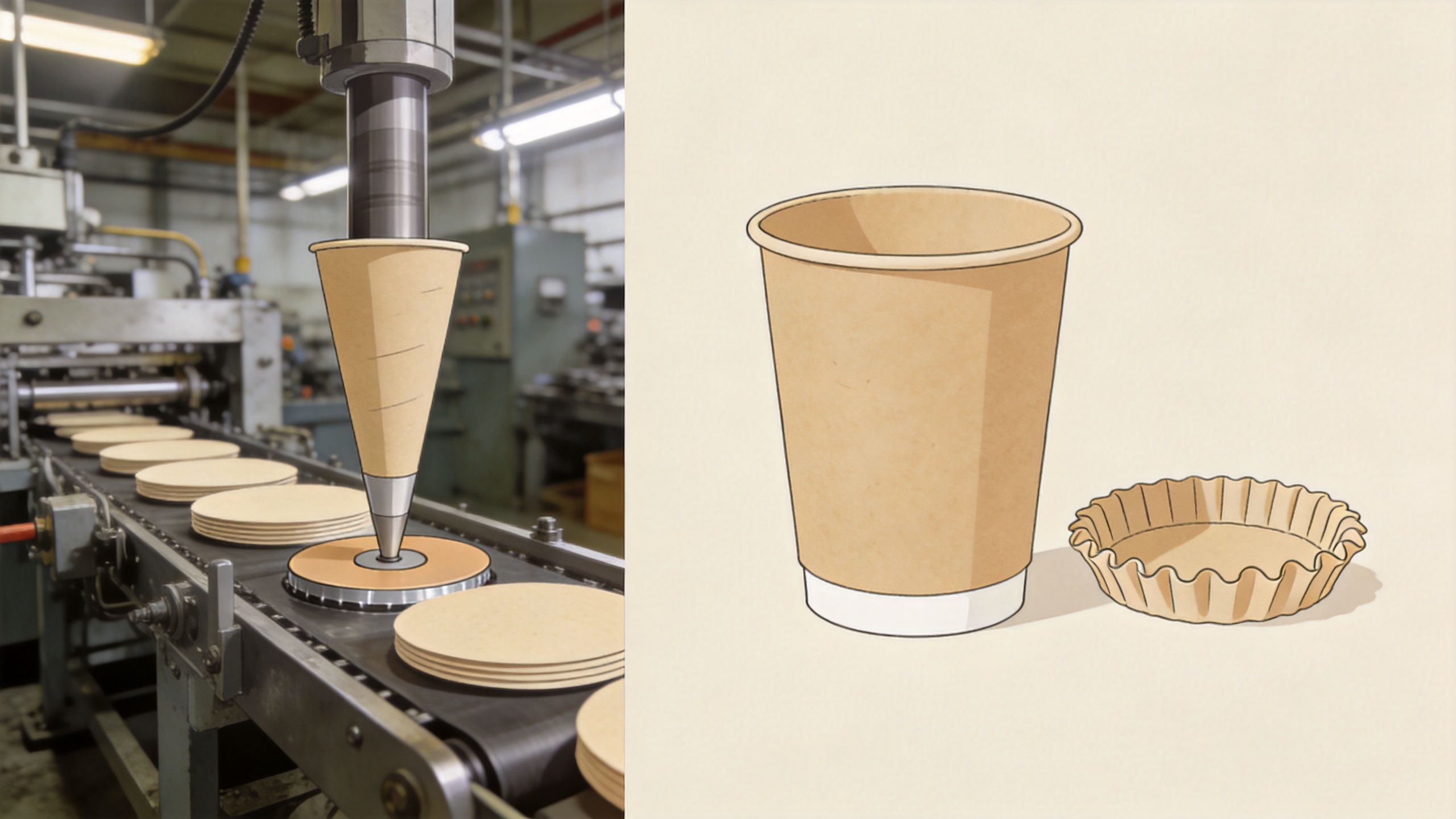
Common uses of a cup making machine
A cup making machine is used wherever a converter needs repeatable production of disposable or paper-based cup formats. Common end uses include hot drinks, cold drinks, sampling portions, food-service packaging, promotional cups, and selected dessert or snack formats. The intended use matters because the cup may need a different body height, top diameter, bottom diameter, board stiffness, barrier construction, or lid relationship.
- Coffee and tea cups: These projects often require attention to cup feel, rim finish, and the relationship between the finished rim and a planned lid.
- Cold-drink cups: Condensation, liquid exposure, print requirements, and stacking behavior should be considered with the cup material.
- Tasting and sampling cups: Smaller dimensions can change handling and tooling needs, so the cup making machine should be matched to the actual format rather than a generic cup category.
- Ice-cream or food-service containers: A buyer should clarify whether the item is a cup, a tub, or another formed package because the shape and material requirement may differ.
Food-contact expectations also belong in the project definition. For example, U.S. requirements for paper and paperboard used with aqueous and fatty foods are addressed under 21 CFR 176.170, subject to the applicable conditions. That reference does not certify a machine or a finished cup. It illustrates why the destination market, food-contact material, temperature, and use period should be identified before a production plan is approved.
Single-wall, double-wall, and specialty formats
A standard cup making machine discussion often starts with a single-wall paper cup: one formed body with a bottom and rolled rim. It is a useful baseline, but the finished package is not defined by the wall alone. Paperboard properties, barrier type, seam overlap, and the design of the lower joint all influence the production process.
A double wall cup making machine project adds another layer to the conversation. The outer wall or sleeve is intended to change the hand-feel and insulation characteristics of the finished format. It does not replace the need to validate the inner cup’s side seam and base joint. When reviewing a double wall cup making machine option, specify the inner cup, outer layer, attachment method, final diameter, stacking requirement, and the desired production flow. Those details determine whether the proposed process fits the application.
A cake cup making machine inquiry should be defined just as carefully. “Cake cup” can refer to baking liners, dessert cups, or food-service containers, and those formats may call for different materials, shapes, heat exposure, and forming methods. Before selecting a cake cup making machine, confirm the actual product drawing, material structure, food-use conditions, and whether the item will be baked, filled cold, or used only for presentation.
What to check before choosing equipment
Instead of asking only how many cups a cup making machine can make, begin with a requirement sheet. This shifts the decision from comparing headline figures to confirming whether the process can make the intended cup consistently.
| Question to define | Why it matters |
|---|---|
| What are the top, bottom, and height dimensions? | They guide cup geometry and tooling compatibility. |
| What cupstock and barrier construction will be used? | Material affects forming, sealing, and the checks required for the intended use. |
| Is the format single-wall, double-wall, or another structure? | The production route and handling steps may be different. |
| Will the cup use a lid? | Rim diameter, roundness, and curl profile need validation with the selected lid. |
| What output, changeover, and inspection needs apply? | These factors shape the operating plan beyond nominal machine output. |
For a cup making machine, material compatibility deserves early attention. If the seal area, coating orientation, or blank dimensions are not confirmed, a supplier cannot responsibly treat a general description as proof of final results. This is especially important when a project changes cup size, print design, barrier material, or product destination.
Typical production issues and a practical response
A cup making machine can reveal a process issue at the side seam, bottom, rim, or cup handling stage. A vertical leak points the team toward seam overlap, heat or energy conditions, pressure, material orientation, and alignment. A base leak calls for a review of bottom centering, lower curl formation, tool condition, and the forming window. A cracked or uneven rim suggests checking board condition, rim tooling, and cup roundness.
The useful response is to keep samples, identify the material lot and time sequence, and change one verified condition at a time. In other words, do not assume every problem is solved by raising output or changing a single setting. If paper material and cup geometry are already confirmed, that comparison usually becomes more meaningful; before then, the requirement sheet is the stronger starting point.
Frequently asked questions
Can one machine make every cup size?
Not automatically. Equipment is selected around a supported size range, tooling arrangement, material behavior, and production requirement. Ask for confirmation against your actual drawing and cupstock.
Do double-wall cups require a different process?
They can require additional material handling and attachment steps. A double wall cup making machine project should define the inner and outer structures together rather than treating the outer layer as an afterthought.
What information should a buyer send first?
Send cup drawings or dimensions, material details, intended use, destination market, lid information if applicable, print requirements, target output, and changeover expectations. This gives a cup making machine supplier a clearer basis for a technical discussion.
A practical starting point
A cup making machine is not simply a device that turns paper into a cup. It is a forming process that must coordinate material, cup geometry, joints, rim quality, and downstream handling. Start with the cup you need to make, then verify the material and process conditions before comparing configurations. That approach gives buyers a clearer path to assess whether a cup making machine, a double wall cup making machine, or a cake cup making machine workflow fits the planned application.
 ONLINE