
 EN

How Facilities Maximize Output via Paper Bowl Machine?
For a facility team, a paper bowl machine is not productive simply because its nameplate cycle looks fast. Output is the number of bowls that pass forming, inspection, packing, and handoff without creating rework or starving the next station. A reliable paper bowl machine therefore has to fit the bowl format, paper stock, staffing plan, and maintenance routine used on the actual floor.
From an operator’s perspective, the useful question is not “What is the top speed?” It is: “How many acceptable bowls can the line produce consistently through a full shift?” That framing helps a facility use a paper bowl machine as a dependable production asset instead of spending each shift on recurring adjustments.
Measure usable output, not only machine speed
Start by defining a shift-level baseline for the paper bowl machine. Record planned run time, unplanned stops, changeover time, start-up scrap, rejects, and downstream packing delays. These categories reveal whether a missed output target comes from forming, materials, people, or the flow around the machine.
A practical review separates three numbers: nominal cycles, formed bowls, and accepted packed bowls. The gap between them is where improvement work belongs. For example, if the paper bowl machine keeps running but operators repeatedly remove poorly formed bowls, improving inspection feedback or material setup may yield more saleable output than increasing speed.
- Availability: how much planned time the machine is actually able to run.
- Performance: how close the line operates to its validated operating rhythm under current conditions.
- Quality: the share of bowls that meet the facility’s agreed appearance, seal, and dimensional checks.
Use the same definitions across shifts. That makes problems visible without turning a single busy hour into an unsupported performance claim.
Match materials and bowl design before chasing throughput
Paper stock, coating type, blank geometry, bowl size, and intended food application all affect how a paper bowl machine should be set up. Before increasing the run rate, verify that the material lot and forming tools match the approved sample. A bowl issue is not automatically a machine issue; paper variation, storage conditions, or an incorrect setup can produce similar symptoms.
This matters for a paper soup bowl maker, where the team should confirm the intended bowl construction and the agreed quality checks for the application. It also matters for a paper noodle bowl maker, where bowl dimensions, blank consistency, and the packing workflow may shape the practical production rhythm. The equipment discussion should stay tied to verified materials and samples rather than assumptions about one universal configuration.
One useful habit is to keep a setup record with the approved paper specification, tool set, temperatures or other applicable process settings, first-piece observations, and actions taken after adjustments. When the next shift sees an edge, bottom, or shape issue, that record shortens diagnosis and reduces repeated trial-and-error.
Protect the critical process nodes
A paper bowl machine works as a sequence, not as an isolated motor. Facilities improve output by identifying which node is limiting the next one: blank feeding, forming, joining, bottom processing, discharge, inspection, or packing. Observe the handoffs during a normal production run. Is material feeding smoothly? Do formed bowls accumulate before packing? Are operators leaving their stations to fetch supplies? The answers are often more valuable than a broad request to “run faster.”
Build a short start-up routine
At start-up, let the paper bowl machine produce enough pieces for the team to check the agreed visual and functional criteria before releasing the lot. Confirm that guards, sensors, and accessible work areas are ready, then document the first accepted sample. This adds a few deliberate minutes but can prevent a longer period of unnoticed scrap.
Make abnormalities easy to report
Clear fault messages and a simple shift log help operators describe what happened, when it happened, and what changed beforehand. Instead of recording “machine stopped,” record the station, material lot, bowl size, symptom, corrective action, and whether the action held. This makes recurring events traceable and helps maintenance prioritize the parts or checks that actually affect output.
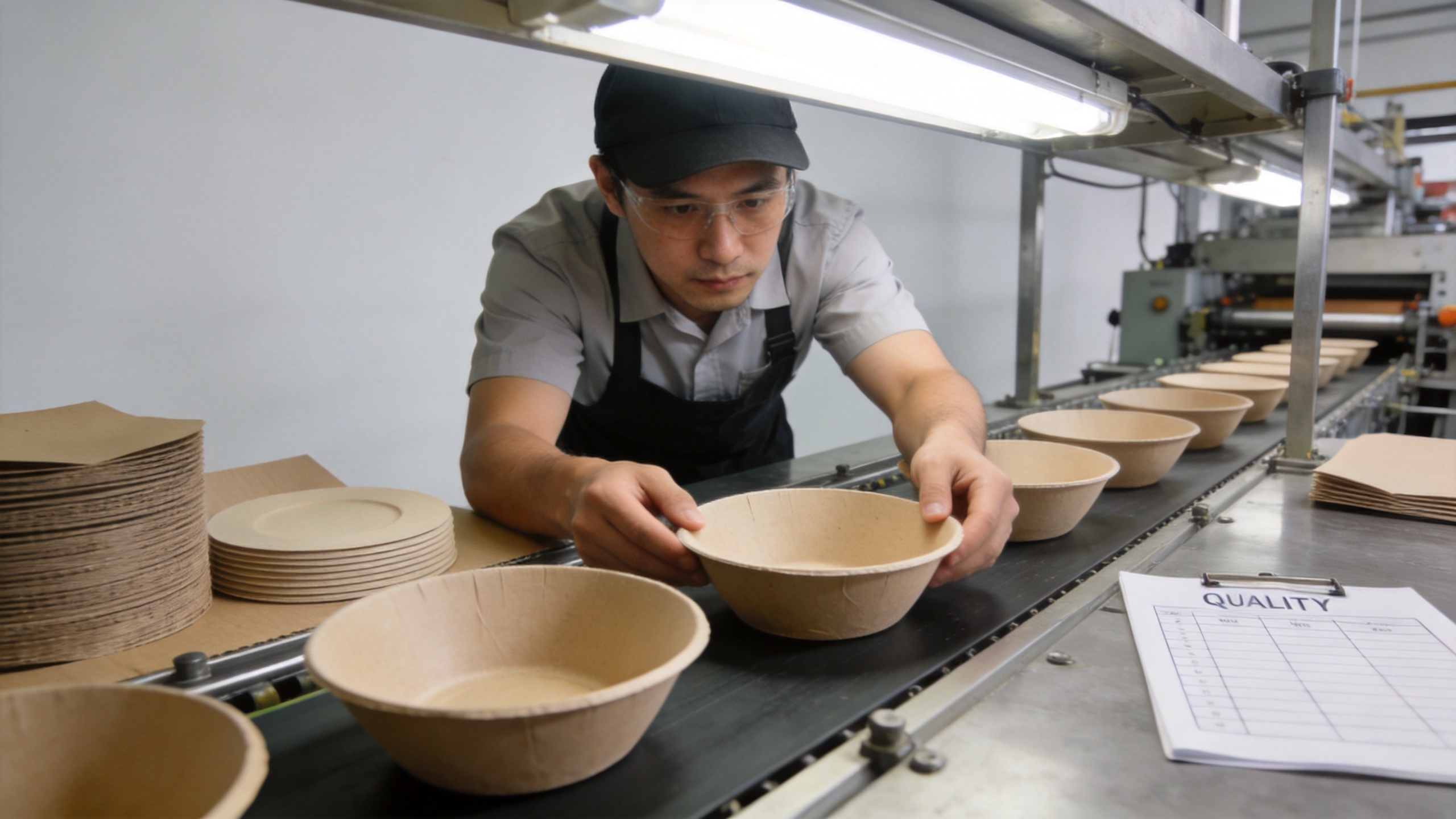
Reduce changeover losses with a repeatable method
Frequent format changes can quietly consume the capacity of a paper bowl machine. The goal is not to skip checks; it is to move preparation away from the stopped machine whenever possible. Stage the verified tools, material, labels, instructions, and sample criteria before the last run ends. Then give the operator a sequenced checklist for the actual change.
- Confirm the next bowl format, approved blank, and production order.
- Prepare tools and consumables at the station before shutdown.
- Install and verify the change parts according to the documented sequence.
- Run first pieces slowly enough to check shape and joining quality.
- Record the accepted setup and release the line only after the specified checks.
This approach is particularly helpful when a site alternates between a paper soup bowl maker workflow and a paper noodle bowl maker workflow. The appropriate balance between speed and flexibility depends on the site’s actual product mix. A line dedicated to one validated bowl format may need a different plan from a line that changes formats several times each week.
Use preventive maintenance to preserve production rhythm
Maintenance is an output discipline, not a separate afterthought. Search results for bowl-forming equipment commonly emphasize cleaning, lubrication, inspection of wear items, calibration, and operator training as routine themes. Each facility should translate those general themes into its own approved maintenance instructions, safety procedures, and service intervals.
For the paper bowl machine, build a practical daily, weekly, and planned-service checklist around the points that are relevant to the installed equipment. Daily work may include cleaning accessible debris, observing unusual noise or vibration, and checking whether sensors and guards behave as expected. Planned checks can focus on wear patterns, alignment, fasteners, lubrication requirements, and parts that have caused past interruptions. Do not treat automatic operation as maintenance-free operation.
Keep critical spares and their lead-time information visible to the maintenance team. A modest inventory decision can be more valuable than an urgent production request when a known wear item prevents the paper bowl machine from returning to service.
Align people, quality, and downstream flow
A facility gets more from a paper bowl machine when operators, quality staff, maintenance, and packers share the same target: accepted bowls delivered at a predictable rhythm. Train operators on the purpose of each check, not only the button sequence. They should know when a minor correction is within their role and when the condition needs escalation.
Review output at a regular shift handoff. Ask: Which stoppage occurred most often? Did a material issue repeat? Was the bottleneck at the paper bowl machine or after discharge? What will the next shift verify first? That short conversation builds a practical improvement loop and reduces reliance on memory after a difficult run.
A facility checklist for higher usable output
- Define accepted packed bowls as the main output measure for the paper bowl machine.
- Validate bowl format and material conditions before raising the operating rhythm.
- Track stops, scrap, changeovers, and downstream delays by cause.
- Stage change parts and approved materials before the current order ends.
- Use first-piece checks and a documented setup record.
- Plan cleaning, inspection, lubrication, and wear-part review around the actual equipment manual.
- Review shift data with operators, maintenance, quality, and packing personnel.
Facilities maximize output when they treat the paper bowl machine as part of a controlled system. With validated materials, clear setup standards, disciplined preventive maintenance, and a shared view of usable output, the line can improve consistency without relying on unverified promises about speed or zero downtime.
 ONLINE