
 EN

Why Choose Paper Bowl Machine for Eco Packaging?
Choosing a paper bowl machine is no longer only a capacity decision. For foodservice brands, converters, and contract packers, it is also a way to align a bowl format with a more considered packaging strategy. The useful question is not whether paper automatically makes a package sustainable. It is whether a paper bowl machine can process the specified substrate consistently, limit avoidable scrap, and help the factory deliver bowls that work in the real food application.
From an operations perspective, eco packaging begins with repeatable manufacturing. A bowl that leaks, has an uneven rim, or is rejected at packing consumes material without reaching the customer. The right paper bowl machine therefore helps turn a material decision into a controlled production process. It should be assessed alongside the paperboard, barrier treatment, lid or sealing method, transport requirements, and the local rules that shape end-of-life claims.
Eco Packaging Is a System, Not a Label
Paper-based food containers can support renewable-fiber, recyclable, or compostable packaging pathways, but the appropriate claim depends on the complete construction and the waste stream available to the end user. A paper bowl machine gives a manufacturer the forming platform; it does not by itself prove recyclability, compostability, or regulatory compliance. That distinction is important when buyers compare coated stocks, water-based barriers, and different food-contact requirements.
Before ordering a paper bowl machine, define the product brief in plain operational terms: bowl volume, fill temperature, food type, holding time, required stiffness, leak resistance, printing area, and destination market. Soup, salad, rice, and noodle applications put different demands on a bowl. If the line will produce a noodle paper bowl machine format, test the intended stock with representative hot and moist foods instead of relying on a generic material description.
How a Paper Bowl Machine Supports Better Material Use
Material efficiency is one of the clearest practical reasons to select a capable paper bowl machine. Stable feeding, accurate forming, dependable side-seam or bottom sealing, and consistent ejection can reduce the number of malformed bowls entering a reject bin. The financial benefit is obvious, but the environmental benefit matters as well: fewer rejected blanks means less converted material, less rework, and fewer finished goods to dispose of.
Ask a supplier to demonstrate the paper bowl machine with the actual paperboard grade, thickness, and coating family you intend to use. A trial should observe seam appearance, bottom adhesion, rim quality, bowl geometry, and start-up scrap. Do not assume that a machine proven on one stock will behave identically on every alternative substrate. Changes in stiffness, moisture response, friction, or heat-sealing behavior can affect the window for reliable production.
Automation also matters because repeatability is part of waste control. Search results for this equipment commonly highlight features such as sensor-based monitoring, PLC control, and ultrasonic sealing, but those features are model-specific rather than universal promises. Use them as questions during evaluation: What fault conditions does the line detect? How is a misfeed handled? Which forming and sealing parameters can an operator monitor and document?
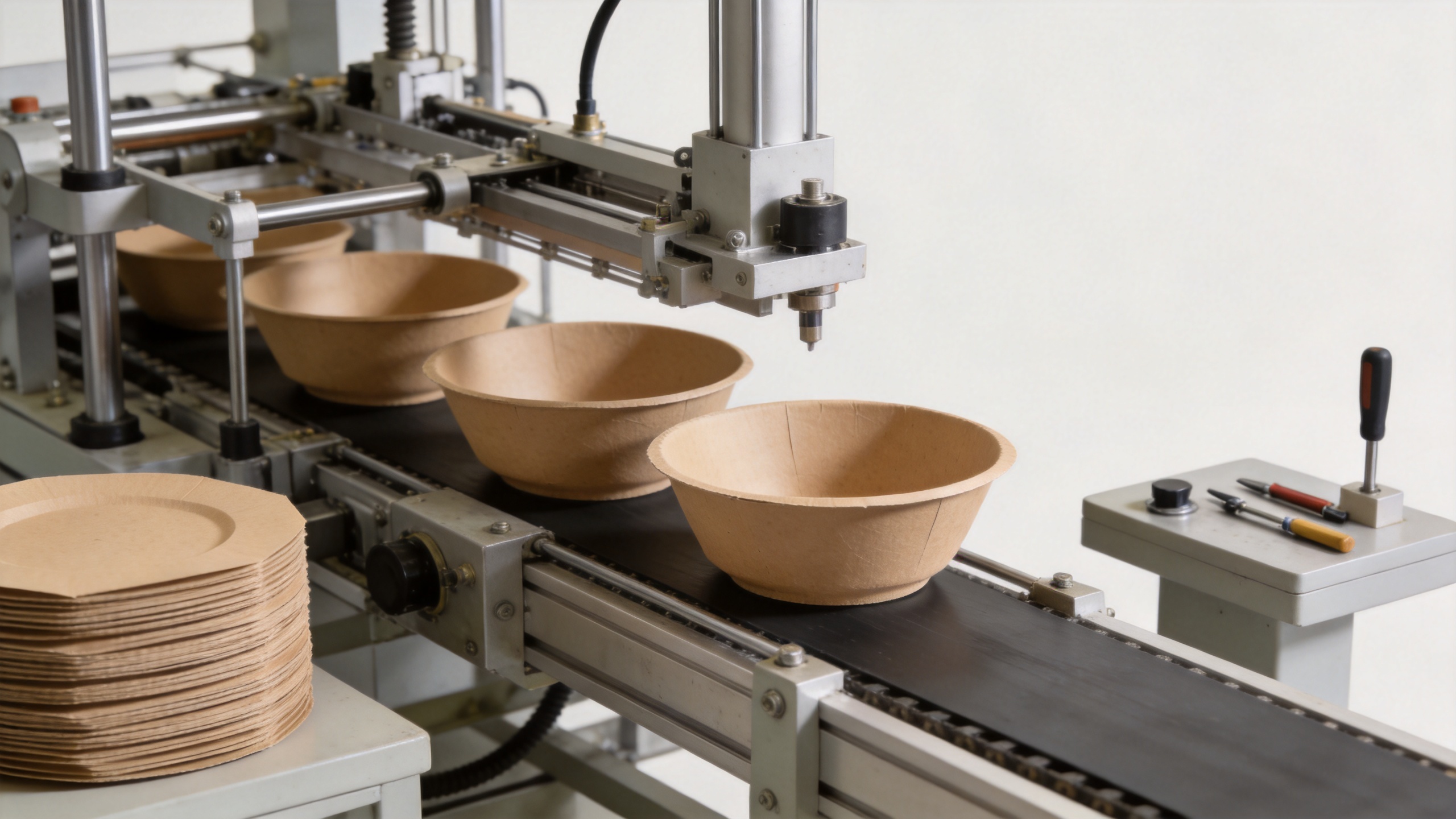
Match the Machine to the Bowl, Not Just the Output Claim
A paper bowl machine should be chosen for the bowls your customers need, not just for the highest advertised speed. Capacity targets are meaningful only when the bowls pass inspection at the intended substrate and application. Compare the supported diameter, height, volume range, rim style, and blank design. Then ask for a realistic rate that accounts for changeovers, material adjustments, inspection, and packing.
This is particularly relevant for a noodle paper bowl machine application. Noodle bowls may face steam, hot broth, sauces, and extended holding periods. The selection review should include filling tests, closure or lid compatibility, stacking behavior, and transport simulation. When the result is a bowl that performs consistently, the packaging team can make more responsible decisions about material specifications instead of compensating for weak forming with unnecessary overdesign.
A paper bowl machine also needs a maintenance plan that supports steady quality. A clean, accessible forming area and a documented preventive-maintenance routine make it easier to identify wear before it becomes a recurring seam or rim defect. Request a list of consumables, expected service intervals, operator training needs, and the support process for troubleshooting. These details influence uptime, but they also influence the amount of off-spec product a site may generate over time.
Think Beyond Forming: Inspection, Packing, and Traceability
A well-matched paper bowl machine is part of a line, not an isolated purchase. Finished bowls need to be counted, sleeved, protected, and packed without crushing or contamination. That is where a cup packing machine can become relevant. Matching downstream packing speed and pack configuration to the forming line reduces manual handling, prevents bottlenecks, and helps keep acceptable bowls from becoming packaging damage.
During line planning, map the transfer points between the paper bowl machine, inspection station, and cup packing machine. Decide how operators will separate suspect product, reconcile production counts, and record material lots. Basic traceability is useful when a customer asks which substrate was used in a shipment or when a team needs to investigate a quality trend. It is also a disciplined way to avoid broad sustainability statements that the factory cannot substantiate.
A Practical Evaluation Checklist
- Confirm material compatibility: run the selected paperboard and barrier construction on the paper bowl machine, then inspect seams, bottoms, rims, and nesting.
- Test the real use case: evaluate hot, cold, wet, oily, or dry foods for the claimed holding period.
- Measure usable output: compare accepted bowls per shift, not only theoretical cycle rate.
- Review scrap causes: ask how the paper bowl machine detects misfeeds, malformed blanks, and sealing faults.
- Plan downstream handling: check whether a cup packing machine, carton format, and pallet plan can protect the bowls efficiently.
- Validate claims separately: obtain documentation for food contact, material composition, and any recyclable or compostable claim required in the target market.
Why the Choice Matters
A paper bowl machine can be a strong investment for eco packaging when it is selected as part of a broader product-and-process plan. It can help a business make better use of its chosen stock, deliver reliable bowl geometry, and connect forming with orderly inspection and packing. It cannot replace material testing or compliance review, but it can make those decisions easier to execute at scale.
For buyers evaluating a paper bowl machine, the most durable approach is to request application trials, define acceptance criteria before purchase, and look at the full path from blank to packed bowl. That approach supports practical efficiency today while leaving room for material and market requirements to evolve.
 ONLINE