
 EN

How Industrial Lines Use Paper Machinery Effectively?
Effective paper machinery is not simply a fast machine placed in the middle of a plant. It is a coordinated part of a line: material must arrive in the right condition, forming or converting steps must stay in sequence, operators need clear access, and finished products must leave without creating a new bottleneck. From a maintenance-planning perspective, the useful question is not “What is the highest machine rating?” but “What conditions let this equipment support the planned production rhythm?”
That distinction matters for paper cup and food-packaging operations. A machine paper roll may look like a basic supply item, yet its width, winding quality, coating, storage condition, and feed behavior can influence every downstream station. Likewise, a specialist unit such as a deflaker paper machine should be considered within the stock-preparation or material-conditioning workflow rather than as an isolated purchase. If paper grade and product format are already confirmed, the following framework gives an industrial team a more reliable way to evaluate paper machinery.
Start With the Line Outcome, Not the Nameplate
Industrial teams often begin with speed, automation level, or a short feature list. A more useful starting point is the desired output: product type, acceptable quality variation, shift plan, changeover frequency, inspection method, and downstream collection capacity.
A paper-converting line may include material preparation, forming, pressing or sealing, finishing, and conversion. The arrangement differs by product, but connected stages reveal where paper machinery must hand material to the next process without delay, damage, or excessive manual handling.
- Define the finished item and the paper or paperboard specification before comparing configurations.
- Map every handoff, from incoming rolls through formed parts to finished-product collection.
- Identify the slowest practical step rather than assuming the rated speed of one machine sets line output.
- Write down normal operation, changeover, cleaning, inspection, and fault-recovery activities.
This turns a broad paper machinery discussion into an operating plan. It also reveals a common issue early: a capable forming machine cannot make an industrial line effective if roll loading, material preparation, or finished-product transfer forces repeated stops.
Match Material Preparation to What the Next Station Needs
Material variation is often mistaken for an equipment problem. In practice, paper moisture, caliper, stiffness, coatings, fiber condition, roll tension, and storage history can all affect how a line behaves. More accurately, not every defect originates in the machine; the material and the operating method should be checked together.
Control the paper roll as a process input
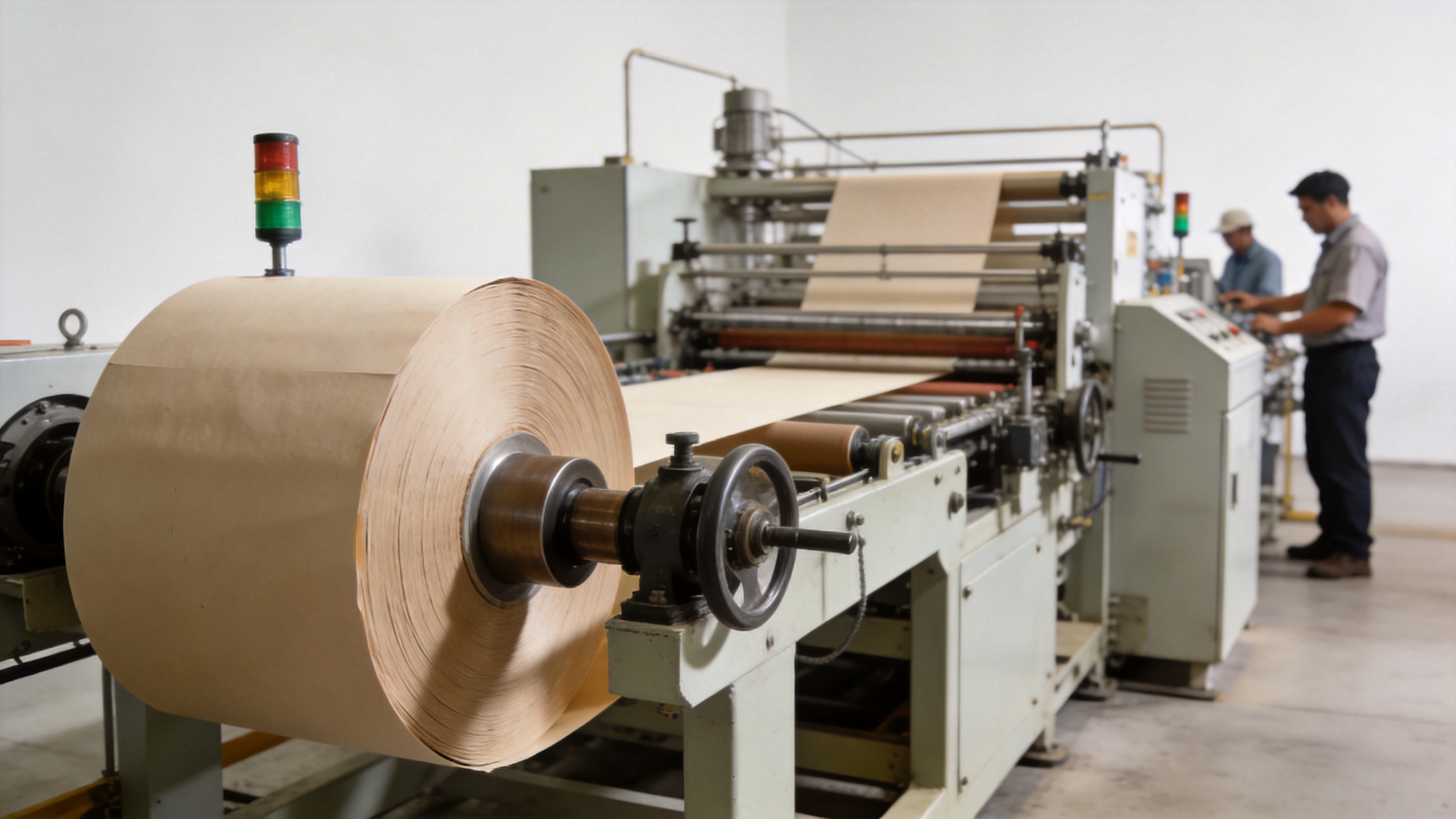
Before a machine paper roll enters the unwind, confirm its dimensions, core compatibility, winding direction, edge condition, and handling route. A practical incoming checklist can include lot identification and agreed storage conditions so troubleshooting starts with evidence.
At the unwind, observe the relationship between roll feed and the first processing station. Effective paper machinery depends on alignment, tension control, clean guiding surfaces, and safe loading clearance. Compare frequent roll changes with the line’s actual rhythm; a higher speed is not automatically a better fit when changeovers interrupt flow.
Use conditioning equipment for a defined purpose
A deflaker paper machine or another material-conditioning stage should be evaluated against the material condition required by the next process. Ask what it is intended to improve, how it will be checked, and what happens when incoming material differs from the normal range. Its role, controls, cleaning access, and connections must be clear before installation.
Design the Handoffs Between Machines
Many avoidable losses occur at interfaces rather than at the main machine. Paper machinery becomes more effective when every transition has an owner and a visible acceptance condition: physical transfer, timing signals, accumulation, inspection, and rejected-material removal.
| Line interface | What to verify | Why it matters |
|---|---|---|
| Roll supply to unwind | Handling route, core fit, alignment, safe loading clearance | Reduces unplanned waiting and protects the paper path. |
| Preparation to forming or converting | Material condition, feed stability, handoff timing | Helps separate material variation from equipment adjustment. |
| Machine to collection or packing | Transfer method, accumulation capacity, rejection path | Prevents downstream congestion from stopping an upstream process. |
| Operator to control system | Clear alarms, operating limits, documented recovery steps | Supports consistent response when a line condition changes. |
When assessing paper machinery, watch the paper feed and transfer sequence rather than only the final product. A short observation of roll change, startup, normal running, and recovery after a controlled stop is more informative than a feature list alone.
Plan for Changeovers and Maintenance Before Commissioning
Evaluate paper machinery through the work people perform around it. For flexible formats, define how often specifications change and who performs setup. For stable output in a limited range, document the paper grade, tooling, settings, and inspection points that must remain controlled.
Before commissioning, create a maintenance plan for wear items, inspection, cleaning, and stoppage diagnosis. Beyond the initial quotation, confirm spare parts, service access, training, recovery procedures, and the exact support scope.
- List routine checks by shift, week, and planned shutdown interval.
- Confirm whether operators can reach cleaning and inspection points without unsafe improvised methods.
- Keep critical spare-part questions separate from the general machine specification.
- Record common process symptoms and the conditions observed when they occur.
- Put acceptance criteria in writing before factory or site testing.
Putting acceptance standards first is especially helpful when several parties are involved. It changes the conversation from a vague promise of performance to a shared method for checking material, product, safety, and operating conditions.
Build Safety Into Normal Work, Not Just the Guarding Review
Paper and converting equipment can involve moving rolls, nips, cutting areas, drives, and stored energy. For paper machinery, guarding and hazardous-energy control should be confirmed against local requirements and site procedures; this is not a claim that a particular line is compliant.
Ask whether safe work is practical during loading, cleaning, jam clearing, adjustment, and maintenance. Guards, interlocks, access routes, and lockout/tagout procedures should support normal work. A task-based review before startup can surface conflicts between production flow and safe access.
Use Simple Operating Data to Improve the Next Shift
An industrial line does not need a complicated analytics project to learn from its paper machinery. Record planned run, actual run time, stop category, material lot, changeover reason, rejected-product observations, and corrective actions. This separates recurring material issues from setup or interface issues.
Keep the review practical. After a roll-change stoppage, check loading and feed conditions first. After a material-lot change, compare recorded material details before changing every setting. If a concern occurs at one transfer point, inspect that handoff before assuming the system needs an upgrade.
A Pre-Start Checklist for Effective Paper Machinery
- Finished product, paper grade, and acceptable quality criteria are defined.
- The machine paper roll specification and loading method match the unwind and feed process.
- Any deflaker paper machine or conditioning stage has a documented purpose and verification point.
- Each paper machinery handoff has a clear material path, timing expectation, and responsible operator or team.
- Changeover, cleaning, inspection, and fault-recovery work have been reviewed, not just normal running.
- Safety controls and applicable site procedures are checked before production begins.
- Acceptance criteria, training needs, spare-part questions, and support boundaries are written down.
Conclusion
Effective paper machinery supports an industrial line when it is selected and operated as part of a connected process. Start with the finished-product requirement, then verify material preparation, roll handling, machine interfaces, safe access, maintenance work, and acceptance conditions. This does not replace a site-specific technical assessment, but it gives a procurement and operations team a clearer basis for supplier discussions. For paper cup and food-packaging projects, ZheJiang RUIDA Machinery can use the same requirement-led conversation to clarify equipment scope, application conditions, and the points that should be confirmed before a configuration is finalized.
 ONLINE