
 EN

Paper Machine Suppliers Service and Support
Buying converting or paper-processing equipment is not only a question of a machine quote. For operations teams, the real test begins when the equipment reaches the plant, a format changes, or a critical part is needed. That is why capable paper machine suppliers should be evaluated on the support system they can define and document before an order is placed.
From a maintenance-planning perspective, a useful comparison starts with the operating path: install the machine, verify it against an agreed scope, train the people who will run it, and keep the right technical information and parts available afterward. Different paper machine suppliers may organize that path differently, so buyers should compare written deliverables rather than relying on a general promise of after-sales service.
Start with a service scope, not a service slogan
When screening paper machine suppliers, ask each candidate to describe its support scope in the quotation or technical agreement. The document should separate pre-shipment work, installation support, commissioning, operator training, remote troubleshooting, preventive-maintenance guidance, spare parts, and escalation contacts. This gives purchasing, engineering, and production a common reference if responsibilities need clarification later.
A supplier may support a complete line, one converting machine, or a specialized module. The scope should state what is included, what requires a separate agreement, which site conditions are the buyer’s responsibility, and what information the supplier needs before assistance can begin. For many paper machine suppliers, that clarity is more valuable than a broad claim that service is “available worldwide.”
Define commissioning and acceptance evidence early
Commissioning becomes easier to manage when acceptance criteria are set before shipment. Buyers can ask paper machine suppliers to identify the materials, formats, utilities, operator participation, safety checks, and documentation needed for an acceptance review. A factory acceptance test is commonly used to check equipment against an agreed contractual specification before shipment; a site acceptance test is used after installation. The right sequence depends on the project, but the evidence should be agreed in writing.
Do not treat an acceptance test as a vague demonstration. Ask for a test plan that identifies the sample conditions, the observations to be recorded, the limits of the test, and how open items will be closed. This approach helps buyers compare paper machine suppliers on preparation and communication rather than on a single claimed output figure.
Check whether training matches the people and the task
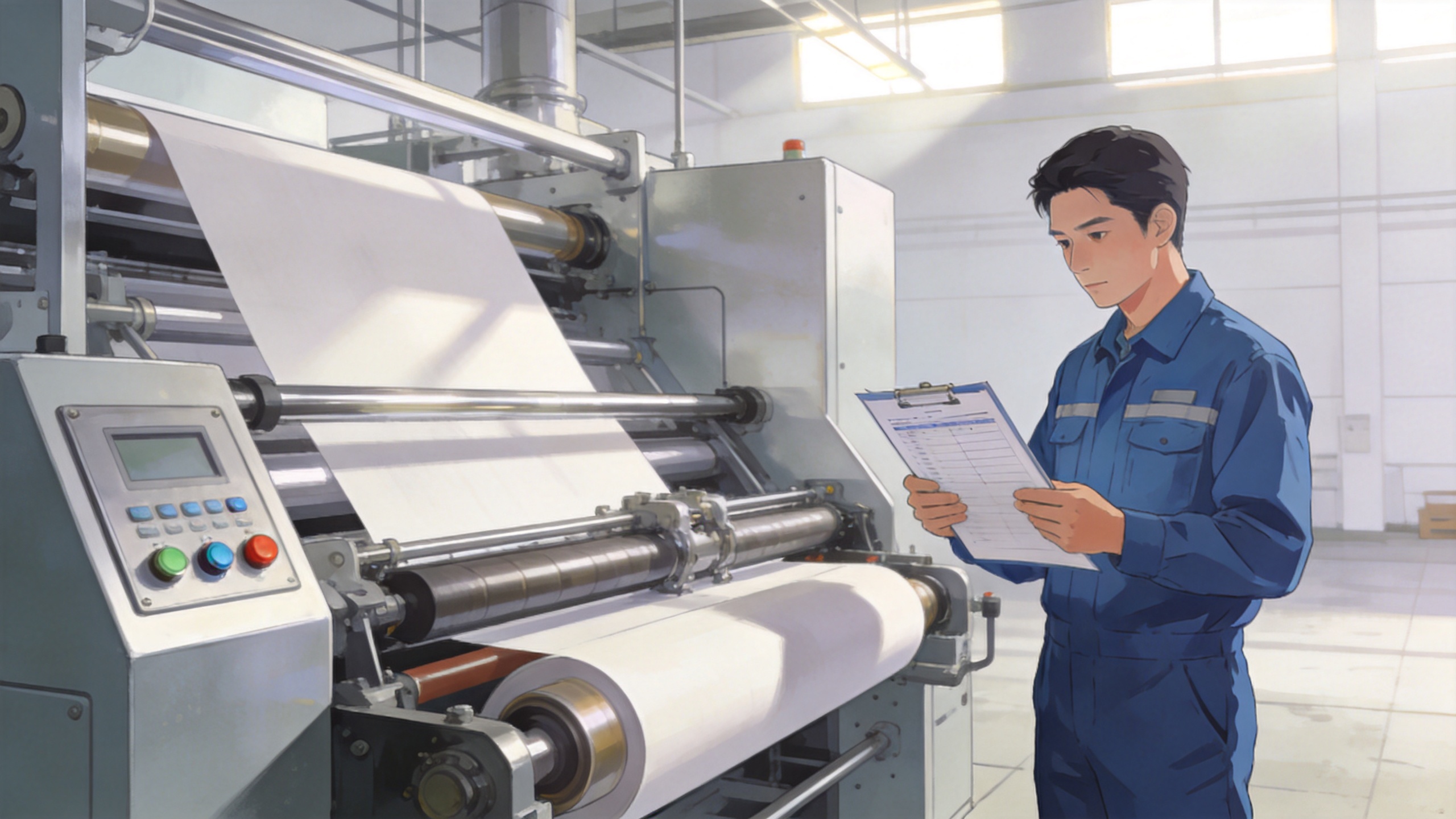
Training is most useful when it follows the actual operating roles. Before selecting paper machine suppliers, identify who needs instruction: operators, shift leaders, maintenance technicians, electrical staff, and quality personnel may require different material. Ask whether training covers start-up and shutdown, changeovers, routine cleaning, alarm recognition, safe adjustment, basic fault isolation, and the handover of manuals or parameter records.
A good training plan also establishes what happens when staff change. Instead of assuming one session is sufficient, buyers can request a list of reference documents, video or remote-session options where available, and a process for asking follow-up questions. This is particularly important for a paper tube machine manufacturer when winding, cutting, adhesive handling, and size changeovers must be understood together.
Make spare-parts support measurable
Spare-parts planning is where service promises become operational. Ask paper machine suppliers for an itemized recommended-spares list, part numbers, maintenance-critical items, storage guidance, and the information required to identify a component correctly. The discussion should distinguish consumables, planned-replacement items, and parts that could stop production if they fail.
Buyers should also ask where parts are held, how availability is confirmed, what shipping options exist, and how substitutions are approved. No supplier should be assumed to hold every component locally. However, paper machine suppliers that can give clear part-identification and escalation procedures make it easier for a plant to plan around uncertainty. The same discipline applies when comparing an industrial paper machine suppliers shortlist: the purchase price alone does not describe the cost of waiting for a part.
Evaluate technical support as a troubleshooting workflow
Remote assistance is more effective when the buyer and supplier agree on the information to collect. Ask paper machine suppliers which details help them diagnose a problem: alarm text, controller or drive information, material specifications, photos or video where permitted, maintenance history, and a description of the operating sequence. A documented workflow prevents a support request from becoming an unstructured exchange of messages.
It is also reasonable to ask about normal contact channels, language coverage, time-zone handover, and when an issue moves from remote guidance to an on-site recommendation. These questions do not require a supplier to guarantee a response time that has not been contracted. They let buyers compare paper machine suppliers on the transparency of their support process.
Use lifecycle questions when comparing offers
Service should be reviewed alongside the technical proposal, not after the machine is selected. Create one comparison sheet for all paper machine suppliers and score the evidence they provide against the same questions. A lower initial price can be difficult to interpret if the scope for documentation, installation, training, and spares is incomplete.
| Support area | Question to put in the RFQ | Evidence to request |
|---|---|---|
| Commissioning | Who performs each task and under what site conditions? | Commissioning plan and responsibility matrix |
| Acceptance | What will be checked before shipment and after installation? | Test plan and open-item process |
| Training | Which roles are trained and what records are handed over? | Agenda, manuals, and training list |
| Parts | Which parts are recommended for start-up and maintenance? | Itemized spares list and identification process |
| Troubleshooting | How is an issue logged, diagnosed, and escalated? | Support workflow and contact route |
A practical pre-order checklist
- Ask each of the shortlisted paper machine suppliers for a written service-scope matrix.
- Align the acceptance plan with the materials, utilities, formats, and operating conditions that matter to your plant.
- Confirm the training roles, language needs, manuals, and follow-up method before the schedule is finalized.
- Review recommended spares with maintenance staff, not only with purchasing.
- Record the troubleshooting contact path and the information required for a support case.
- Keep service documents with the machine record so future teams can use the same baseline.
Choose evidence you can use after delivery
Reliable support is not a single feature. It is the combination of clear roles, documented acceptance conditions, usable training, part-identification discipline, and a predictable communication path. Buyers who ask these questions can compare paper machine suppliers more fairly and reduce ambiguity before their equipment arrives.
For a paper tube line or other converting application, the same principle applies: request a service scope that fits the actual production workflow, then preserve the agreed documents for the people who will operate and maintain the equipment. That is a more durable basis for working with paper machine suppliers than choosing solely from a product list or an initial quotation.
 ONLINE