
 EN

How Paper Cup Machine Manufacturer Builds Units?
When buyers ask how a paper cup machine manufacturer builds a unit, they are usually looking beyond a catalog photo. They need to know whether the supplier can translate a cup format, paper specification, production rhythm, and operating conditions into a machine that can be reviewed before shipment. From a packaging-equipment technical-adviser perspective, the useful question is not simply “How fast is it?” It is whether the requirements, forming sequence, controls, and acceptance checks fit the intended job.
A capable paper cup machine manufacturer normally works through a connected sequence: clarify the application, prepare parts and the frame, assemble the mechanical and electrical systems, adjust the forming stations, and run functional checks. The exact arrangement differs by cup size, blank shape, paper stock, coating, and requested options. For that reason, buyers should treat this article as a review framework rather than as a promise about any individual configuration.
Start With the Cup Requirement, Not the Machine Name
Before building begins, a paper cup machine manufacturer should turn the buyer’s application into a practical requirement sheet. The starting inputs commonly include cup volume and profile, top and bottom diameter, paperboard type and thickness range, coating or barrier condition, artwork layout, target output, local power supply, and the level of operator involvement expected. If a project will change between cup formats, changeover expectations matter as much as the nominal running rate.
This stage prevents a common mismatch: comparing a standard frame before the cup blank and bottom stock are clear. Paper behavior affects feeding, curling, heating, forming, and bottom knurling. A paper cup machine manufacturer can discuss suitable stations and adjustment scope more accurately after the material and geometry are confirmed. When those inputs are still open, the supplier should mark them as open rather than presenting a universal configuration.
How the Main Mechanical Sections Come Together
Once requirements are defined, the build moves from the base structure to the process stations. A paper cup machine manufacturer may prepare or source the frame, shafts, cams, transmission components, guides, guarding, and station tooling before mechanical assembly. The purpose is to create repeatable motion through the cup-forming sequence, not merely to place components on a frame.
Feeding and sidewall forming
The feeding area presents the sidewall blank at the right time. Guides, rollers, sensors, and vacuum or pneumatic handling arrangements may be used according to the design. The blank is then wrapped and joined into a cup body. Here, alignment and timing are important because an inaccurate sidewall position can carry forward to later operations. During design discussion, ask the paper cup machine manufacturer which blank dimensions and paper conditions are assumed for this station.
Bottom insertion, heating, and knurling
After sidewall forming, the machine introduces the bottom piece and joins it to the cup body. Heating conditions and mechanical pressure are part of the process, but their appropriate settings depend on the material system and the target cup. Knurling forms the bottom seam area to support the joint. A paper cup machine manufacturer should explain which settings are adjustable and which materials need confirmation before a trial, rather than suggesting that one setting applies to every paper cup.
Rim finishing and discharge
The upper rim is curled after the body has reached the relevant forming stage, and the finished cup is discharged for collection or downstream handling. In a complete line, the rhythm of discharge also needs to match inspection, packing, and material replenishment. This is where buyers should shift from a single-machine view to the pace of the whole operation. A paper cup machine manufacturer can help define where manual checks and collection capacity may affect the practical workflow.
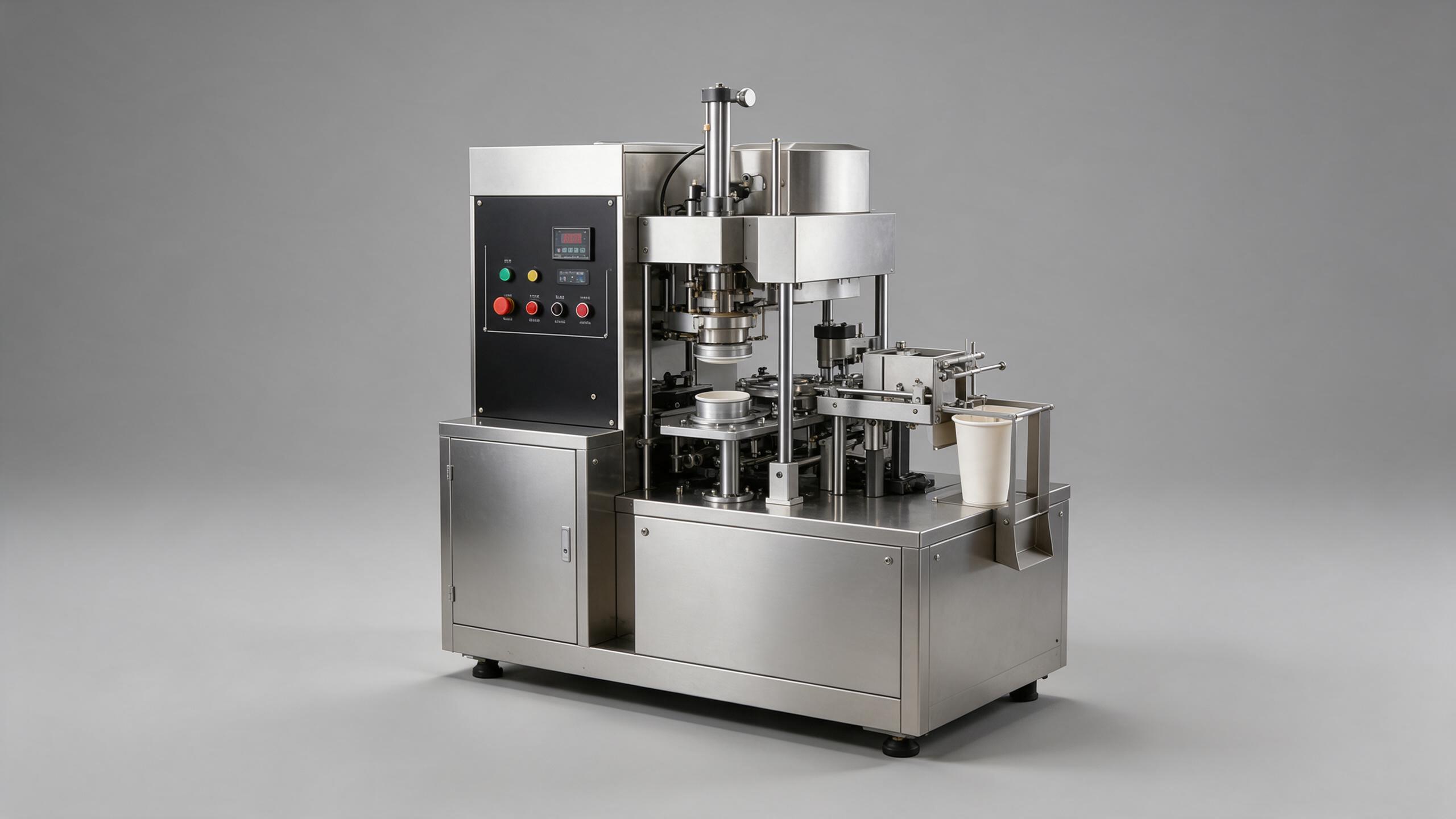
Electrical Assembly and Controls Are Part of the Build
Mechanical assembly alone does not create an operating unit. The electrical phase typically includes the control cabinet, wiring, safety devices, sensors, actuators, heating control, and operator control panel specified for the machine. A paper cup machine manufacturer should label circuits and provide documentation that lets the buyer’s team understand the normal controls, alarms, and maintenance boundaries.
It is sensible to ask how sensor signals relate to feeding, blank position, and fault notification. However, a buyer should not assume that a listed sensor or controller produces the same result under every paper condition. More accurately, the control system provides a way to monitor and coordinate the agreed process; final adjustment still depends on the cup sample, paper stock, and operating setup.
Adjustment Turns an Assembly Into a Working Process
After the main sections are installed, technicians align the stations and run the machine through controlled trials. A paper cup machine manufacturer may check blank feeding, sidewall overlap, bottom placement, heating response, seam appearance, rim curl, discharge, and alarm behavior. The sequence is iterative: an observed issue should lead to a defined adjustment, then another check under the relevant conditions.
For an OEM paper cup machine manufacturer discussion, the buyer should separate branding or specified component preferences from proven process changes. OEM work may involve agreed labeling, documentation, electrical conventions, or selected components, but each requested change needs a written scope and validation plan. For an ODM paper cup machine manufacturer discussion, the design contribution can be broader, yet cup geometry, material behavior, tooling needs, and acceptance criteria still need to be documented before the work is treated as final.
What Factory Acceptance Should Cover
Before shipment, a paper cup machine manufacturer and buyer benefit from an acceptance checklist based on the project’s own inputs. It can include the confirmed cup drawing or sample, paper and bottom-stock details, installed tooling, power requirement, operating sequence, observable cup checks, safety-device demonstration, spare-parts list, manuals, wiring information, and packing scope. If a specific production target is important, define the test conditions under which it will be assessed.
This approach makes the review more useful than an unqualified speed claim. It also creates a record of what was tested and what remains for site commissioning. A paper cup machine manufacturer should identify any conditions that cannot be reproduced at the factory, such as site air quality, local utilities, or downstream packing integration, so the buyer can plan the next verification stage.
Questions to Ask Before You Approve a Build
- Which cup sizes, blank dimensions, and paper conditions form the agreed basis for the unit?
- Which stations, tools, and adjustments relate directly to those conditions?
- What will be demonstrated during factory acceptance, and what evidence will be recorded?
- Which drawings, operating instructions, electrical documents, and spare-parts details are included?
- Which OEM or ODM requests are within the written scope, and which require a separate engineering review?
These questions let a paper cup machine manufacturer respond with concrete scope rather than broad claims. They also help purchasing and technical teams review the same project language.
A Practical Way to Evaluate the Supplier
The build process is strongest when the supplier and buyer connect requirements to inspection points. RUIDA Machinery’s stated focus includes automatic paper cup machines and servo paper cup formers, so an initial technical conversation can begin with the target cup, paper conditions, and production workflow. A paper cup machine manufacturer should then provide the configuration boundaries and acceptance details relevant to that inquiry.
In short, a paper cup machine manufacturer builds more than a collection of parts. The value of the process lies in linking the cup specification to the forming stations, controls, adjustment work, and documented factory checks. If your requirements are already defined, share the cup sample or drawing, paper details, intended output, and utility conditions so the proposed unit can be reviewed against real operating assumptions.
 ONLINE