
 EN

How to Select Machine For Paper Cup Production?
Choosing a machine for paper cup production is less about finding the highest advertised speed and more about matching a forming system to the cups, paper, staffing, and delivery promises your business actually has. A machine that looks suitable in a catalogue can become difficult to run if its tooling range, paper specification, or service plan does not fit the job. Start with the finished cup and work backward through the production process.
For procurement teams, the useful question is: can this machine make our agreed cup specification consistently at a speed we can support with material supply, inspection, and packing? That question leads to a clearer comparison than price or headline capacity alone.
1. Define the cup before you compare the machine
Your first specification sheet should list the cup’s top diameter, bottom diameter, height, capacity, rim style, and intended drink temperature. These measurements determine whether a proposed machine for paper cup production can use the required forming tooling. Include the paperboard grade, coating type, and print layout as well. Small changes in cup geometry or material behavior may affect feeding, bottom insertion, side-seam heating, and the forming setup.
If your range includes coffee cups, ask whether one platform can cover the required sizes with practical mold changes. The search phrase coffee cup banane ka machine is often used for a basic coffee-cup maker, but a procurement decision still needs the precise cup drawing and paper sample. A supplier can then discuss compatibility instead of making assumptions from volume alone.
- Specify every launch size and identify the volume expected for each.
- State whether cups are single-wall, double-wall, or intended for a later sleeve or wrapping operation.
- Provide paperboard thickness, coating details, blank shape, and printed-surface requirements.
- Separate current sizes from possible future sizes so changeover needs are visible.
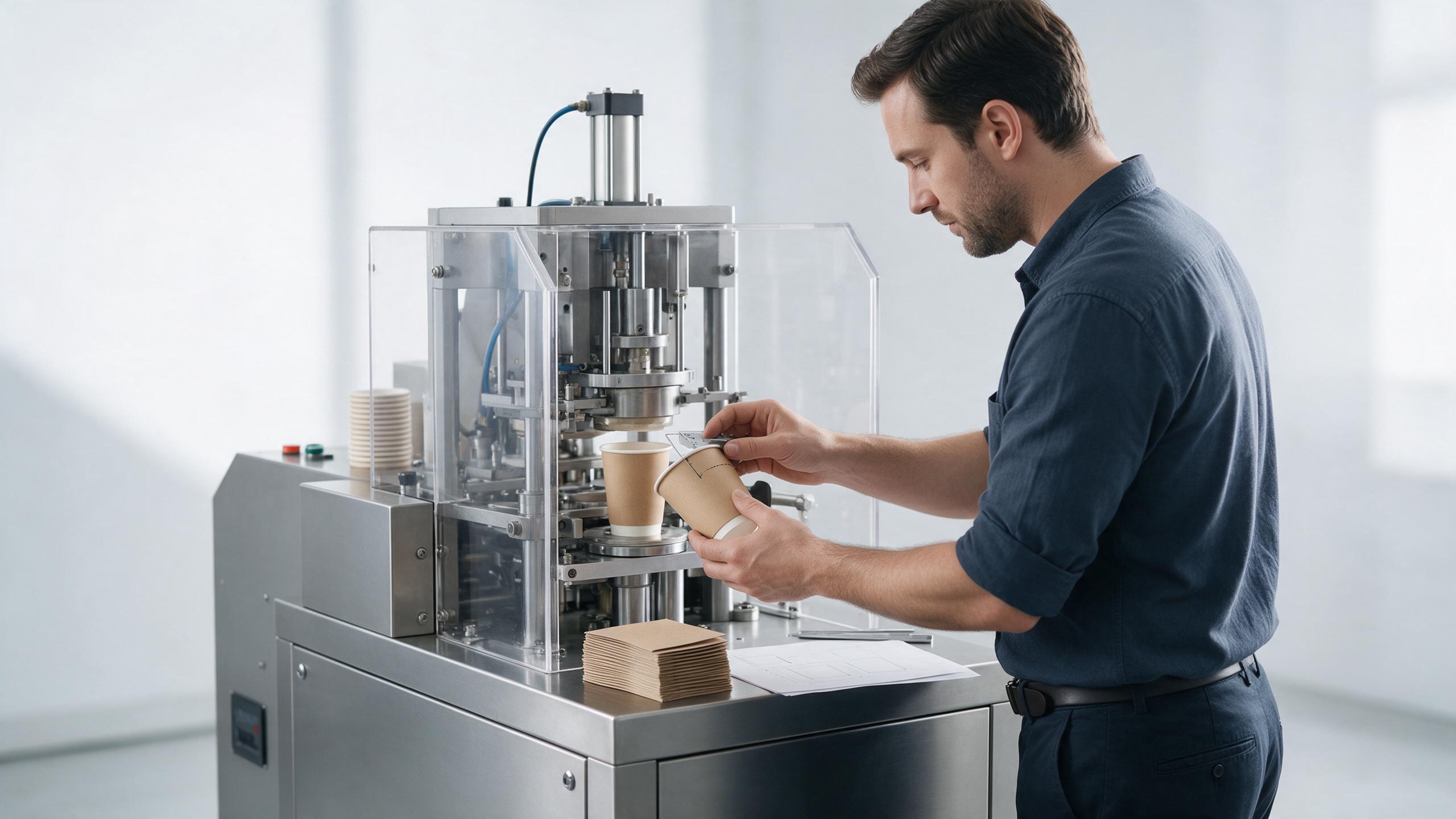
2. Translate demand into a realistic output target
A machine for paper cup production should be selected around usable output, not just nominal cycles per minute. Calculate your required cups per shift, then allow for planned breaks, setup, inspection, material replenishment, and normal operating losses. This produces an operating target that is more useful than dividing the daily requirement by the full clock time.
Ask the supplier to explain the stated rate for your cup size and paper material. Larger cups, difficult materials, and frequent changes may not run under the same conditions as a standard demonstration cup. If the project needs high output, also review whether downstream counting, packing, and carton handling can keep pace. A fast former does not improve the line if cups wait at the discharge point.
3. Check the forming process, not only the machine list
When comparing a machine for paper cup production, map the paper path from blank feeding to finished-cup discharge. Look for clear explanations of blank feeding, side-seam heating, bottom punching and insertion, knurling, rim curling, and cup ejection. The discussion should show where your paper and cup design could need adjustment.
For example, verify how operators inspect side seams and bottom seams, how rejected cups are handled, and whether the controls make it easy to record recurring defects. These details matter when a buyer must distinguish a material issue from a machine-setting issue. They also make factory acceptance discussions more specific.
4. Evaluate tooling range and changeover discipline
The most suitable machine for paper cup production for a narrow, stable product range may differ from one used for many cup sizes. If you change sizes frequently, ask for the list of change parts, the tools needed, the adjustment points, and the method used to confirm the first acceptable cup after a change. A lower headline speed may be easier to justify when it reduces interruptions and confusion between runs.
Build a simple comparison table during supplier discussions:
| Selection point | What to confirm | Why it matters |
|---|---|---|
| Cup range | Diameter, height, and available molds | Shows whether present and planned SKUs can be formed. |
| Paper compatibility | Board thickness, coating, blanks, and samples | Connects the machine setup to actual input material. |
| Operating output | Rate for your cup, expected staffing, and packing flow | Creates a usable planning figure. |
| Changeover | Parts list, setup steps, and first-off approval | Helps evaluate mixed-size production. |
| Support | Documentation, training, spares, and fault communication | Supports stable operation after installation. |
5. Ask specific questions about the drive train
The paper cup machine gear box deserves a practical inspection because it is part of how synchronized forming motion is transmitted. Do not treat the gearbox as a simple checkbox. Ask what lubrication checks are required, which inspection points are accessible, what signs warrant investigation, and which replacement parts should be included in the initial spare-parts plan.
During a visit or remote review, request a clear explanation of routine checks around the drive system, fasteners, noise, temperature observations, and lubrication intervals. The goal is not to prescribe one maintenance schedule for every design; it is to understand the supplier’s documented procedure and the support path if an issue occurs. Pair this with a wider preventive-care plan covering molds, rollers, belts, cleaning, and fault records. For a maintenance-oriented follow-up, see paper cup machine maintenance tips for longer service life.
6. Compare controls, safety, and operator workload
A machine for paper cup production should fit the skills and staffing model available on your floor. Ask how an operator sets production parameters, responds to alarms, verifies the first cups, and records adjustments. Request sample manuals, electrical documentation, and a training outline before committing. These materials reveal whether daily operation can be transferred clearly from commissioning staff to your team.
Also check guarding, emergency-stop access, cleaning access, and the space required for paper loading, cup collection, and maintenance. Layout is easy to underestimate until the machine is installed. A review of utilities, operator access, and downstream equipment should be part of the same decision, rather than an afterthought.
7. Use samples and acceptance criteria to close the gap
Before placing an order for a machine for paper cup production, agree on a trial based on your cup drawing and material sample where possible. Define what will be observed: cup dimensions, seam appearance, bottom integrity, rim quality, stability during handling, and the agreed demonstration conditions. Record the conditions alongside the result, because a cup produced on substitute material may not answer the same question.
Ask for the quotation to state what is included: tooling, commissioning scope, training, spare parts, documentation, remote support, and any optional downstream equipment. This makes comparisons fairer and gives both sides a workable handover plan.
A practical selection sequence
- Freeze the cup drawing, paper specification, and launch volumes.
- Set an operating output target with planned downtime included.
- Compare tooling range, material compatibility, drive-system access, and changeover work.
- Review operating documents, training, support, utilities, and layout requirements.
- Approve a sample or acceptance test against documented criteria.
The right machine for paper cup production is the one that matches the cups you intend to sell and the production system you can sustain. A structured request for specifications, samples, and acceptance conditions turns a broad equipment search into an informed purchasing decision.
 ONLINE