
 EN

What Makes a Good Paper Cup Machine Manufacturer?
Choosing a paper cup machine manufacturer is not simply a comparison of catalog speed or initial price. Start the supplier conversation with the cups you plan to make, the paper stock you expect to run, and the production rhythm your team can support. From a packaging-equipment selection perspective, those conditions should shape the configuration discussion before anyone promises an output figure.
A capable paper cup machine manufacturer helps turn a broad request into testable questions. That matters whether you are sourcing an automatic former for a single cup format or reviewing a wider project involving printed blanks, several sizes, and future changeovers. The aim is not to find a universal machine; it is to establish whether a manufacturer can explain fit, limits, and the evidence needed before purchase.
Start with the application, not the brochure
Before approaching a paper cup machine manufacturer, make a short production brief. Include cup volume and profile, rim and bottom requirements, paper grade and coating, artwork or blank-supply method, target operating schedule, and expected changeover frequency. A manufacturer can only assess a proposal properly when these inputs are clear. If the paper material or cup shape is still undecided, treat any configuration recommendation as provisional.
This is particularly important when an inquiry uses a broad phrase such as cup plate banane wala machine. That wording can cover different paper-container applications. Ask the supplier to distinguish the intended product, tooling scope, and material route rather than assuming that one machine arrangement serves every cup or plate format.
Look for a paper cup machine manufacturer that asks useful questions
A good paper cup machine manufacturer does more than send a quotation. It asks how the cup will be used, which dimensions are critical, what paper stock is planned, and how output will be measured. Those questions show that the supplier is checking the connection between forming conditions and the finished cup.
- Which cup sizes and shapes are included in the proposed scope?
- What paper specifications, coatings, and blank tolerances should be confirmed?
- What parts or adjustments are involved when formats change?
- Which operating conditions must be agreed before an output expectation is discussed?
- What information will be recorded during factory acceptance?
Questions alone do not establish capability, but they turn the evaluation into something concrete. A paper cup machine manufacturer should be able to explain which answers affect tooling, feeding, heating, forming, inspection, collection, and operator routines. If every reply remains general, request a clearer written scope.
Evaluate configuration fit instead of headline speed
Speed is relevant, but it is only one part of a productive process. A paper cup machine manufacturer should describe the operating assumptions behind a quoted rate: cup format, paper condition, tooling, staffing, changeover pattern, and acceptance method. More accurately, the question is not “What is the fastest machine?” but “Under our agreed conditions, what can the proposed configuration be evaluated to do?”
Compare how each paper cup machine manufacturer handles material feed, forming stages, control visibility, fault indication, finished-cup collection, and format changes. The right priorities vary by project. A business making one stable cup format may value repeatable daily routines, while a producer with frequent specification changes may need a more detailed changeover plan. Put those priorities in the same comparison sheet as the equipment scope.
Ask for a defined acceptance plan
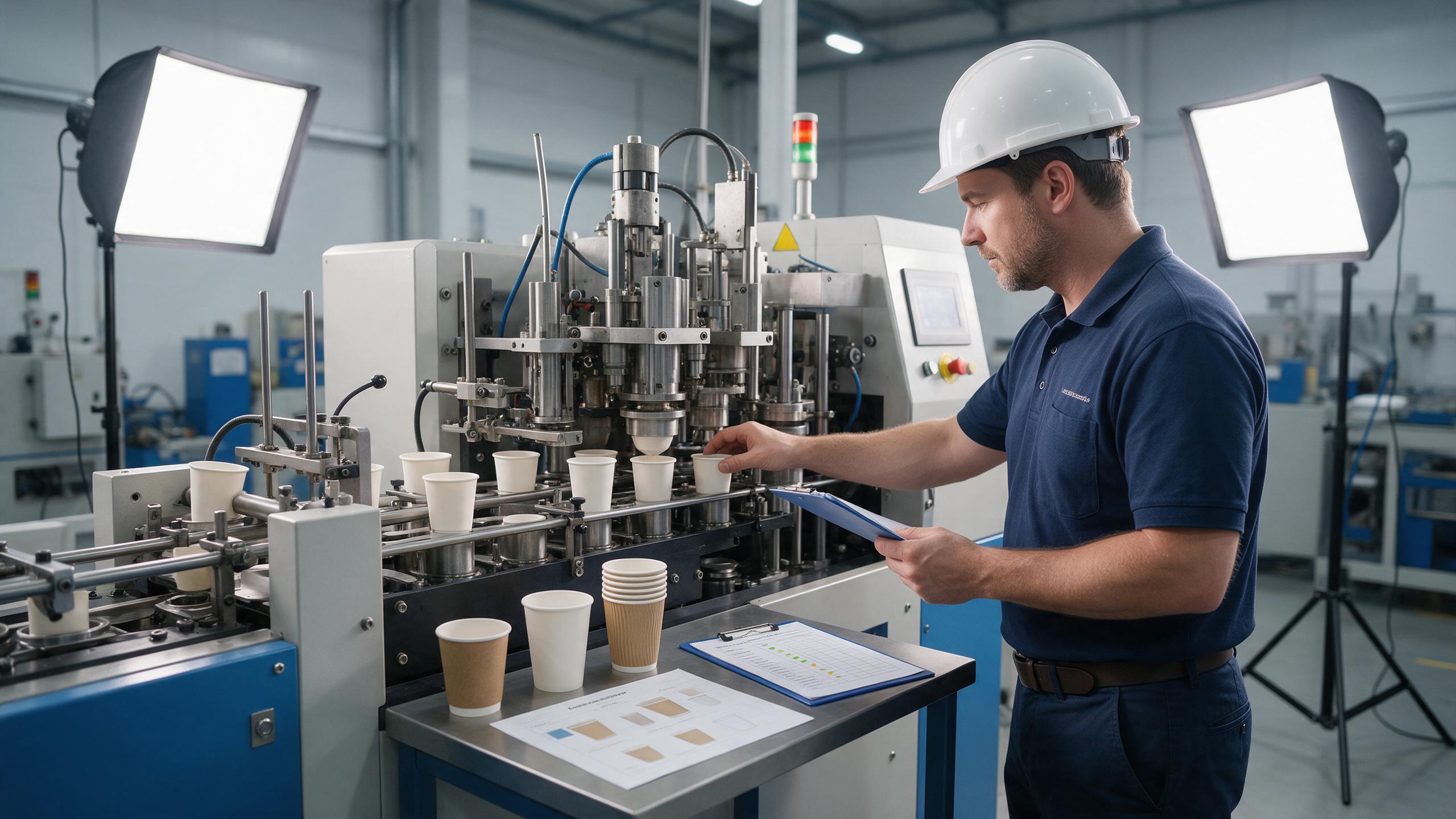
Acceptance is where manufacturer statements become observable. Ask each paper cup machine manufacturer to outline the proposed factory-acceptance conditions before you place an order. The document does not need to make sweeping promises. It should state the cup sample, paper material, tooling, checks, responsibilities, records, and any items that require confirmation at installation.
A practical acceptance discussion may cover sample dimensions, visual forming checks, operating observations, training arrangements, and the treatment of deviations. The scope should also say what happens when customer-supplied materials differ from those used for a trial. That keeps an early discussion from being mistaken for a final specification.
Judge support as part of the machine purchase
A paper cup machine manufacturer is also a long-term communication partner. Before signing, ask who will support commissioning, which documents are supplied, how spare parts are identified, and what information the service team needs when a problem occurs. A quotation that looks attractive can be difficult to assess if the boundaries of technical support and replacement parts are vague.
For a commercial paper cup machine manufacturer, it is sensible to ask how the supplier organizes handover between sales, engineering, assembly, and service. You do not need to demand a claim of zero downtime; instead, request a realistic escalation route, a recommended spares list, and a clear way to document machine serial details and approved settings. Those details help future conversations stay traceable.
Check manufacturing communication and documentation
When comparing a paper cup machine manufacturer, pay attention to the quality of written communication. Are configuration changes confirmed in writing? Are drawings, utility requirements, manuals, packing details, and inspection records discussed at the right stage? A supplier that keeps requirements visible is often easier to work with when questions arise across technical and purchasing teams.
For a commercial paper cup machine manufacturer, documentation is especially useful when equipment will cross borders or be handed to a different operating team. Confirm the language and scope of manuals, the list of supplied accessories, electrical and utility assumptions, packaging responsibilities, and the evidence expected at shipment. Each item may need to be adapted to the project, so treat the list as a review tool rather than an automatic inclusion.
Compare total operating considerations, not just initial cost
The lowest initial proposal is not automatically the most suitable. Ask every paper cup machine manufacturer to make the quoted scope explicit: included tooling, commissioning assumptions, training, spare parts, documentation, and support boundaries. Then compare the likely effort associated with changeovers, routine checks, parts planning, and operator learning.
This approach does not require invented savings figures. It simply prevents a buyer from comparing different scopes as if they were identical. A paper cup machine manufacturer that can identify exclusions and dependencies gives your team a more reliable basis for internal approval.
A final manufacturer review checklist
- Share a complete cup, material, and production brief with each paper cup machine manufacturer.
- Request a written configuration scope and note what remains to be confirmed.
- Ask how material and cup-format conditions affect the proposed arrangement.
- Agree factory-acceptance samples, observations, records, and responsibilities.
- Clarify installation, training, documentation, spare-parts, and service processes.
- Compare proposals by operating fit and lifecycle support, not only the stated price.
A good paper cup machine manufacturer makes the buying process easier to verify. If your project details are clear, you can move from broad supplier claims to a structured discussion about configuration, acceptance, and support. That is a more useful foundation for selecting a machine partner that fits your paper-cup production plan.
 ONLINE