
 EN

Machine For Paper Cup Production Features
Choosing a machine for paper cup production is easier when the discussion starts with the cup you plan to make, not with a headline speed figure. A practical review connects cup diameter, height, rim style, paper stock, coating, print requirements, production rhythm, and downstream packing. From a packaging-equipment selection perspective, those details determine which features deserve attention and which questions should be clarified before a quotation is compared.
Start with the finished cup and production target
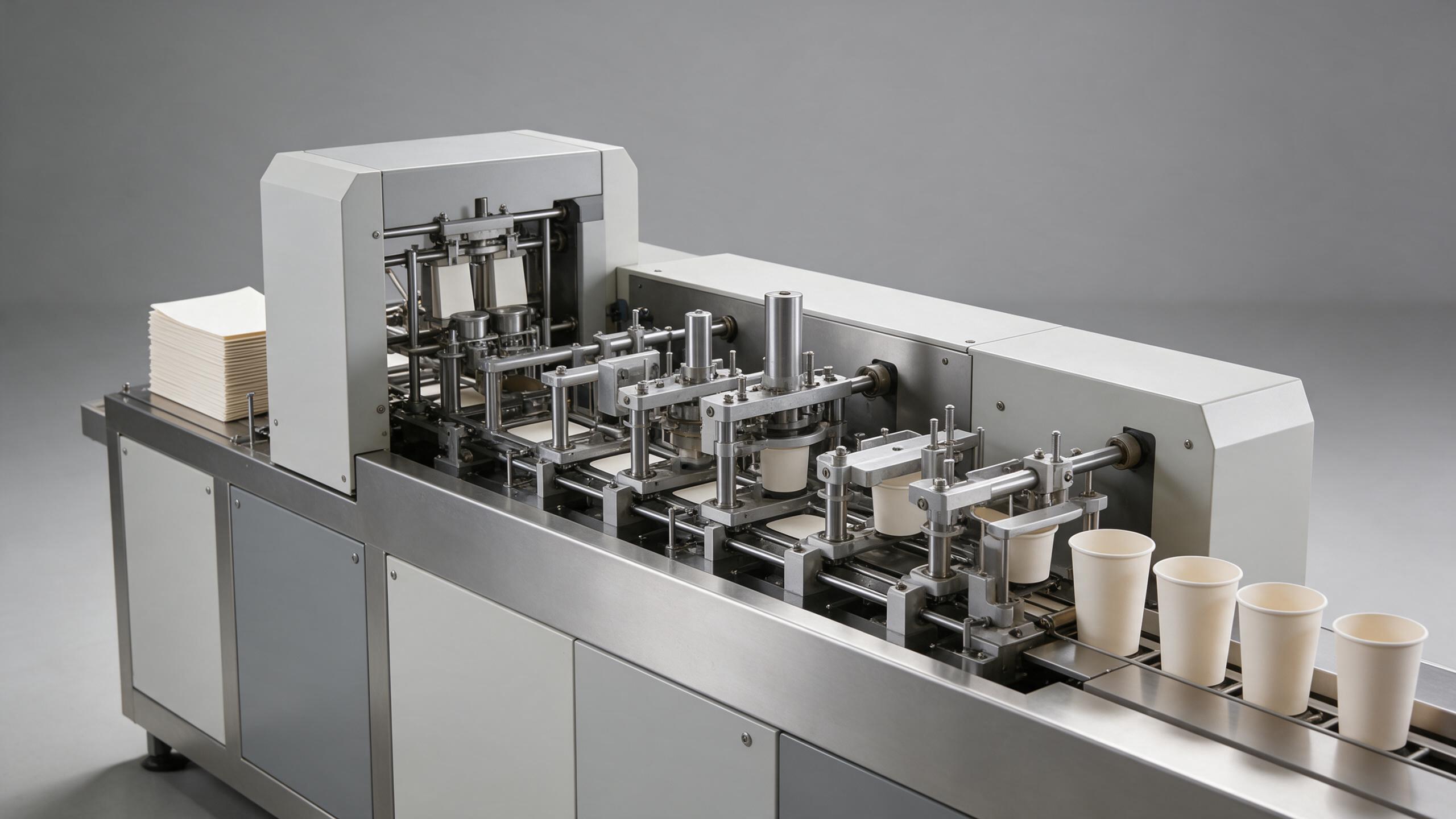
A machine for paper cup production converts prepared cup blanks into formed containers through a sequence of feeding, forming, heating or sealing, bottom forming, rim finishing, discharge, and collection steps. The exact arrangement varies by equipment design and cup format. Before assessing a machine for paper cup production, document the intended cup sizes, wall-paper construction, coating type, beverage temperature, artwork needs, planned shifts, and expected changeover frequency.
This brief prevents a common mismatch: choosing a machine for paper cup production that is suitable for a stable, single-format run when the actual business needs frequent format changes. Ask whether tooling changes, adjustments, and trial procedures are clearly defined for each cup family. If paper stock and cup style have already been confirmed, that question is usually more useful than a generic comparison of output.
Core features to review on a cup-forming line
Blank handling and registration
For any cup-forming line, blank feeding should be reviewed together with blank quality and storage conditions. Buyers should ask how the feed section handles consistent separation and whether the supplier’s test process uses representative blanks. Registration matters when printed graphics, side-seam overlap, or a particular cup orientation must remain consistent. It is not just a cosmetic detail: unstable feeding can create waste and interruptions upstream of later stations.
Forming, heating, and sealing control
The forming section is where a machine for paper cup production must work with the selected paper and coating system. Instead of assuming one setting fits all materials, confirm the process controls available for the intended stock and request a sample trial using your own blank specification when possible. Material behavior, tooling condition, process settings, and operator practice all influence seam consistency. More precisely, not every sealing issue comes from the equipment; paper quality and preparation also need checking.
The related term paper cup sealing should therefore be treated as a process checkpoint rather than an isolated add-on. Define what your inspection will cover: side seam appearance, bottom attachment, rim quality, leakage checks appropriate to the cup application, and reject handling. Destination-market rules must also be considered separately. For example, U.S. food-contact paper and paperboard requirements include 21 CFR 176.170 under stated conditions, but material documentation and the finished-cup application still need confirmation for the target market.
Bottom forming, rim finishing, and discharge
The forming line should be evaluated as a sequence, not a single station. Bottom forming and rim finishing affect the final geometry and user experience, while discharge and collection affect how smoothly cups move into counting, packing, or inspection. Review access for cleaning, routine checks, and removal of damaged cups. Ask the supplier to explain the normal operating sequence, alarm logic, and what happens when a cup is not transferred as expected.
Do not confuse cup forming with downstream sealing
Some projects also require lids, film sealing, or takeaway-beverage packing after cup manufacture. A paper glass sealing machine may be relevant to that downstream task, but it is not a substitute for the forming equipment. Treat this downstream equipment as a separate handoff decision: cup dimensions, rim profile, line pace, film or lid format, and handoff method need to be compatible with the output of the machine for paper cup production.
This distinction helps the team set realistic scope. The machine for paper cup production makes the cup; a paper glass sealing machine supports a later sealing or serving operation where applicable. When both are in the project, map the transfer point, accumulation needs, operator roles, and quality checks between them. That is more useful than treating every machine with “sealing” in its name as part of the same process.
Features that support everyday operation
When comparing a machine for paper cup production, include operating features that affect the shift rather than only the brochure headline. Useful discussion points include access for cleaning and routine maintenance, visibility of key operating conditions, fault messages that help staff find the relevant station, safe access around moving parts, and a clear list of wear parts. Before comparing speed, write the format-change requirement down; it makes the evaluation more dependable.
- Format flexibility: Which cup geometries can be considered, and what tooling or setup work is needed?
- Process verification: How will samples be assessed for the selected paper, coating, and paper cup sealing requirements?
- Maintenance planning: Which parts require routine inspection, and what support information is supplied?
- Acceptance definition: What material, cup type, trial conditions, and quality criteria will be used before shipment?
A machine for paper cup production should also fit the communication plan around installation, training, spare parts, and service boundaries. For cross-border projects, confirm documentation, electrical requirements, installation support, and responsibilities at the destination early. Do not compare only the purchase price; the scope of support and the ability to plan consumables can affect the later operating decision.
A practical feature-review checklist
Use the following sequence when narrowing a machine for paper cup production:
- Define cup sizes, intended use, paper specification, coating, and artwork requirements.
- Set the production rhythm, planned shifts, and realistic changeover expectations.
- Ask how the proposed machine for paper cup production will be trialed with representative blanks.
- Agree on inspection points for forming, rim quality, bottom attachment, and paper cup sealing.
- Separate cup-forming scope from any downstream paper glass sealing machine, packing, or counting scope.
- Write acceptance criteria, training, parts, and support expectations into the technical discussion.
Make features comparable before selecting a machine
The right machine for paper cup production is the one whose process features match your cup specification, production plan, and operating resources. A structured comparison avoids choosing on a single speed claim or an incomplete equipment list. First confirm the application, then review cup geometry and paper stock, and finally compare the configuration and support scope. For a project-specific recommendation, prepare representative blanks, target cup details, anticipated output, and the quality checks your team will use during a trial.
 ONLINE