
 EN

Machine For Paper Cup Production Applications
Paper-cup forming equipment should be selected from the application backward, not from a headline speed figure forward. A small hot-drink cup, a larger cold-drink cup, and a branded food-service cup may share the same broad forming process, yet their blank layout, paper specification, bottom shape, handling method, and changeover needs can differ. From a packaging-equipment selection perspective, the practical first step is to define the cup and material conditions, then compare the configuration that can be verified for those conditions.
This matters because the cup-forming system is part of a workflow rather than an isolated purchase. The workflow can include blank preparation, printing, die cutting, forming, inspection, packing, and material handling. If the target product or market has food-contact requirements, the buyer should also confirm the applicable material and documentation requirements for that destination before treating a general machine description as a project approval.
Start with the intended paper cup application
The application defines what the selected former must repeatedly form and handle. Put the following items into the inquiry brief before asking for a quotation:
- Cup format: rim diameter, height, bottom shape, single-wall or another construction, and the planned range of formats.
- Paper and coating: the paperboard grade, coating or barrier system, blank stiffness, and the information the material supplier can provide.
- End use: hot beverage, cold beverage, sampling, food service, or another defined use case.
- Production pattern: one stable SKU or frequent format changes, planned shifts, expected reject handling, and packing method.
That list makes the discussion more useful than simply asking whether a fully automatic machine for paper cup production is available. Automation can reduce manual steps in a defined workflow, but its value depends on how the feeder, forming sequence, collection arrangement, and change parts fit the planned cup program. If paper and cup geometry are already confirmed, a configuration conversation has a much firmer basis.
Where forming equipment fits in the production flow
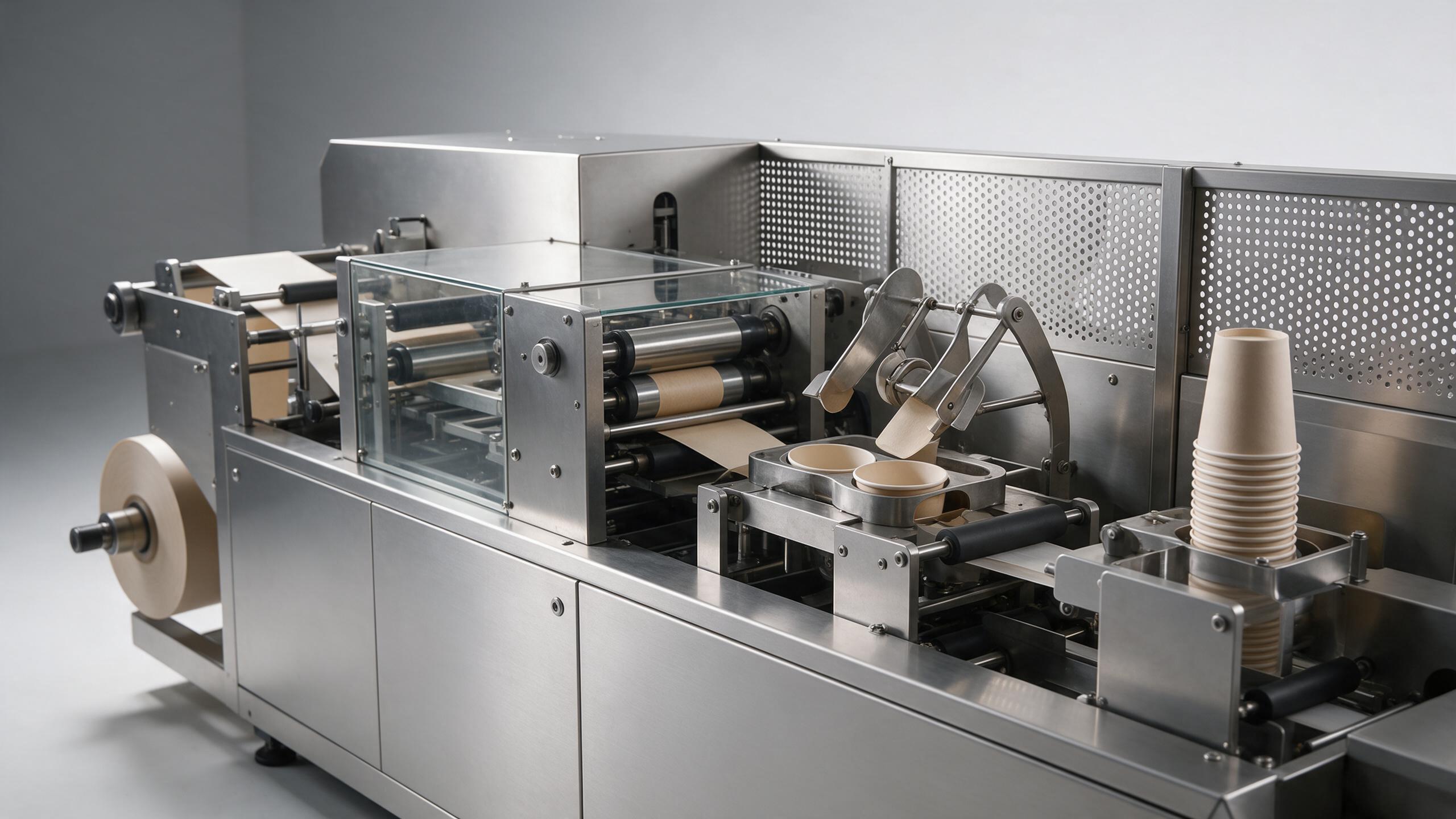
A typical paper-cup operation begins with converted blanks and ends with packed cups. The forming section receives suitable blanks, creates the cup body, joins and finishes the base, and sends formed cups to the next handling point. The exact sequence and options need supplier confirmation, but the selection logic remains consistent: a machine for paper cup production must match the incoming blank, the required cup shape, and the way finished cups leave the machine.
For branded work, flexographic printing equipment can be an upstream part of the line. General industry process descriptions commonly place flexographic printing before blank cutting and cup forming when graphics are printed on the paper web. That does not mean every project requires integrated printing. It means the team should decide whether blanks will arrive preprinted from an outside converter or whether flexographic printing equipment belongs in the planned production flow. Registration, color control, drying, web handling, and die-cut blank quality should be discussed with the relevant equipment supplier rather than assumed from the cup former alone.
Match the machine configuration to operating conditions
Once the product brief is clear, compare a machine for paper cup production against the conditions it will see every day. This is where technical discussions become more useful than broad automation labels.
Material path and forming stability
Ask how the proposed machine for paper cup production is intended to process the stated blank and paper conditions. The review should cover feeding, blank orientation, body forming, bottom insertion, heating or sealing method where applicable, rim treatment, cup discharge, and access for routine checks. It is reasonable to ask for a demonstration or acceptance plan using representative materials; a general capacity statement alone does not establish compatibility with every paperboard and coating combination.
Changeover and format planning
For a producer with several cup formats, the relevant question is not only whether the proposed equipment can make each format. Confirm which change parts are involved, what settings are documented, who performs the changeover, how first-off cups are checked, and what information is needed before the project begins. A line with a narrower but well-defined format plan may be easier to validate than a broad claim with no tooling discussion.
Output, inspection, and packing handoff
Output should be evaluated as an operating target under stated conditions, not as a standalone number. Review how the equipment hands cups to inspection, counting, sleeving, bagging, or carton packing. Define what is inspected, how rejects are separated, and who records the acceptance result. This turns an advertised rate into a project-specific discussion about usable output and the next process step.
When a fully automatic machine is the right discussion
A fully automatic machine for paper cup production is most relevant when the buyer has a stable enough process to define material supply, cup formats, downstream handling, operator responsibilities, and maintenance access. In that situation, ask how automatic feeding, forming, discharge, and fault indication interact with the actual line. A fully automatic machine for paper cup production still needs planned cleaning, inspection, change parts, trained operators, and a documented response when cup quality moves outside the agreed sample standard.
For an early-stage project, it can be more practical to build a phased acceptance plan than to demand a single sweeping promise. Confirm the cup drawing, blank sample, paper specification, artwork ownership where printing is involved, utility conditions, commissioning scope, spare-parts list, and training expectations. This approach keeps a machine for paper cup production evaluation anchored to evidence that both parties can check.
Questions to ask about flexographic printing equipment
If printed branding is part of the application, review flexographic printing equipment as a linked process, not an afterthought. The key questions are:
- Will the production plan use preprinted blanks or an in-house printed web?
- What substrate, coating, inks, and drying conditions are planned, and who confirms their compatibility?
- How will print registration and die-cut alignment be checked before blanks reach the cup former?
- What quality samples and documentation will be used for approval?
These questions help reduce the chance of a gap between print appearance and forming performance. They also clarify whether flexographic printing equipment is a separate investment, an upstream partner process, or not required for the first production phase.
A practical evaluation checklist
Before finalizing a cup-forming solution, prepare a single requirements sheet covering cup drawings, paper and coating details, target formats, blank source, printing path, utility conditions, quality criteria, output assumptions, changeover needs, packing handoff, service expectations, and acceptance samples. Then ask the supplier to identify which points are confirmed, which require testing, and which remain project-specific.
That discipline is useful for both a basic former and a fully automatic machine for paper cup production. It replaces generic comparisons with a transparent way to connect the paper cup application to material handling, forming conditions, printing coordination, and acceptance evidence. The right decision is the configuration that can be verified for the cup program you actually intend to run.
 ONLINE