
 EN

How to Choose Paper Cup Forming Machine?
Choosing a paper cup forming machine is less about finding the highest headline speed and more about matching a forming process to your cups, paper stock, operators, and production plan. From a packaging-equipment adviser’s viewpoint, start with the cup you must make, then verify the machine configuration. That order prevents a familiar mistake: comparing quotations before confirming whether the proposed machine can handle the intended cup geometry and material.
A paper cup line turns prepared blanks into finished cups through feeding, side-seam forming, bottom insertion, heating or sealing, knurling, curling, and collection. The exact sequence and available options vary by model. Therefore, the equipment should be evaluated against your specific samples and acceptance criteria, not against a generic specification sheet.
1. Begin With the Finished Cup, Not the Machine Catalog
Before requesting a quotation, prepare a concise cup brief. Include volume, top and bottom diameters, height, rim style, intended beverage or food use, printing layout, coating type, and expected output by shift. If you plan to make more than one size, state how often you will change formats. A supplier can then discuss whether one machine configuration and the related molds are a practical fit.
- Cup geometry: A tall cup, a wide bowl-like cup, and a standard beverage cup can place different demands on forming and collection.
- Paper stock: Confirm the grade, coating system, stiffness, and actual thickness range with sample blanks. Paper behavior affects feeding, side seams, bottom sealing, and curl quality.
- Application: Hot drinks, cold drinks, and food containers may need different material and sealing verification. Do not assume a paper cup forming machine is suitable until the intended stock and cup construction are reviewed.
As a market illustration only, individual suppliers may list very different cup-size and coated-paper ranges. Those figures are model-specific, which is exactly why your actual blank and finished-cup drawing should be part of the discussion.
2. Match Output Expectations to the Real Production Rhythm
Production speed is important, but the former should be assessed at stable, acceptable output rather than at a single maximum figure. Ask what conditions are assumed for the stated rate: cup size, paper stock, operator involvement, material preparation, and test duration. A line that is fast on one straightforward cup may need a different setup for another format.
Compare the entire rhythm: blank supply, cup discharge, inspection, packing, and planned changeovers. If operators must frequently stop the machine to adjust feeding or clear cups, the practical output may differ from the catalog number. Ask the supplier to explain the expected changeover steps, which settings are recorded, and what training is needed before your team can run routine sizes consistently.
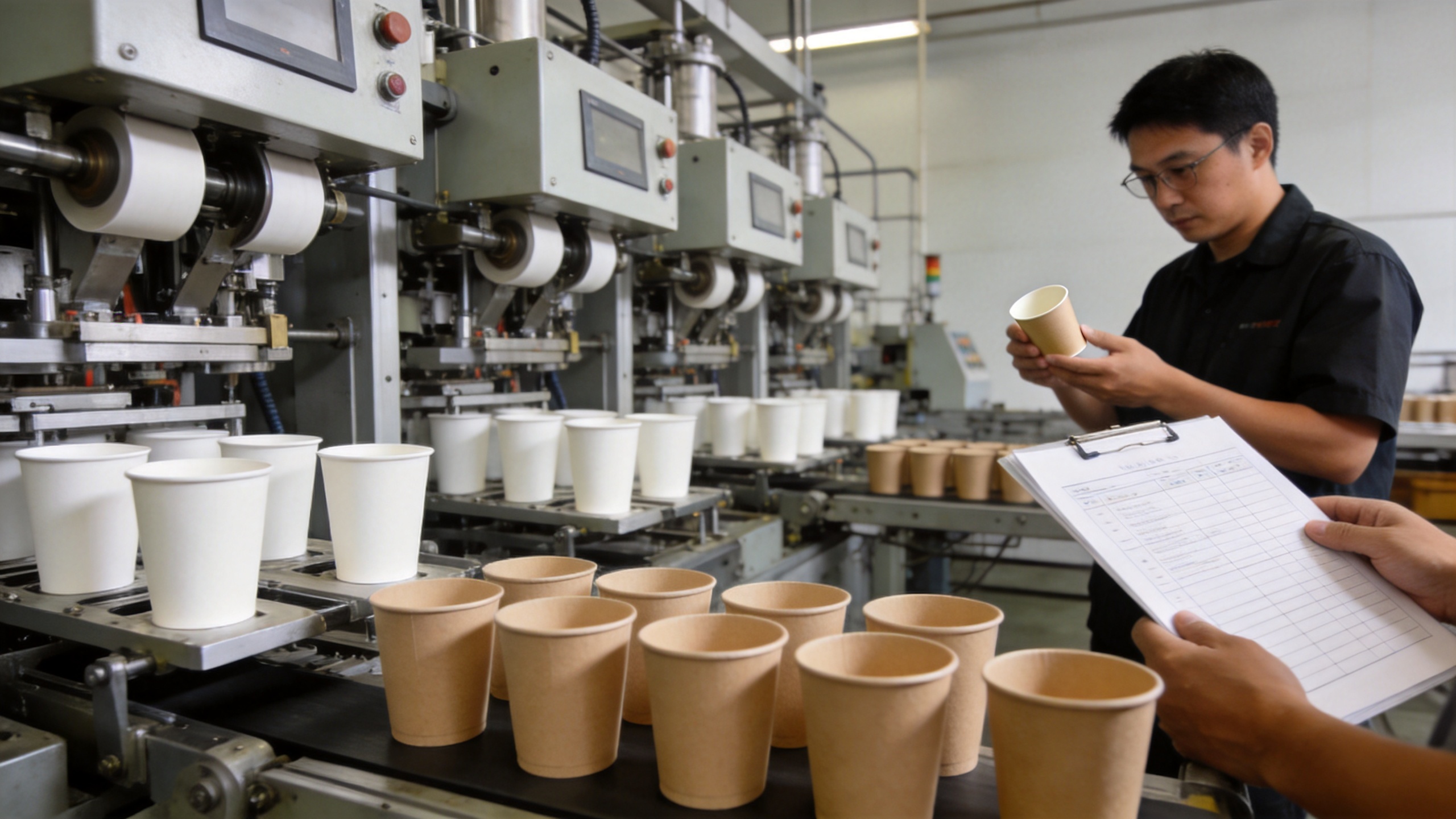
3. Understand Drive Design and the Open-Cam Question
An open cam paper cup forming machine is often considered by buyers who want to examine how motion is transmitted and how accessible the mechanism is during maintenance. The label alone is not a guarantee of accuracy, speed, or easy servicing. Instead, ask what the cam controls, how components are lubricated, which wear points require inspection, and how the design fits your maintenance capability.
When comparing a forming system, request a clear explanation of the drive arrangement, synchronization points, guarding, lubrication schedule, and recommended spare parts. For an open cam paper cup forming machine, also ask to see the access points and the procedure for checking adjustment after routine maintenance. This turns a design term into a usable purchasing question.
4. Inspect Forming Quality Where It Matters
A reliable way to judge the equipment is to define what an acceptable cup looks like before the trial. Review side-seam appearance, bottom sealing, knurling, rim curl, cup roundness, stackability, and collection stability. If your project has leak testing or visual-inspection requirements, describe them early and agree on the test method.
Paper cup pleating equipment deserves separate attention when cup design or material behavior can create folds, wrinkles, or inconsistent appearance. Rather than assuming that every system handles pleating the same way, provide the cup drawing and paper sample. Ask which forming stations influence pleat control, what sample evidence can be reviewed, and whether the proposed configuration has been assessed for your cup style.
Useful acceptance questions include:
- Which cup sample, paper stock, and coating will be used for the trial?
- What defects will be checked, and how will the result be recorded?
- Can the supplier explain the relationship between the forming stations and paper cup pleating equipment performance?
- What changes are needed for a second cup size or a different material batch?
5. Compare the Scope Around the Machine
A thoughtful paper cup forming machine comparison includes more than the base machine. Clarify utilities, installation space, electrical requirements, air supply, tooling, commissioning support, manuals, recommended spares, and remote-service boundaries. For export projects, confirm the documents required for the destination and agree on responsibilities before shipment.
ZheJiang RUIDA Machinery focuses on paper cup and food-packaging equipment, including automatic paper cup machines and servo paper cup formers. A productive inquiry is one that supplies the cup sample, material details, expected production rhythm, and target market requirements. This gives both sides a workable basis for discussing an appropriate paper cup forming machine configuration without making assumptions.
6. Use This Short Pre-Quote Checklist
| Check | What to provide or ask |
|---|---|
| Product brief | Share cup drawing, size range, use case, print layout, and finished sample if available. |
| Material proof | Confirm paper grade, coating, thickness range, and representative blanks for testing. |
| Configuration | Ask how the proposed forming system and tooling address your cup formats and changeovers. |
| Quality trial | Set criteria for seams, bottoms, rims, pleats, appearance, and collection before acceptance. |
| Service plan | Review training, inspection intervals, wear parts, installation support, and communication route. |
Final Decision: Choose for Verified Fit
Choose the equipment after your cup specification, materials, expected output, drive-design questions, and acceptance checks point to the same configuration. An open cam paper cup forming machine may be worth evaluating when its accessibility and maintenance approach fit your team; paper cup pleating equipment should be verified against the actual cup design rather than treated as a generic feature. Bring samples and questions to the technical discussion, verify the proposed scope, and make the decision on demonstrated fit—not on speed or price alone.
 ONLINE