
 EN

Profile of Trusted Paper Machine Suppliers
Choosing among paper machine suppliers is not just a price-comparison exercise. For a converter producing paper cups or related food-packaging formats, the practical question is whether a supplier can turn your cup size, paper specification, output target, and delivery requirements into a testable machine proposal. A credible review starts with the production need and then checks the evidence behind every claim.
From a B2B purchasing perspective, dependable paper machine suppliers make it easier to compare configuration, documentation, commissioning support, and long-term service conditions on the same basis. This profile explains what to examine before an RFQ becomes a purchase order.
What trusted paper machine suppliers should clarify first
Reliable paper machine suppliers ask focused questions before recommending a model. For paper-container work, those questions normally cover the intended cup or container format, paper material, coating or print requirements, expected production rhythm, utilities, destination market, and operator experience. That sequence matters: a machine that looks suitable in a catalog may still require a different tooling, heating, control, or collection arrangement for a specific job.
Buyers should therefore ask paper machine suppliers to put assumptions in writing. A useful proposal distinguishes confirmed requirements from items that still need trial material, drawings, or mutual approval. This is more valuable than a broad promise of compatibility because it gives both teams a clear list of what must be verified.
Compare supplier roles before comparing quotations
The term paper machine suppliers can describe a manufacturer, an export company, a regional reseller, or an engineering partner. Each role can be useful, but the buyer should know who owns design confirmation, manufacturing control, spare-parts supply, and the response if commissioning questions arise. Do not assume that a distributor has the same factory access or technical responsibility as the original builder.
When evaluating paper container machine distributors, ask which factory makes the equipment, who will issue technical drawings, and whether the distributor can coordinate service and parts after shipment. A distributor may offer local communication or logistics value; those strengths should be compared alongside, not instead of, the production responsibility of the factory.
The same care applies to ODM paper machine suppliers. ODM collaboration can be appropriate when a buyer needs a tailored format, branding, or process arrangement. The key is to define ownership of tooling, change control, test criteria, documentation, and future spare parts before custom work begins. Trusted paper machine suppliers should be comfortable documenting those boundaries.
Build a capability matrix for paper machine suppliers
Rather than ranking paper machine suppliers by a single headline specification, use a capability matrix. Put the same questions to each candidate so that differences become visible:
- Application fit: Which paper-container formats and material conditions are explicitly included in the proposal?
- Configuration: Which tooling, controls, heating, printing, or collection elements are included, optional, or excluded?
- Evidence: What drawings, inspection records, manuals, certificates, and test records can be reviewed before shipment?
- Delivery scope: Who manages packing, installation guidance, commissioning support, training, and open issues?
- Lifecycle support: How are recommended spares, consumables, troubleshooting channels, and lead times handled?
This matrix helps procurement and technical teams review paper machine suppliers together. It also prevents a low initial quotation from masking missing scope that could later become an avoidable delay.
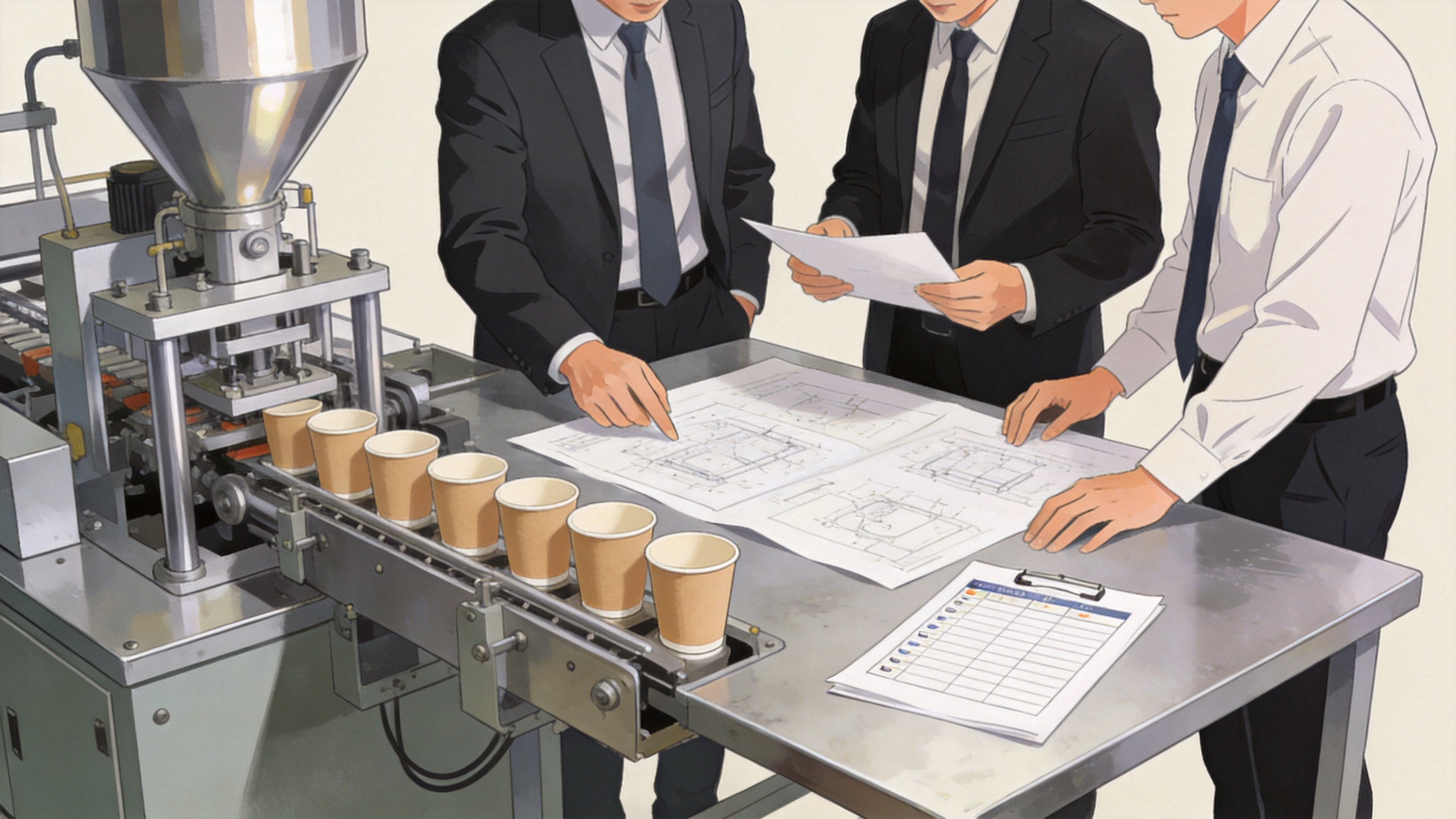
Verify documents without treating them as automatic proof
Certification language deserves careful reading. For example, ZheJiang RUIDA Machinery presents its packaging-machinery business as CE-certified and ISO9001-compliant and identifies automatic paper cup machines, servo paper cup formers, and flexographic printing presses within its offering. Buyers should still ask paper machine suppliers for the documentation relevant to the quoted equipment, applicable destination requirements, and the final contracted configuration.
CE-related documentation and quality-system certificates can be useful review inputs, but they do not replace application-specific verification. Ask what document applies to which machine, what scope it covers, and whether any country-specific requirements remain with the buyer or importer. Good paper machine suppliers explain these limits plainly rather than using a certificate as a blanket performance promise.
Make factory acceptance testing part of supplier selection
A factory acceptance test is one of the clearest ways to compare paper machine suppliers before shipment. The test plan should be agreed early, not drafted after the final payment discussion. It can identify the agreed configuration, trial material, paper-container quality checks, operating functions, required documents, and any open actions that must be closed.
For an overseas project, ask paper machine suppliers whether the buyer can review test evidence remotely, attend in person, or receive a documented result against the signed checklist. Define what happens if the agreed material or format is unavailable, because that condition can affect how meaningful the trial will be. The aim is not to demand an unrealistic guarantee; it is to create a shared, observable basis for acceptance.
Assess service readiness and total ownership conditions
Many purchasing teams begin with speed or machine price. In practice, strong paper machine suppliers also help clarify changeover demands, maintenance access, recommended spare parts, electrical support, and escalation contacts. In many cases, a machine issue can also involve paper material, tooling condition, settings, or operator practice, so each factor deserves review.
Ask each candidate how it handles troubleshooting, what information it needs to diagnose an issue, and which parts should be planned for before startup. Comparing these answers gives buyers a more realistic picture of total ownership conditions than comparing a brochure alone. If your project will rely on a distributor, confirm how that distributor coordinates with the factory when technical escalation is required.
A practical shortlist checklist
- Describe the target container, paper material, production goal, and market requirements in one RFQ brief.
- Ask the same technical and service questions of all shortlisted paper machine suppliers.
- Separate confirmed scope from assumptions, options, and exclusions.
- Review the manufacturer/distributor/ODM role and the accountable party for each deliverable.
- Agree a factory acceptance checklist, test material, records, and closure process before shipment.
- Confirm documentation, installation support, parts planning, and post-sale communication channels.
Why a structured review creates a stronger partnership
Trusted paper machine suppliers do not need to claim that one configuration fits every plant. They should help a buyer identify the conditions that matter, make trade-offs visible, and agree how fit will be verified. For projects involving paper-container machinery, the most useful conversation moves from a generic machine comparison to a documented production-and-support plan.
ZheJiang RUIDA Machinery serves food-packaging equipment needs with automatic paper cup machines, servo paper cup formers, and flexographic printing presses. Its stated focus on CE-certified, ISO9001-compliant packaging machinery and more than 24 years of experience provides a starting point for discussion; the next step is to share your format, material, output, and acceptance requirements for confirmation. When buyers use this evidence-led approach, paper machine suppliers, paper container machine distributors, and ODM paper machine suppliers can be assessed on the terms that matter to the actual project.
 ONLINE