
 EN

What Is a Paper Cup Forming Machine?
This industrial cup-forming equipment converts prepared cup-wall blanks and bottom discs into finished paper cups. Rather than simply rolling paper into a tube, the machine coordinates feeding, side-seam joining, bottom insertion, knurling, rim curling, and discharge. For a buyer, understanding that sequence matters: the right paper cup forming machine must fit the cup design, paper structure, expected operating rhythm, and maintenance capability.
From a packaging-equipment advisor’s perspective, it helps to think of a paper cup forming machine as a linked series of forming stations. A good result depends on the interaction among those stations, the prepared blanks, and the operating setup—not on one headline speed figure alone.
What does a paper cup forming machine do?
The basic job of this equipment is to turn die-cut cup components into a stable, usable container. The wall blank is picked up and wrapped into a cone or cylinder. Its overlap becomes the side seam. A bottom disc is then placed into the open body, formed into position, and mechanically locked through knurling. The top edge is curled to create a smoother drinking rim and add stiffness before the cup is checked and discharged.
This workflow explains why material and tooling choices must be reviewed together. Cup diameter, height, taper, printed blank accuracy, coating or barrier system, and intended use all affect how a paper cup forming machine should be configured. The machine forms the package; it does not independently make an unsuitable blank or coating appropriate for a particular food-contact application.
How the forming process usually works
1. Blank feeding and cup-body forming
Prepared wall blanks are separated and transferred to a forming mandrel. The machine wraps each blank into the intended body shape and aligns the overlap. In this area, the body-forming station controls placement and timing so the printed side and seam position remain consistent. Misfeeds or inconsistent blank geometry often show up later as uneven seams or distorted cups.
2. Side-seam joining
The overlap is joined according to the selected paper and barrier material. Depending on the construction, this may involve heat, pressure, or another compatible sealing method. The key question is not whether the proposed former can run a nominal paper weight, but whether the complete blank-and-seam combination has been validated for the intended cup and production conditions.
3. Bottom insertion and knurling
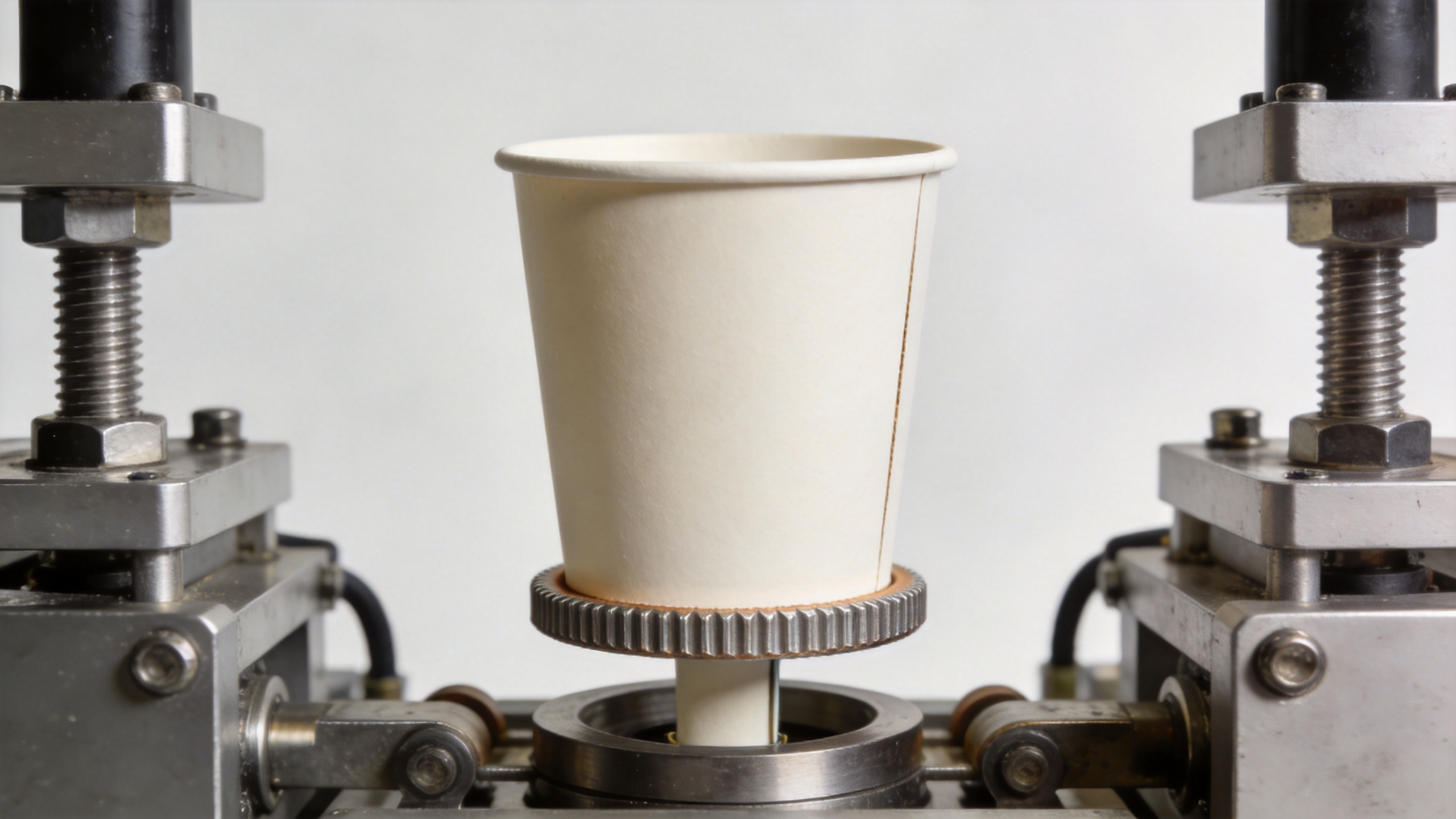
A bottom disc is fed into the formed body. The lower edge is then folded and knurled to lock the body and bottom together. This is a quality-critical operation: poor alignment, worn tooling, or an unsuitable material response can compromise the bottom seam. A production team should inspect this area during setup and routinely during a run rather than relying only on the final count.
4. Rim curling, inspection, and discharge
The upper edge is curled to create the finished rim. The cup then moves through inspection or sorting arrangements before discharge. A well-set paper cup forming machine should support repeatable handling through these stages, but the inspection plan still needs defined acceptance criteria for seam appearance, rim shape, cup dimensions, and leakage performance where applicable.
Horizontal versus other machine layouts
A horizontal cup-forming layout describes a production path arranged horizontally. Layout alone does not establish better quality or output. It changes how material moves, how stations are accessed, and how an operator approaches setup and maintenance. When comparing a horizontal paper cup forming machine with another layout, ask to see the cup range, material conditions, forming sequence, changeover tasks, safety access, and quality-verification method.
In practice, the most useful comparison is application-based. A horizontal paper cup forming machine may be considered when the proposed line layout, access requirements, and operating workflow fit the project. That decision should follow a review of actual sample cups and run conditions, not a layout label alone.
How to select a paper cup forming machine
- Define the cup first. Document top and bottom diameters, height, taper, capacity, artwork orientation, and whether there are special rim or bottom requirements.
- Confirm material compatibility. Review cupstock, coating or barrier construction, blank tolerances, and the approved sealing approach. For U.S. food-contact projects, 21 CFR 176.170 is one example of material-regulation context that the material supplier and project team may need to review; it is not a blanket equipment certification.
- Map the production rhythm. Ask how startup, stoppages, quality checks, changeovers, and operator handoffs are managed. The equipment should be assessed on stable, verified production conditions rather than an isolated theoretical rate.
- Review the paper cup body forming device. Check feeding, forming-mandrel access, seam alignment, and the method used to inspect the body before downstream issues multiply.
- Plan service access. Identify wear parts, lubrication points, cleaning tasks, training needs, and the supplier’s spare-parts communication process before procurement.
Operating and maintenance checkpoints
Daily checks on a paper cup forming machine commonly focus on clean feeding, stable blank transfer, seam appearance, bottom knurl definition, and rim consistency. At changeover, record the tooling and adjustment settings used for the cup format so the next setup starts from a controlled baseline. If a quality issue appears, trace it by station: a poor rim may originate upstream in body position or bottom geometry, not only at the curling area.
A preventive plan should also cover wear components, moving mechanisms, guards, sensors, and accessible cleaning points. The practical goal is predictable cup quality and safer troubleshooting. RUIDA’s paper-cup and food-packaging equipment focus makes a technical discussion of cup requirements, material compatibility, forming-process configuration, and daily inspection planning a useful starting point before a project specification is finalized.
Key takeaway
A paper cup forming machine is a coordinated converting system, not just a cup-shaping unit. The strongest selection process starts with the finished cup and material, then verifies the body-forming, sealing, bottom-forming, curling, inspection, and service requirements as one workflow. Whether you are assessing a horizontal paper cup forming machine or another architecture, request a configuration discussion tied to your actual cup samples and acceptance criteria.
 ONLINE