
 EN

Paper Cup Forming Machine Applications
Cup-forming equipment is not selected simply because a plant needs more cups. Its suitable application depends on the beverage format, cup construction, paper stock, sealing method, and the pace of the downstream packing process. From a packaging-equipment selection perspective, the practical sequence is to define the cup first, confirm the material and production rhythm next, and then discuss the machine configuration.
That order matters because the same paper cup forming machine may be asked to support very different applications: a small tasting cup, a cold-drink cup, a hot beverage cup, or a sleeve-based double-wall design. A specification only becomes useful when it is linked to a real cup format and a validation plan.
Where a Paper Cup Forming Machine Fits in Production
At a general level, a paper cup forming machine turns prepared cup blanks and bottom material into finished cup bodies through a sequence of feeding, forming, side-seam joining, bottom insertion, sealing, shaping, and discharge. Exact stations vary by configuration, so buyers should confirm the actual process with the supplier rather than assume that every paper cup forming machine includes the same functions.
The most common use is producing disposable beverage cups for cafés, food-service operators, event catering, take-away counters, and branded packaging programs. In these applications, a paper cup forming machine must be considered alongside cup diameter, height, rim style, bottom profile, print registration expectations, and the way finished cups are counted, packed, or transferred.
Single-Wall Cups for Cold and Hot Drinks
Single-wall cups are a frequent starting point for a paper cup forming machine. They are used for water, juice, soft drinks, samples, and many hot-drink formats when the final cup design and material system are appropriate. The relevant discussion is not whether a forming system is “universal,” but whether the selected tooling and heating approach suit the approved blank, coating, and cup geometry.
Paperboard used for cup blanks may use PE, PLA, or water-based coating systems. These are material categories, not an automatic compatibility guarantee. Before committing to a forming line, a buyer should provide representative blanks and ask for a sample run that checks side-seam appearance, bottom sealing, rim consistency, and resistance under the intended filling conditions.
For cold-drink work, condensation, fill temperature, and lid fit can affect the overall package. For hot drinks, handling comfort and insulation may change the cup construction. In both cases, the equipment should be evaluated with the complete cup specification rather than with paper weight alone.
Fully Automatic Paper Cup Forming Machine Use Cases
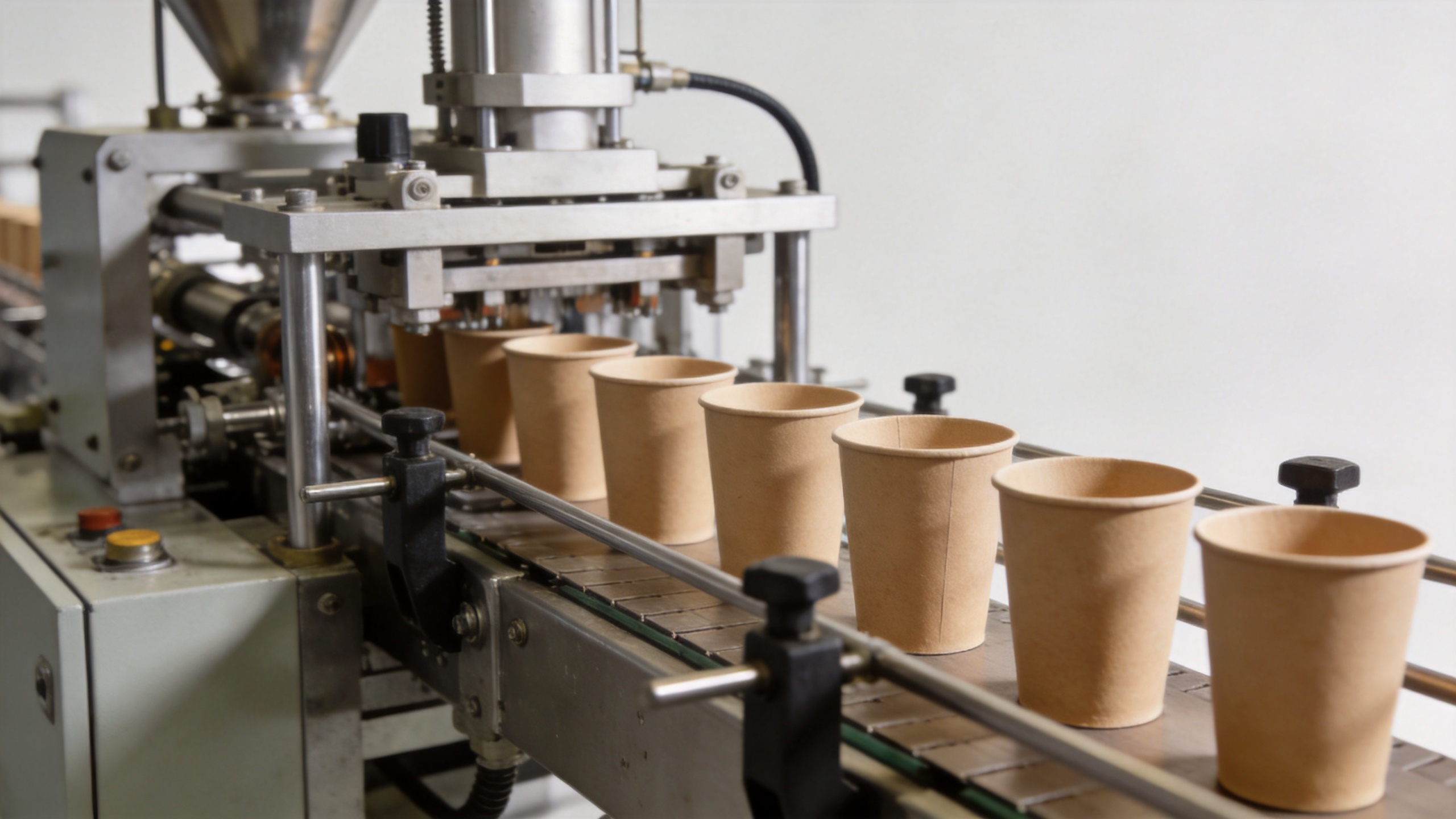
A fully automatic paper cup forming machine is typically considered when a producer wants a repeatable, continuous workflow with less manual handling between the major forming stages. It can be relevant to established beverage-packaging operations, contract manufacturers, and businesses planning a structured shift pattern. Still, “fully automatic” does not remove the need for operators to monitor material supply, quality checks, changeovers, cleaning, and routine maintenance.
When comparing a fully automatic paper cup forming machine, start with the expected cup mix. A forming line dedicated to a stable format may have different priorities from a line that changes between sizes, artwork, or paper structures. Ask how the proposed machine handles the confirmed formats, what needs adjustment during a changeover, and what acceptance samples will be reviewed. This moves the conversation from a broad automation label to an application-specific plan.
Double-Wall Cup Applications Need a Two-Part View
A double wall paper cup forming machine addresses applications where an outer layer or sleeve is used to improve handling comfort or create a different presentation for hot beverages. The inner cup and outer wall should be treated as related components, not as a single generic product. Their dimensions, joining method, visual alignment, and downstream handling all deserve confirmation.
Buyers assessing a double wall paper cup forming machine should clarify whether the outer layer is formed or attached within the intended workflow, how the inner and outer pieces are supplied, and how the finished cup will be inspected. A paper cup forming machine for the inner cup may be part of the solution, while a separate double-wall operation can introduce additional tooling, handling, or assembly questions.
This is a useful point to avoid an overly simple comparison. A double-wall product is not necessarily just a single-wall cup with more paper. It can alter material consumption, production flow, inspection points, and packing requirements. Confirming these conditions early makes the equipment discussion more reliable.
Food-Service and Branding Applications
Food-service buyers often use cup-forming equipment to support branded cup programs for cafés, quick-service restaurants, office beverage stations, and event distribution. Printed blanks may introduce additional requirements for artwork orientation and visual consistency. A supplier discussion should separate what is verified through samples from what still needs testing with the buyer’s own blanks.
For seasonal or promotional cups, flexible planning may be more important than an impressive headline output figure. The proposed equipment should be reviewed for the planned size range, the frequency of product switches, spare-format tooling, and the practical process for approving a new blank. If paper material and cup type are already confirmed, this application-based review is usually more useful than comparing speed alone.
How to Match the Application to the Machine
Use a short requirements sheet before requesting a proposal for cup-forming equipment:
- Describe each cup application: beverage type, fill condition, target size, and wall construction.
- Provide cup drawings, blank samples, and material/coating information for trial confirmation.
- State whether the project needs a standard single-wall workflow, a fully automatic configuration, or a double-wall process.
- List the expected production schedule, changeover frequency, inspection method, packing flow, and available utilities.
- Agree on sample acceptance criteria before treating the selected system as a production match.
Questions to Settle Before Purchase
The strongest application decision is usually made by turning uncertainties into testable questions. For each proposed machine, ask which cup sizes have been verified with comparable blanks, which settings are format-dependent, what operator checks are recommended, and what information is needed for a realistic quotation. Include maintenance access, change-part management, and training in the same conversation; they influence the ownership experience after installation.
Ruida Machinery focuses on paper-cup and food-packaging equipment discussions and can help buyers organize the cup-size, paper-material, and production-rhythm details that need confirmation. The right production configuration is therefore not defined by one label. It is the configuration that matches a documented application and can be validated with representative materials.
Conclusion
Paper cup applications range from straightforward single-wall beverage cups to insulation-focused double-wall formats and branded food-service programs. Begin with the intended cup, then verify the materials, workflow, tooling, and acceptance samples. This approach gives a cup-forming project a clearer technical basis and helps the buyer compare configurations on relevant conditions rather than broad claims.
 ONLINE