
 EN

How Buyers Collaborate with Paper Machine Suppliers?
Buying converting or paper-packaging equipment is not a one-email transaction. The strongest results come when buyers treat paper machine suppliers as project partners with defined responsibilities, evidence checkpoints, and a shared record of decisions. That approach is especially useful when a line must suit a particular cup format, paper grade, output target, utility condition, and destination-market requirement.
Good collaboration does not mean accepting vague promises. It means helping paper machine suppliers understand the operating problem, then checking whether their proposed solution, documents, tests, and support plan answer that problem. The same discipline helps buyers compare a specialist in disposable packaging equipment with broader paper machine suppliers offering a larger equipment scope.
Start with a usable operating brief
Before asking for quotations, assemble a short brief that converts production goals into information paper machine suppliers can use. Include the product formats, materials, planned shift pattern, expected output range, available power and compressed air, installation space, operator skill level, and delivery location. If the project involves cups or food-packaging products, describe the paper stock and any downstream printing, packing, or inspection interfaces rather than simply asking for a “high-speed” machine.
This makes quotes easier to compare because paper machine suppliers are responding to the same baseline. It also exposes assumptions early. For example, a stated output may be conditional on one cup size, one material specification, or a defined maintenance routine. Ask the supplier to label those conditions in its proposal.
- List must-have outcomes separately from preferred options.
- Identify the buyer-side owner for process, electrical, safety, logistics, and purchasing questions.
- State which documents must be provided before shipment and which must accompany commissioning.
- Invite questions; a careful clarification request is more useful than an instant generic quotation.
Turn quotations into a comparison matrix
Buyers often compare only price and nominal speed. A more useful matrix asks what each proposal actually includes. When reviewing paper machine suppliers, place equipment scope, tooling, change parts, controls, safety provisions, installation support, training, warranty, recommended spares, and exclusions in separate columns. This is not about forcing every supplier into the same design; it is about making the differences visible.
For disposable paper machine suppliers, include the finished-item range and the changeover assumptions in the matrix. A buyer who expects several sizes or paper grades should ask how a change is performed, what parts are required, and whether the quoted cycle rate applies after a changeover. For high speed paper machine suppliers, ask how the proposed speed is demonstrated, what material and tooling conditions apply, and which production data will be recorded during acceptance testing.
Ask each supplier to identify an accountable contact for technical revisions. Version-controlled drawings, a dated action list, and written responses to deviations prevent an old assumption from becoming an expensive site problem.
Agree on evidence before you place the order
Reliable paper machine suppliers can explain how the buyer will verify the proposal. The purchase order should connect the specification to a practical evidence plan: drawing approvals, component or tooling confirmations where relevant, factory acceptance testing, packing records, installation inputs, commissioning tasks, and handover documents.
A factory acceptance test is valuable when its criteria are agreed before anyone travels or schedules remote witnessing. Practical FAT guidance commonly checks agreed functional performance, then records each deficiency with an owner, a due date, and a sign-off method. Apply that logic with paper machine suppliers: define the product sample, operating conditions, observation period, safety checks, video or data records, and punch-list process in advance.
Safety should also be a collaborative document trail, not a late-stage question. ISO 12100 is widely used as a framework for machinery safety principles, risk assessment, and risk reduction. Buyers should confirm applicable local regulations and destination-market requirements with qualified parties, then ask paper machine suppliers what safety information and risk-related documentation they can provide for the agreed scope.
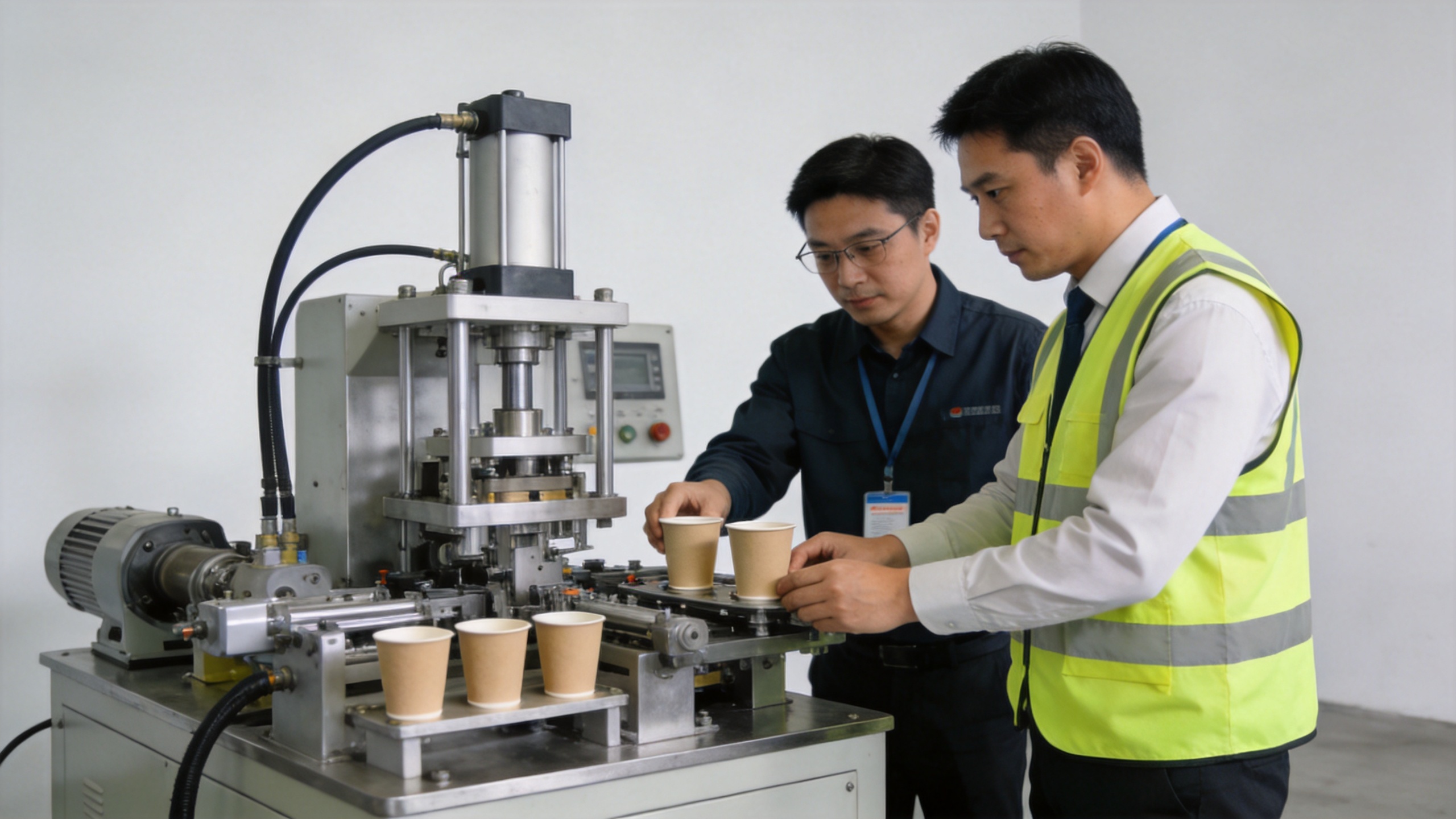
Use one project rhythm from design to shipment
A reliable collaboration rhythm is predictable. Set a regular meeting cadence with a short agenda: completed actions, open technical points, drawing status, procurement risks, test readiness, shipment readiness, and decisions required from the buyer. Each meeting should end with a written owner and target date. This structure helps both the buyer and paper machine suppliers identify delays while choices are still reversible.
Do not leave utilities, foundations, receiving access, and local installation resources until shipment. Share site constraints early and request a clear pre-installation checklist. Buyers should also document who is responsible for customs paperwork, unloading, positioning, electrical connection, consumables, and operator availability. A supplier’s remote guidance can be valuable, when the buyer has already assigned competent site contacts.
Plan commissioning and support as part of the purchase
Commissioning is where a proposal becomes an operating process. Ask paper machine suppliers to distinguish between what must be complete before start-up, what will be demonstrated at site acceptance, and what becomes routine operator or maintenance work afterward. Confirm the communication channel for urgent issues, the time-zone coverage if relevant, the format of troubleshooting information, and how software or electrical changes are recorded.
For buyers evaluating disposable paper machine suppliers, training should address normal operation, format changes, basic fault isolation, cleaning, and the limits of operator adjustment. For buyers comparing high speed paper machine suppliers, it should also make clear how stable output is monitored after initial start-up rather than treating a short demonstration as a lifetime guarantee.
Spare-parts planning deserves the same attention as machine selection. Build a starter list around wear parts, change parts, electrical components, and items with a long replenishment lead time. Ask paper machine suppliers to identify part numbers, recommended quantities, and expected ordering information. That makes later support more precise and reduces dependence on ambiguous descriptions.
Build a relationship that improves the next project
After handover, hold a short review with the supplier: which requirements were clear, which changed, which documents were most useful, and which support questions repeated. This feedback gives paper machine suppliers a better basis for future proposals and gives buyers a reusable supplier-evaluation record.
The goal is not to eliminate every issue; industrial projects involve variables. The goal is to make each issue visible, owned, and traceable. When buyers provide disciplined requirements and paper machine suppliers provide equally disciplined evidence, the relationship moves beyond quotation comparison toward a more controllable production launch.
 ONLINE