
 EN

Paper Cup Forming Machine Core Advantages
A paper cup forming machine is more than a way to turn printed cup blanks into finished packaging. For a food-packaging operation, its value lies in making the forming sequence repeatable: the cup body is shaped, the side seam is sealed, the bottom is joined, and the rim is finished under controlled motions. That repeatability can support steadier output, more predictable quality checks, and a clearer basis for production planning.
From a food-packaging application perspective, the useful question is not simply whether a machine is “high speed.” It is whether the selected paper cup forming machine matches the cup diameter, height, paper stock, barrier treatment, and shift rhythm of the intended line. Buyers who evaluate those conditions before comparing optional features are better placed to turn machine advantages into reliable results.
1. A paper cup forming machine brings critical forming steps into one controlled sequence
The core advantage of a paper cup forming machine is process integration. Instead of treating body forming, side sealing, bottom insertion, bottom heating, knurling, rim curling, and discharge as unrelated tasks, the equipment coordinates them as a sequence. Each station affects the next one. A body that is not aligned cleanly can complicate bottom fitting; a poorly controlled heating condition can affect seam appearance and leak resistance.
This is why a buyer should assess the forming path rather than rely on a single headline capacity. A practical review asks how cup blanks are fed, how the side seam is positioned, where heat is applied, how the bottom is knurled, and how finished cups are separated for inspection. When those steps are stable, operators can focus on confirming results rather than constantly correcting variation.
2. Consistent cup geometry helps protect downstream efficiency
Consistency is a commercial advantage because cup geometry influences packing, lid fit, sleeve application, and visual presentation. A paper cup forming machine that maintains controlled body shape and rim condition can reduce the likelihood that downstream teams spend time sorting visibly irregular cups. It also gives quality personnel clearer checkpoints: side-seam alignment, bottom appearance, rim finish, and dimensional fit can be inspected at planned intervals.
That does not mean every cupstock or cup design behaves the same way. Paper weight, coating type, print coverage, blank tolerance, and ambient conditions all affect the process. During a supplier discussion, provide representative blanks and specify the cup format so that forming behavior can be evaluated under relevant conditions. This approach is more useful than treating an advertised output figure as a universal promise.
3. Material compatibility can be planned instead of assumed
Cup makers often need to work with different barrier constructions for hot or cold drink applications. Retrieved industry material guidance references single- and double-PE-coated paper, PLA-coated paper, and water-based barrier paper as possible cupstock categories. The correct choice depends on the end use and the intended forming and sealing method. A paper cup forming machine should therefore be specified alongside the actual paperboard, coating, and cup dimensions—not after they are fixed.
For markets where food-contact documentation is relevant, buyers should also confirm the documentation path for the complete packaging system. For example, U.S. 21 CFR 176.170 concerns components of paper and paperboard in contact with aqueous and fatty foods. It is a regulatory reference for applicable materials, not a blanket statement about any machine. The practical advantage of disciplined machine selection is that material and documentation questions can be raised early, before routine production begins.
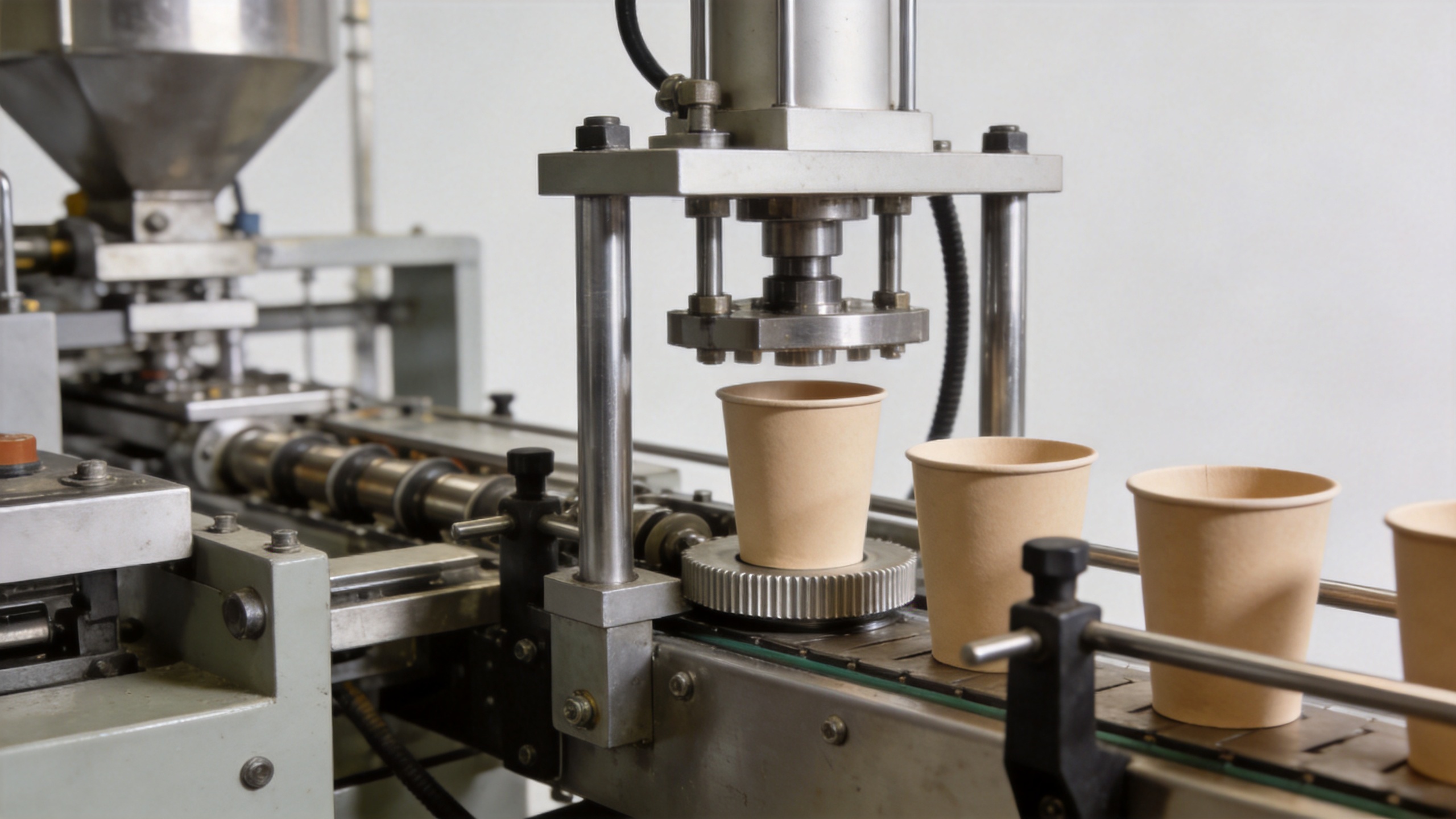
4. The paper cup body forming device is where repeatability starts
The paper cup body forming device deserves particular attention because it sets up the side seam and the cylindrical or tapered body that the rest of the process relies on. When reviewing a paper cup body forming device, ask for a clear explanation of blank guidance, body positioning, seam overlap control, and adjustment procedures for a different cup size. These details affect both the appearance of the cup and the operator’s ability to maintain the process over a shift.
A well-planned paper cup body forming device can also make troubleshooting more systematic. Rather than changing multiple settings at once when a seam looks inconsistent, a team can examine blank quality, feed alignment, overlap, heating conditions, and mechanical setup in sequence. That makes root-cause discussions more productive and helps preserve usable production time.
5. Automation supports a more manageable operating routine
Automation does not remove the need for operators; it changes where their attention is most valuable. With a paper cup forming machine, operators can focus on material loading, first-piece inspection, planned checks, cleaning, and response to alarms or abnormal cup samples. A clear operating routine is especially useful when production switches between cup sizes or paper constructions.
Before purchase, request an acceptance checklist that covers the cup type, cupstock, output conditions, inspection method, changeover tasks, spare-parts list, and support boundaries. This turns a general automation claim into a verifiable project plan. It also helps purchasing, production, and maintenance teams evaluate the same equipment against shared criteria.
6. Double-wall cups require a separate view of the process
A double wall paper cup forming machine should not be evaluated as though it were only a standard cup former with a different label. Double-wall formats commonly add an outer sleeve or second paper layer, so cup-body quality, bonding method, sleeve fit, and final appearance must all be considered together. The inner cup must be stable before the outer layer can be applied consistently.
When considering a double wall paper cup forming machine, clarify whether the equipment scope includes the inner-cup process, the outer-wall or sleeve process, and the handoff or inspection point between them. Ask how the intended stock, graphics, cup diameter, and target appearance will be verified. This avoids a common planning gap: expecting a standard forming configuration to resolve requirements that actually belong to a separate outer-wall operation.
7. The real advantage is a measurable production system
The strongest case for a paper cup forming machine is not a single feature. It is the ability to build a measurable process around the cup format your business plans to supply. Stable forming can support clearer inspection routines. A defined material match can reduce uncertainty during startup. Planned changeover and maintenance procedures can make operation easier to manage over time.
For buyers, the next step is to prepare a concise specification sheet: cup sizes, drawings or samples, paper grade and barrier type, print layout, target market, expected shift pattern, and acceptance criteria. Then ask the supplier to explain how the proposed paper cup forming machine addresses each item. That conversation reveals more than a generic comparison table and gives your team a sounder basis for investment.
Questions to bring to a supplier review
- Which cup diameters, heights, and blank profiles will be evaluated during testing?
- What paperboard and barrier constructions are suitable for the proposed sealing process?
- How are side seam, bottom knurling, rim condition, and leak checks verified?
- What is required when changing to another cup size or material?
- Which routine maintenance items, spare parts, and support responsibilities should be planned?
- For a double-wall format, which stages are included and which require separate equipment or handling?
By assessing these questions early, a paper cup forming machine becomes a production decision grounded in materials, cup design, and operating practice—not just a purchase defined by a nominal speed.
 ONLINE