
 EN

Meet the Ultimate Cup Making Machine System
A cup making machine is not simply a forming unit placed on a factory floor. For a food-packaging producer, it is the center of a linked system that turns approved paper stock into consistent cups, keeps the process observable, and gives the team a practical basis for acceptance. The word “ultimate” should therefore mean fit-for-purpose, not maximum specifications on a quotation.
From a food-packaging application perspective, the useful starting point is the finished cup: its size, intended beverage or food use, paper-and-coating specification, print requirements, packing method, and destination market. Those decisions shape the production conversation more reliably than a speed figure alone. A paper container maker needs a repeatable path from the product brief to material checks, tooling discussions, operator routines, and a documented handover.
What Belongs in a Cup Making Machine System?
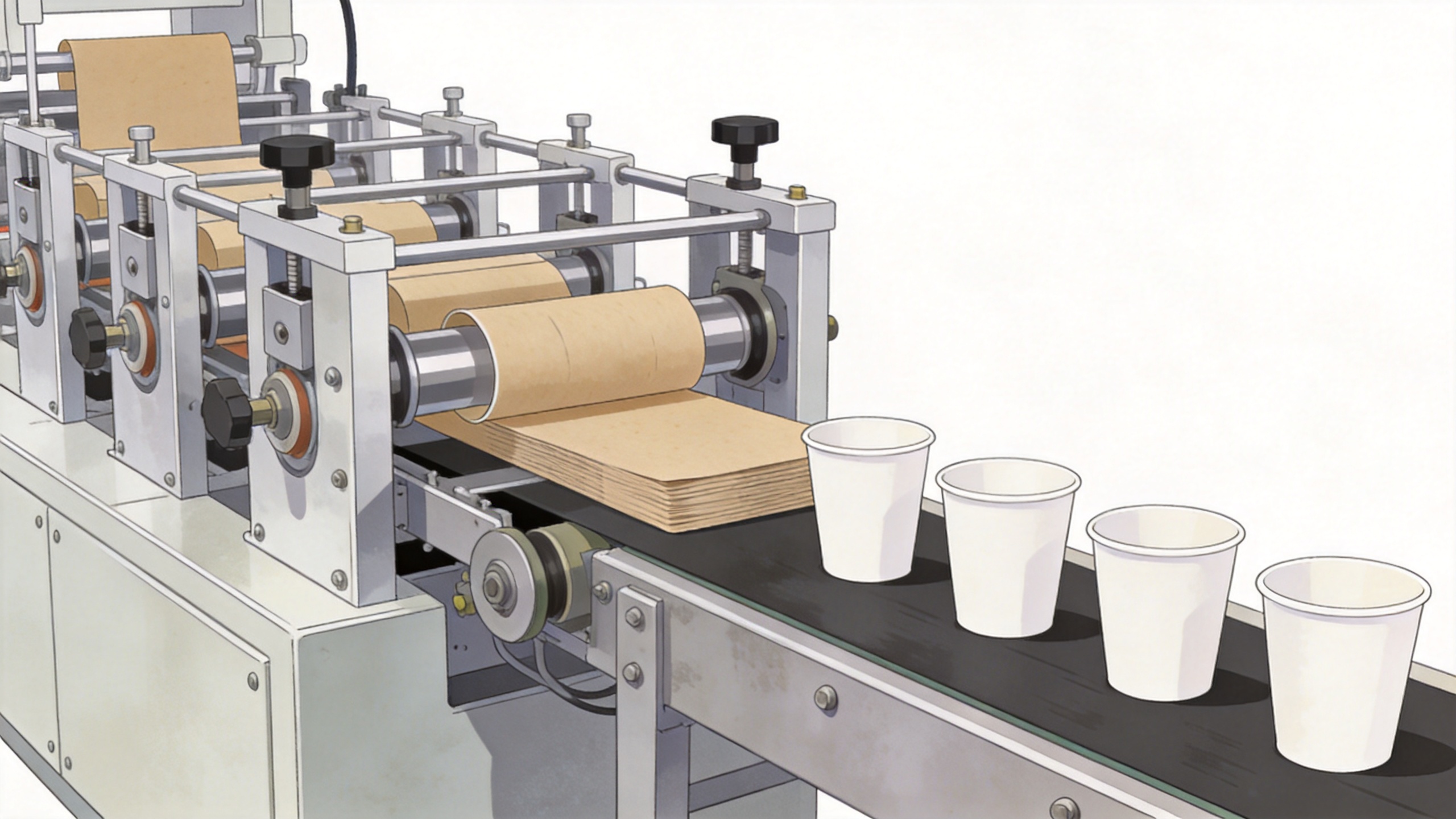
At its core, a cup making machine forms a cup body from prepared paper blanks, joins the side seam, attaches the bottom, creates the rim, and discharges finished cups for collection or downstream inspection. The exact arrangement depends on the requested cup format and the machine configuration, but the system view is wider than the forming stations themselves.
- Material preparation: correctly specified blanks, cup bottoms, and traceable incoming materials.
- Forming and sealing: the sequence that shapes the body, joins seams, and completes the base and rim.
- Quality control: agreed sample checks for appearance, dimensions, seams, rim finish, and the intended use case.
- Handling and packing: orderly collection, count control, protection, and a route to the next operation.
- Support infrastructure: utilities, spare-part planning, maintenance access, training, and installation responsibilities.
This distinction matters because a machine can be mechanically capable while the full production line remains unready. For example, a paper cup raw material machine discussion should not stop at whether a roll or blank can be fed; it should also establish what paper, coating, cut quality, storage condition, and supplier records will be used in production.
Start With the Cup, Not With the Fastest Specification
Buyers often compare a cup making machine by headline throughput. That is understandable, yet it is incomplete. Parameters that look more impressive do not automatically make a machine more suitable. The more reliable question is: can the proposed configuration make the required cup consistently with the actual materials and operating conditions?
Before requesting a proposal, build a concise production brief that includes:
- cup diameter, height, bottom diameter, and target shape;
- single-wall or another requested construction, plus any special rim or base expectations;
- paper grade, coating or barrier treatment, thickness range, and artwork/printing workflow;
- target market and food-contact documentation requirements;
- shift pattern, target daily demand, and the allowance for setup, inspection, and maintenance; and
- space, electrical supply, compressed-air conditions, staffing, and packing interface.
A paper container maker can then compare proposals against one operating brief rather than trying to reconcile unrelated lists of features. This also makes it easier to define sample tests before the equipment is built or shipped.
Material Compatibility Is a Production Decision
In paper-cup production, materials and machine settings influence each other. A change in paperboard, coating, blank quality, or storage condition can affect feeding behavior, forming consistency, seam appearance, and the checks needed at the end of the line. More accurately, not every defect starts with the machine; material preparation and operating practice must be examined too.
For cups intended for food use, compliance review should be part of the project plan. In the United States, 21 CFR §176.170 addresses components of paper and paperboard intended to contact aqueous and fatty foods, subject to the regulation’s conditions. That is not a blanket approval for any cup or material. It is a reminder to confirm the applicable market rules, supplier declarations, coating system, and finished-product requirements with the responsible parties.
Ask the supplier of a paper cup raw material machine or forming system to clarify what material information is needed for a meaningful trial. Useful records may include paper specification, coating type, blank drawings, tolerances, storage guidance, and the target cup sample. Written confirmation prevents a vague “material compatible” statement from becoming a later disagreement.
Map the Workflow Before You Choose Automation
The search results for cup equipment often focus on automatic operation or a single forming stage. A more useful evaluation maps the complete workflow. Start with how blanks are received and staged, then follow the cup through forming, visual checks, packing, and traceability. Each handoff reveals a question that affects configuration and labor planning.
| Workflow area | What to clarify | Why it matters |
|---|---|---|
| Incoming materials | How are blanks and bottoms identified, stored, and released? | Reduces mix-ups and supports investigation if quality changes. |
| Forming | Which cup sizes, materials, and change parts are included? | Connects the cup making machine to the actual product range. |
| Inspection | Which samples are checked, how often, and against what criteria? | Turns “good quality” into an auditable acceptance routine. |
| Packing | Who supplies counting, sleeving, or cartoning interfaces? | Prevents a finished-cup bottleneck after forming. |
| Service | What are the installation, training, remote-support, and spare-part boundaries? | Supports realistic startup and downtime planning. |
One common omission is leaving installation support boundaries undefined. Put them in the confirmation checklist: who prepares utilities, who performs commissioning, what sample materials are needed, which acceptance tests are witnessed, and how open items are closed. The answer may differ by project, so it belongs in the commercial and technical record rather than in an assumption.
Use Acceptance Criteria to Compare Proposals Fairly
Initial price is only one part of a cup making machine decision. Compare total ownership conditions: tooling coverage, changeover needs, expected maintenance tasks, spare-part identification, operator training, documentation, shipping scope, and support after installation. Avoid unverified savings claims; assess operating costs with your own verified data.
A practical factory-acceptance or pre-shipment checklist can include the agreed cup drawings, approved material samples, visual inspection points, a defined trial sequence, records for any adjustments, and a list of documents delivered with the system. If food-safety management is relevant to your operation, ISO 22000:2018 provides a management-system context for controlling food-safety hazards. It does not certify the machine by itself, but it reinforces the value of traceable records and controlled procedures around packaging production.
During comparison, ask each supplier to respond to the same questions. This exposes whether two offers really cover the same work. It also helps a paper container maker plan the people and materials required for commissioning instead of treating startup as an equipment-only event.
A Practical Supplier Conversation
ZheJiang RUIDA Machinery Co.,Ltd focuses on paper cup and food-packaging equipment, including automatic paper cup machine and servo paper cup former directions. A productive conversation should begin with the cup brief and material details, then move through forming-process configuration, production rhythm, and the support required around installation. The company’s global-market orientation can be useful when a buyer needs to discuss different destination-market expectations, but final regulatory and product suitability checks remain the buyer’s responsibility.
Share drawings, cup samples, intended-use information, paper details, expected production rhythm, and site utilities. In return, request a clear statement of the proposed scope, exclusions, trial conditions, and acceptance steps. This keeps the conversation tied to evidence rather than generic machine claims.
Final Checklist for a Better Machine Decision
- Define the finished cup and destination-market requirements first.
- Confirm paper, coating, blanks, and tolerances before finalizing the forming configuration.
- Map material handling, inspection, packing, and service—not just the forming unit.
- Document utilities, installation roles, training, spare parts, and acceptance criteria.
- Compare lifecycle conditions and support boundaries alongside the initial quotation.
A suitable cup making machine system turns an agreed product brief into a controlled, supportable workflow. Use this framework to prepare your technical discussion, then validate the final configuration with the machine supplier, material suppliers, and the people responsible for quality and compliance at your site.
 ONLINE