
 EN

When Is Cup Making Machine Best Deployed?
A cup making machine is appropriately deployed when a packaging business can connect a defined cup program to a stable production plan—not simply when it sees an attractive speed figure. As a packaging-equipment adviser, I would begin with the cup, the material, and the handoff to packing. A machine can be technically capable of forming a cup and still be a poor fit if the format changes too often, paper stock is inconsistent, or the downstream team cannot keep pace.
For buyers considering a paper drinking vessel maker or a beverage cup making machine, the practical question is: can the line make acceptable cups at a verified rate with the people, utilities, tooling, and quality checks you actually have? This article explains the situations in which deployment is sensible and the checks that should happen first.
Deploy a Cup Making Machine When Demand Is Repeatable
The clearest case for a cup making machine is repeatable demand for a limited, well-defined range of food-service cup formats. A café supply program, food-packaging converter, distributor with contract volume, or brand owner with recurring orders may benefit when cup diameters, heights, paper grades, and print designs can be scheduled in predictable batches.
Start with good output rather than a headline capacity. Search results for this market show everything from modest machine discussions around 40–60 cups per minute to listings that promote 120 or 160 pieces per minute. Those figures are useful starting points, but they are not a production promise. Your deployment estimate should account for setup, paper feeding, inspection, stoppages, collection, packing, and rejected cups. If a changeover interrupts the plan several times a day, the nominal speed alone will not tell you whether the investment fits.
Match the Machine to the Cup Program, Not Just the Daily Volume
A cup making machine earns its place when its tooling and forming sequence suit the cups you intend to sell. Confirm the diameter, height, bottom profile, rim specification, coating or barrier material, and print registration requirements before comparing configurations. That distinction matters for a paper drinking vessel maker: two cups that look similar in a quotation can demand different adjustment work because their blanks, seams, or rims behave differently.
Ask suppliers to explain which conditions must be held steady during a trial. Instead of accepting a broad statement that a beverage cup making machine supports several sizes, document the actual sizes, the expected changeover actions, the required tooling, and the validation samples. A sound deployment is often a stable core format plus a realistic plan for occasional changes—not an assumption that every cup size will run equally well.
Use Line Balance as the Deployment Test
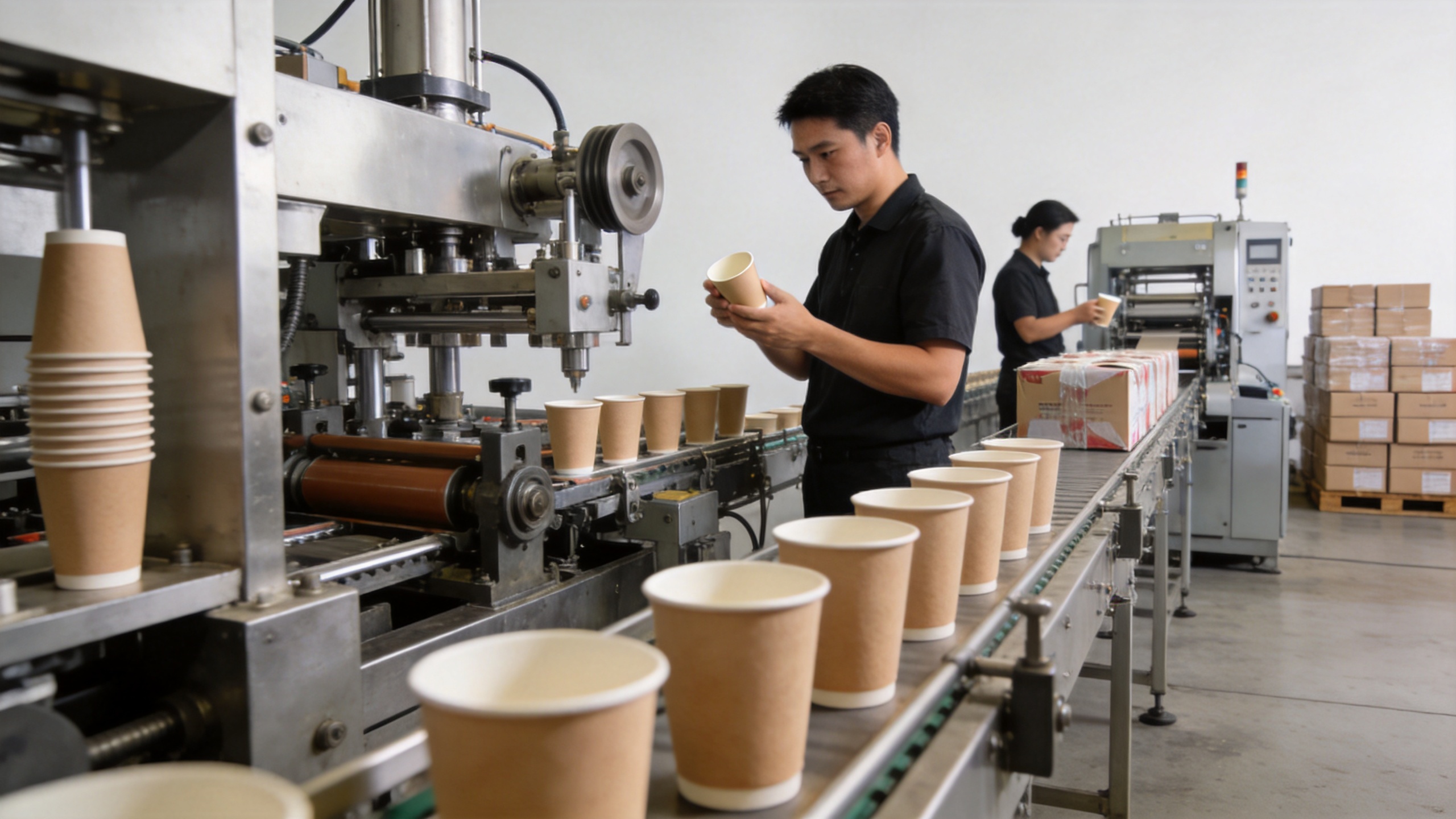
A cup making machine should be treated as one station in a line. Before deployment, map what happens before and after forming: blank supply, material staging, visual inspection, counting, sleeving or bagging, carton packing, and finished-goods movement. If the forming station runs faster than the collection and packing process, operators may be forced to stop it or accept disorganized output. If material preparation is slow, the line will starve.
One useful planning exercise is straightforward. Define the saleable cups needed per shift, estimate planned operating time, reserve time for setup and cleaning, then agree on an acceptable reject allowance. The remaining rate is the rate that the cup making machine needs to demonstrate during a relevant trial. That approach is more defensible than buying around a maximum speed claim. It also reveals whether another station, rather than forming, is the real constraint.
Deploy When Material Control and Quality Checks Are Ready
Paper, coating, blank cutting, storage conditions, and print quality can all affect the way a cup forms. A cup making machine is generally deployed after the buyer has identified the approved materials and a process for checking incoming lots. When a seam, rim, or bottom issue appears, the team needs a way to separate a material variation from an equipment setting issue.
For cups intended for food contact, the machine decision is only one part of readiness. The U.S. Food and Drug Administration explains that food-contact substances regulated as food additives must be authorized for their intended use before marketing. Requirements differ by destination market and cup construction, so buyers should verify the applicable material and documentation requirements with qualified compliance resources. A machine itself should not be treated as proof that the finished cup is compliant.
Choose the Right Automation Level for Your Team
A beverage cup making machine can reduce repetitive manual work, but more automation is not automatically the better deployment choice. The appropriate level depends on operator training, maintenance coverage, spare-parts planning, electrical capacity, and how quickly the site can diagnose routine alarms. For a new line, clear operating steps and accessible cleaning points may be more valuable than a complex feature that no one is prepared to maintain.
At evaluation, have operators walk through loading, startup, normal running, a format change, a planned stop, and basic fault recovery. Watch whether paper feeding and cup collection remain orderly. These observations produce better deployment information than a brief no-load demonstration.
When Deployment Should Wait
It is wise to delay a cup making machine deployment when the cup specification is still changing, order volume is highly uncertain, source materials have not been approved, or the factory lacks a practical acceptance test. Waiting can also be sensible when utilities, floor layout, or downstream packing have not been confirmed. A short preparation phase may prevent an expensive mismatch between a capable machine and an unready operation.
A Deployment Checklist Before You Commit
- Define the target cup formats, material construction, print requirements, and acceptable samples.
- Set a saleable-output target per shift, including planned stops and expected rejects.
- Confirm the workflow around the cup making machine, from blank supply to packed cartons.
- List the utilities, floor space, operators, maintenance support, tooling, and spare parts required.
- Agree on a trial using your relevant blank and cup specification wherever possible.
- Document market-specific food-contact and packaging requirements before commercial production.
Conclusion
A suitable time to deploy a cup making machine is when demand, cup specification, materials, line balance, and operating ownership are aligned. Evaluate a paper drinking vessel maker or beverage cup making machine around verified production conditions rather than brochure speed alone. A disciplined trial and a clear acceptance plan turn equipment selection into a controlled production decision.
 ONLINE