
 EN

How a Workshop Expanded with Cup Making Machine?
Growth can arrive before a small packaging workshop feels ready. A buyer asks for a recurring cup order, a distributor wants a second size, or a seasonal account needs more dependable supply. In that moment, a cup making machine is not simply a purchase; it changes the pace of material handling, forming, inspection, and packing. The sensible question is not whether a cup making machine can run. It is whether the workshop can support a repeatable production rhythm around it.
From a packaging-equipment selection perspective, an expansion is more reliable when the team matches cup shape, paper or coated stock, and target output before comparing configurations. That matters because a cup making machine sits in a chain of decisions. Blank preparation, sealing conditions, rim formation, collection, inspection, and carton flow all affect the result.
The starting point: define the expansion problem
Many workshops begin by asking for the fastest cup making machine available. That is understandable, but it can hide the actual constraint. Is demand concentrated in one stable size? Are short runs and frequent changeovers more valuable? Does the workshop need to make hot-drink cups, cold beverage cups, or a specialized format? A beverage cup making machine project should begin with the finished cup and order pattern, not a brochure speed figure.
Write down four items before requesting a proposal:
- the cup diameters, heights, volumes, and wall-material combinations that will be run most often;
- the expected order mix, including minimum run size and how often tooling or settings may change;
- the quality checks customers will expect, such as visual appearance, seam integrity, rim consistency, or packing counts; and
- the space, power, compressed-air, material staging, and operator coverage available per shift.
These inputs turn a vague expansion into an evaluation brief. They also prevent a workshop from treating a cup making machine as an isolated asset when the bottleneck may actually be blank supply, manual inspection, or finished-goods packing.
Build capacity around the forming sequence
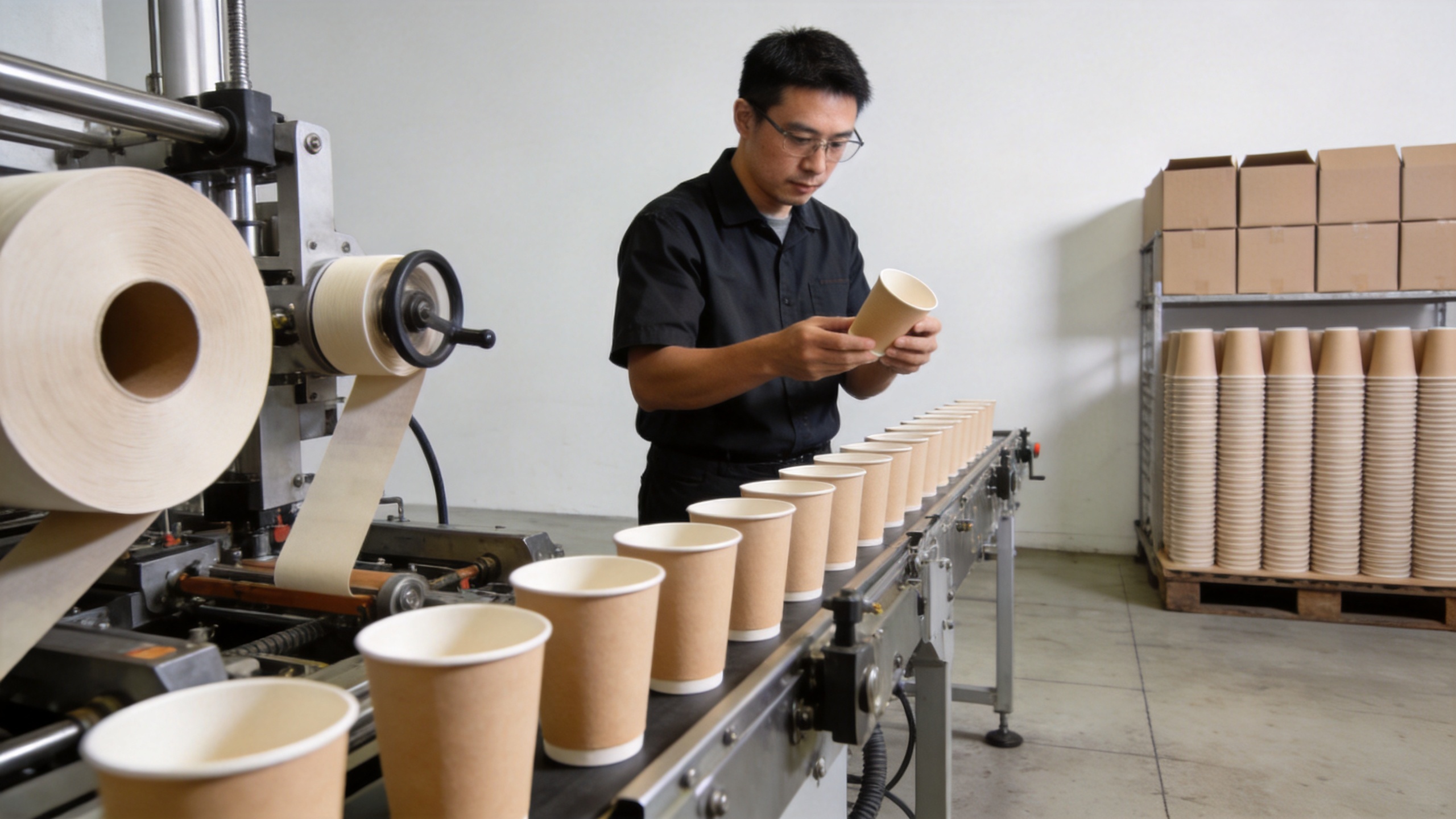
Paper-cup production is a sequence rather than a single motion. In broad terms, material is checked, blanks are formed, the bottom is joined, the rim is curled, and finished cups are collected for inspection and packing. The exact configuration and controls vary, so the workshop should confirm the sequence against its own material and cup requirements. Still, that overview is useful: each handoff creates a place where a cup making machine can gain or lose practical output.
For example, adding a machine without allocating room for orderly blank staging can make operators stop more often than expected. Likewise, a cup making machine may form cups continuously while a manual packing station falls behind. Map the path from incoming blanks to sealed cartons. Mark who supplies materials, who checks the first cups after a change, who removes nonconforming pieces, and where production waits.
Rim formation deserves special attention. Material behavior, tooling condition, and setup can all influence the finished rim. Rather than assuming every cup making machine will deliver the same result, a workshop should request trials using representative stock and document acceptance points. This is particularly important when the expansion includes more than one cup format.
Choose the machine category without mixing applications
The phrase cup making machine can describe several manufacturing routes. For a paper-cup workshop, the relevant discussion is normally paper blank forming and related sealing and curling operations. A blister cup making machine, by contrast, may refer to thermoforming equipment for plastic cups or trays. The terms may look similar in a broad search, but they should not be treated as interchangeable in a specification review.
That distinction helps the team ask better questions. A beverage cup making machine evaluation should focus on the intended cup material, shape, end use, production schedule, and inspection needs. A plastic thermoforming project has different material handling, molds, heating, and downstream considerations. Naming the process correctly reduces the chance of comparing unsuitable configurations.
Stage the expansion instead of betting everything on day one
A practical workshop expansion can be divided into stages. First, use a cup making machine trial to verify representative materials and the highest-priority cup format. Second, set a controlled start-up period with documented settings, sample checks, and a clear escalation path for defects. Third, increase the production plan only after the upstream material flow and downstream packing routine are stable.
This staged approach is not a promise of a specific output or cost reduction. It is a way to make decisions observable. Track usable cups per shift, time spent on adjustments, rejected-cup categories, material interruptions, and packing delays. The figures will tell the workshop more than a nominal capacity number alone. If a cup making machine is selected for frequent changeovers, track the preparation work as carefully as runtime.
A simple acceptance checklist
- Run agreed cup sizes and materials under the planned operating conditions.
- Define visual, seam, rim, and count checks before the trial begins.
- Record the conditions used for accepted samples so they can be repeated.
- Confirm cleaning, lubrication, safe operation, spare-parts scope, and operator training with the supplier.
- Verify that food-contact material handling, cleanliness, and traceability responsibilities are understood for the workshop's market and product.
These checks do not replace local regulatory review or site-specific validation. They create a useful boundary between a promising demonstration and a production-ready expansion.
Make people and workflow part of the equipment decision
A cup making machine changes operator work, not just output. Someone needs to recognize an early quality drift, replenish material safely, complete changeovers, and keep records that help the next shift. Training should therefore include normal operation, routine checks, cleaning boundaries, and what to do when cups do not meet the agreed appearance or seal standard.
It is also worth asking: does the project favor a stable single format, or frequent customer-specific variation? If the answer is variation, a cup making machine should be assessed for how clearly its changeover and verification process can be managed. If the answer is a stable format, the workshop may put more emphasis on balanced feeding, collection, and packing. Neither choice is automatically better; the order profile decides.
Turn expansion into a repeatable operating plan
The workshop that expands successfully usually treats the cup making machine as one part of a controlled system. It confirms the cup application, tests the relevant material, defines acceptable output, assigns people to key handoffs, and reviews production evidence before scaling up. That sequence is more durable than choosing on headline speed alone.
For a paper-cup workshop, a focused cup making machine review can open capacity while keeping decisions grounded in actual cup formats and workflow limits. Start with the demand you can describe, run representative trials, document the conditions, and expand the line only when the surrounding process is ready to support it.
 ONLINE