
 EN

Paper Cup Machine Manufacturer Selection Tips
Choosing a paper cup machine manufacturer is a specification exercise before it is a price exercise. Two quotations can look similar while covering different cup sizes, paper conditions, tooling, trial work, documentation, training, or spare-parts scope. A buyer who sends the same requirement sheet to every supplier is in a better position to compare answers.
From a B2B purchasing viewpoint, start with the cup you intend to make, the paper you intend to run, and the production rhythm you need to support. Then ask each paper cup machine manufacturer to explain its proposed configuration against those conditions. This approach does not replace an onsite review, but it makes technical conversations more useful.
Give every supplier the same production brief
Before contacting a paper cup machine manufacturer, prepare a short brief. Include the cup drawing or physical sample, rim and bottom details, intended paper grade or supplier information, print status, target output, shift pattern, and the number of formats you expect to change between. A paper cup machine manufacturer can respond more precisely when the request identifies what is known and what still needs testing.
The phrase paper cup raw material making machine is often used in early research, but buyers should separate raw-material preparation from cup-forming equipment. Ask where paper stock, coating type, blank conversion, and cup forming meet in the proposed workflow. If blanks come from another source, share representative material information and confirm what the trial will actually use.
- List every cup format, including volumes that appear similar but use different geometry.
- Describe paperboard, coating, print, and blank-supply conditions without assuming all materials behave alike.
- State the expected production rhythm and planned changeover frequency.
- Identify site utilities, available floor space, and operators who will receive training.
Evaluate configuration fit for the intended cup
A credible paper cup machine manufacturer should ask questions before recommending a fixed configuration. Cup shape, paper stiffness, coating, and production environment can influence the discussion around forming, heating, feeding, collection, and inspection. Rather than accepting a general statement about suitability, request a written explanation of which inputs were considered.
Material compatibility deserves its own conversation. Ask the paper cup machine manufacturer what sample or specification is required for a meaningful test, what conditions the trial represents, and what observations will be recorded. A trial can be more useful when it names the paper condition, cup format, operating sequence, and acceptance criteria instead of presenting an unqualified outcome.
Changeover is another area where a paper cup machine manufacturer should describe assumptions. A plant making one stable format may prioritize a different arrangement from a plant switching among several formats. Ask which tooling changes are expected, which adjustments require trained staff, and what production interruption should be planned during a normal format change.
Make every quotation comparable
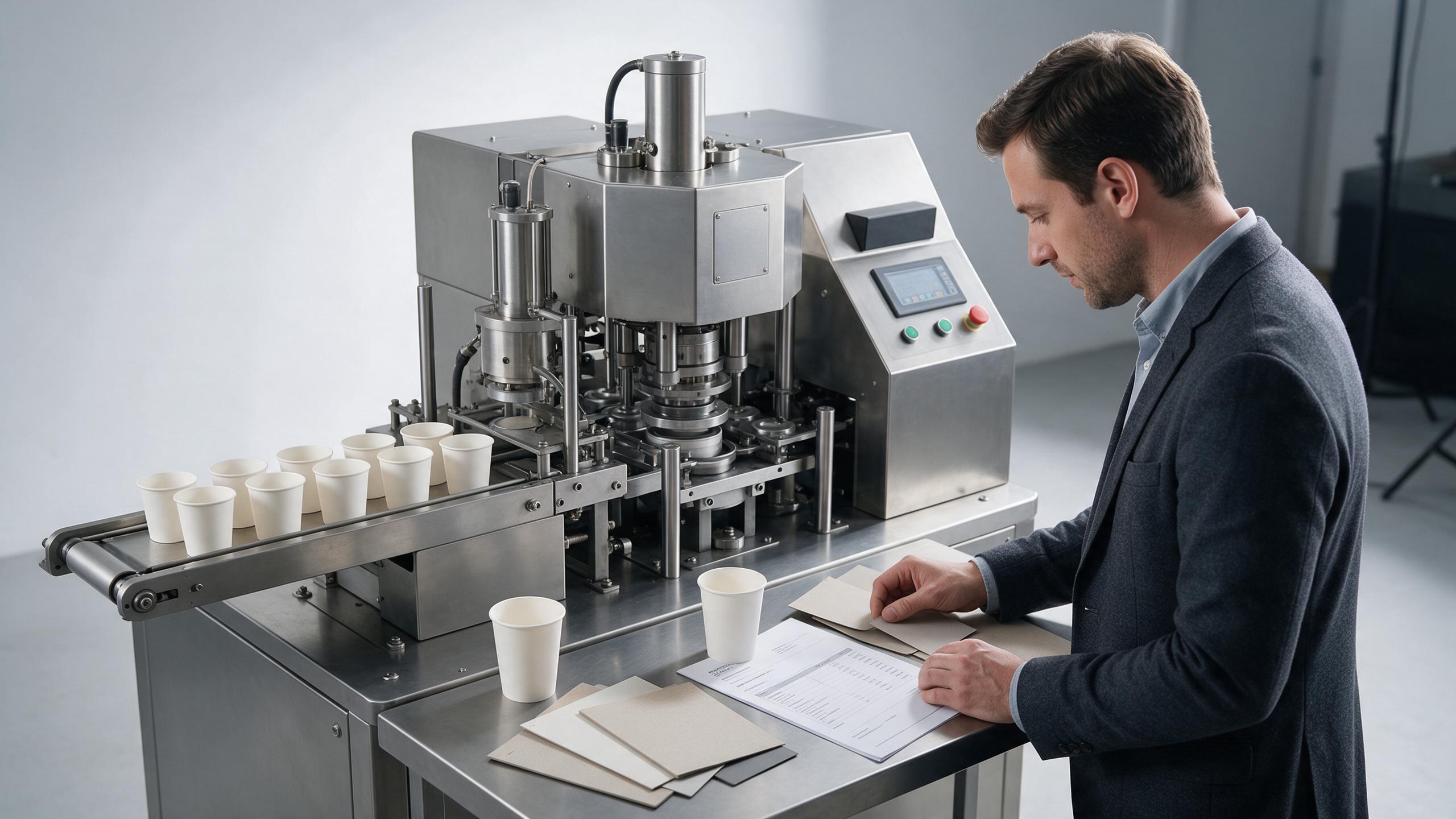
Do not compare a paper cup machine manufacturer only by the total at the bottom of the quotation. Turn each offer into a comparison table with the same columns: machine configuration, included tooling, trial material assumptions, commissioning scope, operator training, documentation, packing, delivery terms, spare parts, and post-delivery communication route.
This also helps when evaluating a disposable cup machine producer. The useful question is not whether a supplier uses a broad product label. It is whether the proposal identifies the exact cup application and the boundaries of the offer. If an item is not listed, mark it as pending rather than assuming it is included.
| Comparison area | Question for the supplier | Evidence to request |
|---|---|---|
| Configuration | What cup and material conditions informed the proposal? | Written configuration note and assumptions |
| Trial | What sample will be used and what will be observed? | Trial plan and agreed acceptance points |
| Commercial scope | Which tooling, services, and parts are included? | Itemized quotation |
| Support | Who handles installation, training, and technical questions? | Named process and response path |
Agree on a trial and acceptance plan
A paper cup machine manufacturer does not need to promise a universal result to provide a useful trial plan. Ask for the agreed cup sample, material condition, operating checks, visual points to inspect, and responsibilities for recording observations. For example, the buyer can ask how forming edges, feeding continuity, collection, and changeover actions will be reviewed during the discussion.
Set acceptance conditions early. The paper cup machine manufacturer should be able to distinguish between an agreed test condition and an issue that still depends on paper, tooling, utility supply, operator practice, or other site factors. This creates a clearer path for resolving discrepancies and reduces the temptation to treat every cup-quality issue as an equipment issue.
Verify documentation and support boundaries
For cross-border projects, ask the paper cup machine manufacturer which documents are included and which destination requirements must be confirmed by the buyer or local adviser. EU machinery legislation, for example, addresses machinery and conformity assessment; that does not establish the status of any individual machine. The practical step is to confirm the applicable market requirement, documentation scope, declaration responsibility, and any site-level obligations before shipment.
Support needs similar precision. Ask the paper cup machine manufacturer how installation guidance, startup support, operator training, troubleshooting, and spare-parts communication will work. Request names or roles, communication channels, information needed to diagnose a problem, and the expected boundary between supplier support and the buyer's local team.
Compare lifecycle assumptions, not only purchase price
The lowest initial figure may not be the lowest operating burden. When comparing a paper cup machine manufacturer, include planned spare parts, training time, changeover demands, maintenance access, expected records, and the cost of avoidable production interruptions in the discussion. The goal is not to predict a universal total cost, but to reveal which assumptions differ across suppliers.
Use the same questions with every paper cup machine manufacturer: What needs routine inspection? Which parts should be discussed before startup? What information should an operator record when a fault appears? How will the supplier and plant distinguish a material issue from a machine-setting issue? Clear answers are more valuable than generic assurances.
A practical supplier-selection checklist
- Send the same cup, material, output, and changeover brief to every paper cup machine manufacturer.
- Request a configuration explanation tied to those conditions.
- Compare itemized quotation scope, not just totals.
- Agree on trial inputs, observations, and acceptance points.
- Confirm documentation and destination-market responsibilities where relevant.
- Clarify training, spare-parts, and troubleshooting communication before purchase.
When you compare a paper cup machine manufacturer on a common evidence set, the decision becomes easier to defend across purchasing, production, and technical teams. Keep a simple record of confirmed points, open questions, and the next action. That record is often the most useful output of the selection process.
 ONLINE