
 EN

How to Choose Paper Cup Machine Manufacturer?
Choosing a paper cup machine manufacturer is not simply a matter of comparing quoted prices. The machine will affect your cup quality, labor plan, maintenance workload, and ability to meet delivery commitments. Buyers sourcing for food-service packaging should first define the cups they intend to make, then use a structured evaluation process to compare factories on evidence rather than on a brochure alone.
For a procurement team, the useful question is: can this supplier show that its equipment, process support, and response plan fit our production target? The checklist below turns that question into practical due diligence.
1. Start with the cup specification, not the machine listing
A capable manufacturer should ask about the end product before proposing a configuration. Prepare a brief that includes cup sizes, paperboard type and coating, single-wall or double-wall construction, printing requirements, intended markets, and planned shift pattern. These details influence tooling, heating and sealing settings, inspection needs, and the way the line is commissioned.
Also distinguish launch volume from the output you need after the business stabilizes. A supplier that understands the difference can discuss the right automation level instead of pushing the same model into every project. This early conversation is a useful test of whether the paper cup machine manufacturer is listening to the process rather than just responding with a catalog.
2. Compare stable output, not only the rated speed
Speed claims are meaningful only when the machine is producing cups that meet your agreed acceptance criteria. Ask what cup format, paper grade, operator conditions, and inspection method were used for the stated rate. Then request a sample-production video or a live remote trial using a comparable specification.
For a high speed paper cup machine manufacturer, ask how paper feeding, cup ejection, lubrication, alarms, and changeovers are handled at the proposed operating rate. A short demonstration that shows only the highest display value does not explain scrap levels, restart time, or how the line behaves after a routine adjustment.
- What output range is expected for the specific cup and paperboard?
- Which checks are performed during a sample run: appearance, bottom seal, side seam, and dimensional consistency?
- What conditions cause the line to slow down, and how is the operator expected to respond?
- Which consumables and spare parts are normally prepared before commissioning?
3. Examine the forming system and maintenance access
Mechanical layout affects the daily work around a cup-forming line. If you are considering an open cam paper cup machine manufacturer, discuss how the cam system is inspected, adjusted, lubricated, and serviced. “Open cam” describes a design approach; it does not remove the need to verify machining quality, access points, wear parts, and the service instructions supplied with the machine.
Ask the factory to walk through the components an operator or technician will touch during a normal shift. Clear answers about adjustment points, fault indications, cleaning, and spare-part identification are often more useful than broad statements about reliability. The aim is to understand the maintenance routine your team can actually sustain.
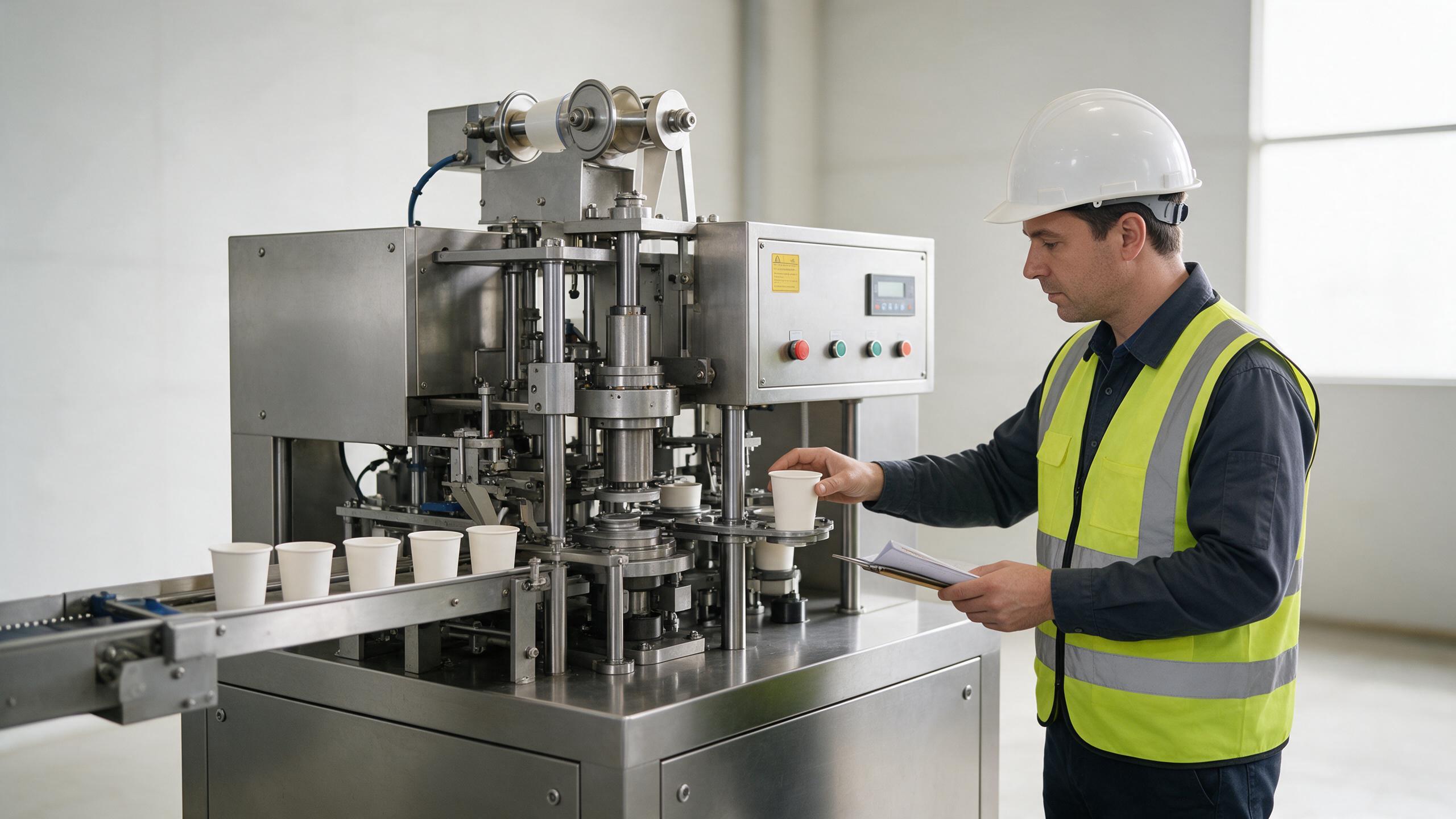
4. Audit the manufacturer’s engineering and quality process
Before placing an order, arrange a factory visit when practical or conduct a detailed video audit. Observe whether the supplier can trace key components, explain its assembly flow, and show how it checks a machine before shipment. The visit should focus on evidence: work areas, machining or assembly capability, test runs, documentation control, and the people who will support the project.
Request the documents needed for your destination market and let your compliance or import team verify which ones apply. A paper cup machine manufacturer should be able to identify the documentation it can provide and state any limits clearly. Do not treat a logo on a quotation as proof that every configuration meets every market requirement.
5. Make the sample run part of your acceptance plan
A sample run is the point where requirements become measurable. Send or specify the relevant paper material where feasible, agree on cup dimensions and visual criteria, and document the checks that matter to you. If remote witnessing is necessary, request continuous footage of preparation, operation, rejected samples, and the final samples rather than an edited highlight clip.
| Acceptance topic | What to agree before production |
|---|---|
| Cup format | Size, shape, paperboard, coating, printing, and tolerance expectations |
| Run conditions | Target rate, warm-up, operator actions, material feed, and run duration |
| Quality checks | Appearance, seam and bottom integrity, dimensions, and sampling method |
| Handover | Manuals, electrical information, spare-parts list, packing details, and training scope |
6. Evaluate service as a project timeline
Machine support begins before shipment. Ask who will review drawings, who prepares the machine for your cup specification, how commissioning is delivered, and how technical questions are handled across time zones. Get the response path in writing: primary contact, escalation route, spare-parts ordering process, and the information needed when reporting a fault.
A useful supplier will help you separate issues caused by settings, materials, wear, and electrical controls. That does not mean every problem can be solved remotely; it means both parties know what records, photos, samples, or video are needed to diagnose an issue efficiently.
7. Use a weighted comparison before you decide
Build a comparison sheet for each shortlisted paper cup machine manufacturer. Weight the criteria according to the risk in your project: specification fit, sample results, engineering transparency, documentation, delivery plan, service capacity, and total operating considerations. Price belongs on the sheet, but it should not be the only score.
When two offers appear similar, return to the evidence from the sample run and factory review. The supplier that gives precise, consistent answers and records the project assumptions is usually easier to work with after the deposit has been made.
Questions to send before signing a purchase order
- Which machine configuration is proposed for our cup sizes and paper material, and why?
- What sample-run criteria will be recorded before shipment?
- Which wear parts should be stocked for initial operation?
- What training, manuals, and electrical documentation are included?
- Who provides commissioning support and what is the escalation route?
- What is the planned timeline from technical confirmation to shipment?
Conclusion
Selecting a paper cup machine manufacturer is a risk-reduction exercise. Start with the cup specification, validate stable output through a relevant trial, inspect the forming and maintenance approach, and make service responsibilities visible before payment. This method gives your team a clearer basis for selecting a supplier that fits the production plan.
 ONLINE