
 EN

Cup Manufacturing Machine Advantages for Brands
For a brand that sells beverages, foodservice packaging, or promotional cups, a cup manufacturing machine is more than a production asset. It is a way to bring format decisions, quality checks, and supply planning into one operating conversation. The useful question is not simply whether a cup manufacturing machine can run quickly. It is whether it supports the cup sizes, paperboard, decoration plan, quality criteria, and delivery rhythm that the brand needs.
That distinction matters because a cup is visible to the end user. A weak side seam, an inconsistent rim, or a poor fit with a filling operation can affect the experience attached to the brand. From a B2B procurement perspective, the value of a cup manufacturing machine comes from repeatable decisions across the whole workflow, not from a headline speed figure alone.
Why brands evaluate the machine and the workflow together
A cup manufacturing machine forms a cup, but it also sits between material preparation and downstream packing or filling. Paperboard weight, coating type, blank accuracy, cup geometry, and intended beverage temperature can all affect the forming process. A sound review starts with the finished cup specification and works backward. In practical terms, that means documenting the diameter, height, bottom shape, print area, material construction, planned volumes, and acceptable variation before comparing a cup manufacturing machine.
This approach gives marketing, procurement, and operations teams a common brief. Marketing can protect the intended presentation; procurement can define what needs to be included in a quotation; operations can identify trial conditions and changeover expectations. Rather than treating the equipment as an isolated purchase, the brand can treat the cup manufacturing machine as one controlled part of its packaging system.
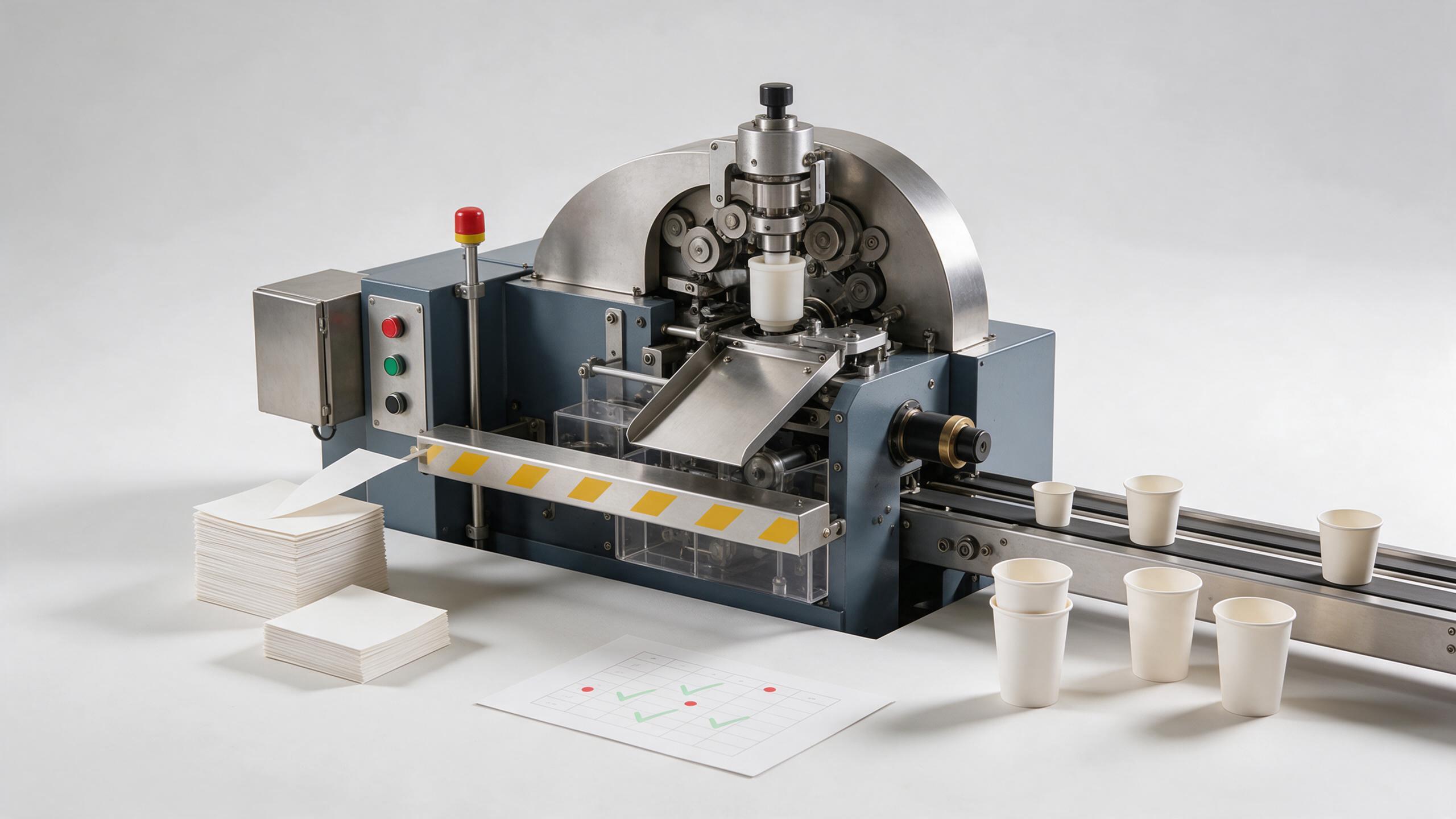
Four practical advantages for a brand
1. More control over cup formats and launch timing
When a new drink size, event format, or seasonal design is being considered, the discussion often begins with a cup drawing and a demand forecast. A cup manufacturing machine can make that discussion more concrete by forcing the team to check tooling, material, and production conditions early. It does not remove the need for development work, but it can make dependencies visible before artwork, inventory, and commercial commitments are finalized.
For brands with several cup sizes, mold and changeover planning deserve the same attention as nominal output. Ask which format changes are expected, what setup information is required, and how trial cups will be approved. The advantage of a cup manufacturing machine is stronger when the format plan is realistic rather than when every possible size is assumed to run under identical conditions.
2. A clearer path to consistent quality checks
Consistency is a brand issue as much as a factory issue. A cup manufacturing machine creates defined forming stages where the team can establish inspection points for shape, rim finish, side seams, bottom sealing, appearance, and packing. The exact plan should reflect the cup and market, but a documented check routine makes it easier to trace a concern back to material, setup, or operating conditions.
Leak checks are a useful example. Water-fill or air-pressure methods may be considered in a quality plan, but the test method, sample frequency, acceptance criteria, and response to a failed sample should be agreed before production. Material properties can also influence sealing behavior, so cup trials should use the intended paperboard and coating rather than a convenient substitute. In this setting, the cup manufacturing machine provides a repeatable process window for verification; it does not replace a brand's own quality requirements.
3. Better coordination with paper container making equipment
A cup program rarely ends at forming. Printing, blank preparation, inspection, sleeving, packing, and warehouse handling all shape the final result. Reviewing a cup manufacturing machine alongside paper container making equipment helps a brand see where handoffs may create delays or variation. For example, a forming plan is only useful if blank supply, print registration, and packing capacity can support the same schedule.
This line-level view can help teams compare options on usable workflow rather than purchase price alone. It also makes responsibilities clearer: who confirms paper specifications, who accepts first-off samples, who holds spare tooling, and who records deviations? A cup manufacturing machine is easier to manage when these interfaces are defined before commissioning.
4. A more disciplined total-cost comparison
The initial price of a cup manufacturing machine is important, but it is only one line in the decision. Brands can compare likely costs for tooling, utilities, training, spare parts, planned maintenance, startup trials, inspection, rejected material, and the operational effect of format changes. This does not require guessing a savings figure. It requires making the cost categories visible and asking suppliers to state what is included, excluded, or subject to site conditions.
A useful comparison table should also distinguish stated capability from conditions that must be verified. If an output claim depends on a particular cup size, paper type, or operator routine, record that condition. That makes the cup manufacturing machine evaluation more credible and reduces the chance that a general specification is mistaken for a commitment about a specific brand program.
Where filling and sealing fit into the decision
Some brands need more than empty cups; they need a controlled route into a filled, sealed, and packed product. In that case, the relationship between the cup-forming stage and a cup filling and sealing machine manufacturer should be examined early. Cup dimensions, rim condition, material behavior, stack handling, sanitation expectations, and line timing can all affect integration.
The aim is not to assume that one supplier must provide every part of the line. The aim is to define interfaces and acceptance responsibilities. A cup manufacturing machine may be the right starting point for empty-cup capacity, while a separate filling partner supports the product process. Both teams should work from the same approved cup specification and trial plan.
A procurement checklist before committing
Before selecting a cup manufacturing machine, organize the project around evidence rather than broad promises:
- Provide drawings and samples for every cup format in scope.
- State the intended paperboard, coating, print treatment, and target market requirements.
- Request a trial plan that identifies materials, tooling, inspection points, and acceptance criteria.
- Clarify changeover tasks, operator training, maintenance access, spare-part scope, and documentation.
- Map the handoff to printing, blank preparation, packing, and, where relevant, filling and sealing.
- For food-contact applications, validate applicable material and regulatory requirements for each destination market; a U.S. program, for example, may need to consider the scope of 21 CFR 176.170 for paper and paperboard components in contact with aqueous and fatty foods.
These questions turn a cup manufacturing machine quotation into an evaluation record that different stakeholders can review. They also help separate confirmed facts from items that need a trial, a document review, or a site-specific check.
Choose for the brand program, not a generic specification
The strongest advantage of a cup manufacturing machine is decision discipline. It gives a brand a structured way to connect cup design, material compatibility, production control, and downstream operations. If the priorities are clear, the equipment discussion becomes more useful: first confirm the cup and paper conditions, then assess the production flow, and finally agree on how success will be verified.
For an expanding packaging program, that sequence can support more reliable launches and clearer supplier conversations. A cup manufacturing machine should be assessed as part of a working system—one that protects the brand's intended cup experience while leaving room for documented trials and market-specific validation.
 ONLINE