
 EN

What Categories Comprise Paper Machinery?
“Paper machinery” is a broad working term rather than the name of one machine. It can refer to equipment that prepares fiber, makes a paper web, finishes a parent roll, or converts paperboard into a saleable package. For a mill, the centre of the system is the paper machine itself. For a converter, the priority may instead be printing, die cutting, forming, inspection, and packing. Drawing that boundary early makes equipment discussions clearer and prevents a downstream line from being mistaken for a complete papermaking plant.
From a food-packaging application perspective, the useful question is not simply which paper machinery category is largest. It is which process step the business needs to control. A plant making base paper has a different equipment map from one buying coated paperboard to make cups or takeaway containers. The sections below place both operations in one practical framework.
A process map for paper machinery
Most industrial paper machinery can be grouped by the path of the material: fiber or recovered paper becomes prepared stock; stock becomes a continuous sheet; the sheet becomes a reel or cut format; then, where required, that material becomes a printed or formed product. Not every facility owns every stage. Many packaging plants enter the chain after the paperboard has already been produced.
A modern papermaking line is often described through stock preparation, forming, pressing, drying, and finishing. The forming, press, and dryer sections are the core paper machine sections. Upstream and downstream systems matter just as much because their settings influence sheet consistency, handling, and the final format. Exact layouts differ by grade, raw material, production scale, and local operating requirements.
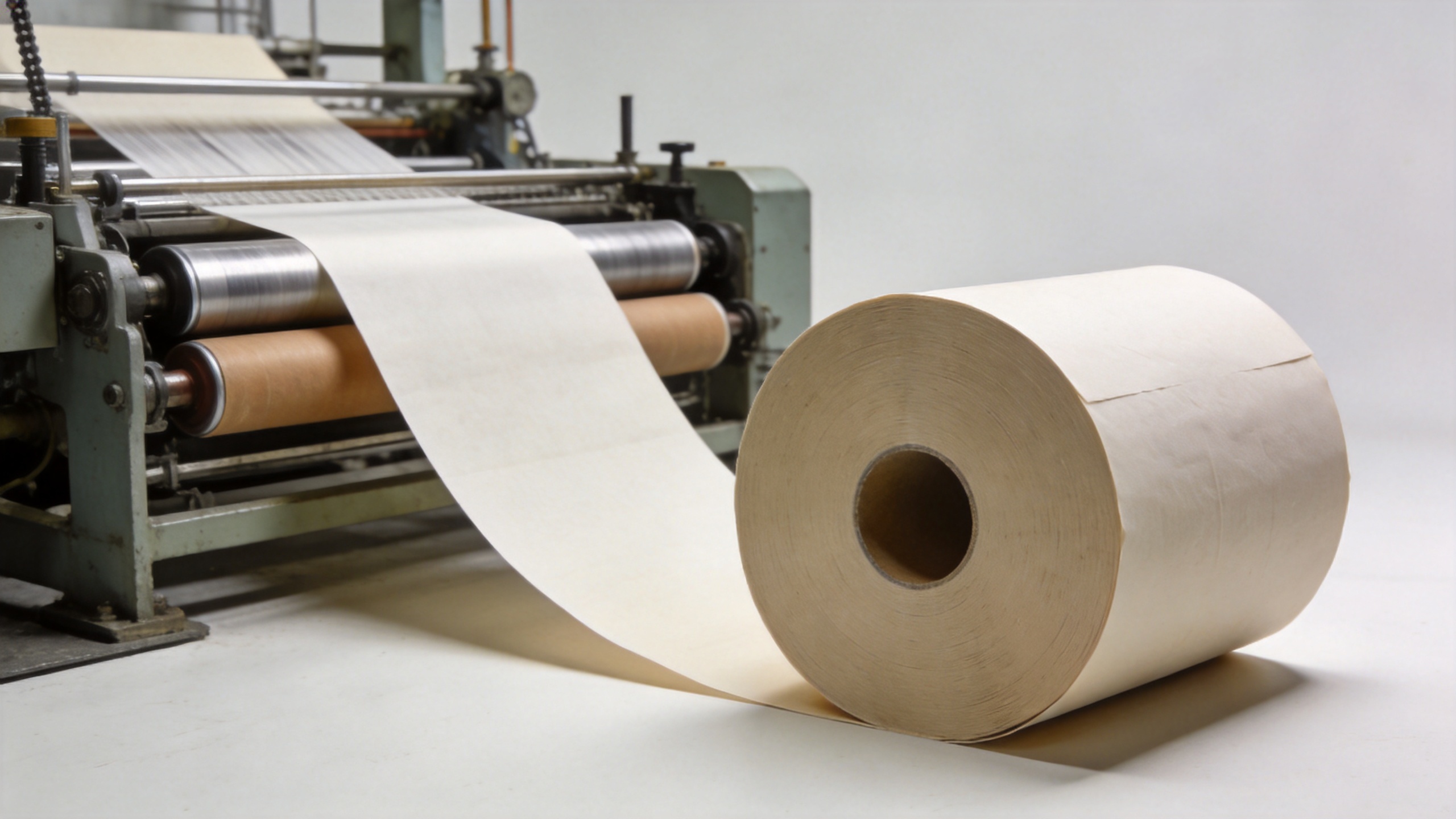
1. Stock preparation and pulp-processing equipment
This category covers paper machinery that turns virgin fiber, recovered paper, or another fiber source into stock suitable for the next process. Typical systems include pulpers, agitators, high-density cleaners, pressure screens, refiners, pumps, chests, and approach-flow equipment. Their job is to disperse fiber, remove unwanted material, manage consistency, and deliver usable stock to the machine in a controlled way.
For recycled-fiber operations, sorting and contaminant removal can be especially important. For specialty grades, refining and additive handling may receive more attention. The important distinction is that this equipment prepares material; it does not yet form the finished sheet. When comparing paper machinery in this group, ask what furnish is being used, what contaminants are expected, and how much grade change flexibility is needed.
2. Sheet-forming paper machinery
The next category is the machine section that creates a continuous web. A headbox distributes prepared stock onto a forming fabric, while drainage elements remove water and support fiber distribution. Common concepts include Fourdrinier, twin-wire, and crescent-forming arrangements. The right configuration depends on the paper or tissue grade, basis-weight range, quality target, and operating plan.
It is tempting to compare only line speed here. However, speed is only one part of the decision. Fiber blend, formation quality, trim width, control approach, and the rest of the line’s capacity determine whether a proposed paper machine fits the process. If material and end use have not been confirmed, a headline output figure has limited value.
3. Pressing, drying, and surface-treatment systems
After formation, the wet web passes through pressing equipment that mechanically removes more water. Dryer sections then use heated cylinders or another drying arrangement to bring the sheet toward its target moisture level. Depending on the grade, this part of the paper machinery may also include size-press, coating, or surface-treatment stations.
These sections should be considered as a connected system. Better water removal before drying can change the thermal load later in the process, while a surface treatment can affect printability, stiffness, or downstream converting behavior. More accurately, no single setting guarantees the same result for every furnish or product grade; the relevant operating conditions need to be checked together.
4. Finishing and roll-handling equipment
Finishing paper machinery prepares the manufactured sheet for shipment or conversion. It can include calenders, reels, winders, slitter-rewinders, sheeters, roll wrappers, roll-handling equipment, and quality-control stations. A calender changes surface characteristics; a winder builds parent rolls; a sheeter converts web material into sheets; and a slitter-rewinder divides a wide parent roll into narrower rolls.
A toilet paper slitting machine belongs in this downstream finishing or converting area, not in the wet end of a paper mill. It is used after a parent roll exists and is selected around web width, roll specification, cut quality, unwind control, and material handling. In a tissue project, it may sit alongside embossing, perforating, rewinding, log-saw, and packaging stations, depending on the product format.
5. Printing and coating equipment for converting
Once paper or paperboard is available in a workable format, converting paper machinery can add graphics, barriers, or functional layers. Flexographic printing presses, coating units, laminating equipment, curing systems, and web-guiding devices commonly fall into this group. These machines do not manufacture the base sheet, but they can be central to the performance and appearance of a paper package.
For food-service formats, the choice should be driven by the substrate, ink and coating system, print coverage, registration requirements, and drying method. Production speed matters, but so do changeovers and waste during setup. A line that is fast for a single stable design may not be the practical choice where short runs or multiple cup sizes are common.
6. Paper container equipment
Paper container equipment is a focused converting category used to turn printed or plain paperboard into cups, bowls, cartons, trays, and related formats. Depending on the product, the line may include blank feeding, side-seam forming, bottom forming, heating, curling, rim shaping, stacking, inspection, and packing. It typically uses purchased or internally produced paperboard rather than making paper from pulp.
This is where a manufacturer should separate a paper-container line from general paper machinery. The former is evaluated around container geometry, material structure, food-contact requirements, sealing method, output rhythm, and change-part management. Before discussing a configuration, document the cup or container dimensions, board specification, desired production range, and packaging method. Those conditions make a recommendation more useful than a generic claim about automation.
7. Auxiliary systems that support the whole line
Paper machinery also depends on equipment that is easy to overlook: vacuum and air systems, water treatment, steam and condensate systems, drives, electrical controls, lubrication, dust collection, conveyors, and automated inspection. These are auxiliary categories, but they strongly affect uptime, energy use, maintenance access, and operator workflow.
Safety belongs in the category discussion too. Slitting, cutting, and forming stations have moving webs, nip points, rotating parts, and points of operation that require safeguards appropriate to the installation. In the United States, OSHA 29 CFR 1910.212 states a general requirement for guarding where machine operation exposes employees to injury, including at guillotine-cutting operations. Local law, the machine design, and the plant’s own risk assessment remain decisive.
How to classify the equipment needed for your project
A simple sequence can narrow the paper machinery list:
- Start with the product. Are you making base paper, tissue rolls, printed paperboard, cups, cartons, or another finished format?
- Mark the entry point. Will the facility process fiber and make a web, or buy rolls and convert them?
- Map the critical transformations. List preparation, forming, drying, slitting, printing, forming, inspection, and packing only where they are actually needed.
- Define the operating conditions. Record material, width or format, output target, quality checks, utilities, and changeover expectations.
- Review interfaces. Check whether each machine’s delivery rhythm, controls, and handling method fit the next station.
This approach shifts the conversation from isolated specifications to line rhythm. It also exposes a common omission: a machine may be suitable on its own yet create a bottleneck at a winder, printer, stacker, or packing station.
Final takeaway
Paper machinery comprises more than a papermaking machine. The main categories are stock preparation, sheet forming, pressing and drying, finishing, printing and coating, paper-container conversion, and the utilities and controls that connect them. A toilet paper slitting machine fits the roll-converting end of that map, while paper container equipment serves the final forming stage for packaging products.
For a practical equipment plan, begin with the end product and work backward through each material transformation. That makes it easier to distinguish essential paper machinery from optional downstream equipment, identify interfaces early, and request a configuration that matches the actual production task.
 ONLINE