
 EN

What Is Paper Machinery and Its Types?
Paper machinery is the broad term for equipment that turns fibre, paper, or paperboard into a usable sheet, roll, or finished paper product. The phrase can describe a complete papermaking line, a single section such as a press or rewinder, or downstream equipment that converts paperboard into cups, cartons, bags, and other formats. That breadth is useful, but it can also confuse a purchase discussion. A mill making base paper needs very different paper machinery from a plant that forms coated cup blanks into food containers.
From a B2B procurement viewpoint, the practical question is not simply “Which machine fits the job?” It is: Which production stage must this equipment perform, with which material, at what output and quality target? Answering that first makes the types of paper machinery much easier to compare.
What does paper machinery include?
At its widest, paper machinery covers the process from fibre preparation through sheet formation and finishing, followed by converting and packing where required. A conventional paper-making flow is often described as stock preparation, forming, pressing, drying, surface finishing, and winding. Each stage has a different job: prepare a uniform fibre suspension, remove water, develop sheet properties, and deliver a roll or sheet suitable for its next use.
Downstream lines extend that definition. Once paper or paperboard is available, it may be printed, die-cut, laminated, pasted, stamped, formed, counted, or packed. A paper pasting machine, for example, belongs to the converting side of the workflow because it applies adhesive or bonds layers. A paper stamping machine generally performs a pressing, embossing, marking, or die-based operation on a prepared substrate; its exact function depends on the tooling and product design.
The main types of paper machinery
1. Stock-preparation equipment
Stock preparation equipment handles raw fibre, recycled paper, and additives before the material reaches the paper machine. This category can include pulpers, screening and cleaning equipment, refiners, chests, agitators, and approach-flow components. The aim is not merely to move material. It is to create a stable, suitably prepared furnish for the grade being made.
When comparing this paper machinery, buyers should define fibre source, contamination level, target grade, and the consistency required by the next stage. Those conditions influence whether cleaning, screening, refining, or mixing capacity deserves priority.
2. Sheet-forming machinery
The forming section is where diluted stock becomes a continuous wet web. A headbox distributes stock across a moving forming fabric or wire, allowing water to drain away while fibres begin to form a sheet. Common forming concepts include Fourdrinier-style single-wire arrangements, twin-wire formers, and cylinder-mould systems. They are not interchangeable labels: the product grade, basis weight, required formation, and line design all affect the suitable arrangement.
For a buyer, this category of paper machinery should be discussed together with stock preparation and press capacity. A former cannot be evaluated in isolation if upstream stock quality or downstream dewatering limits the line.
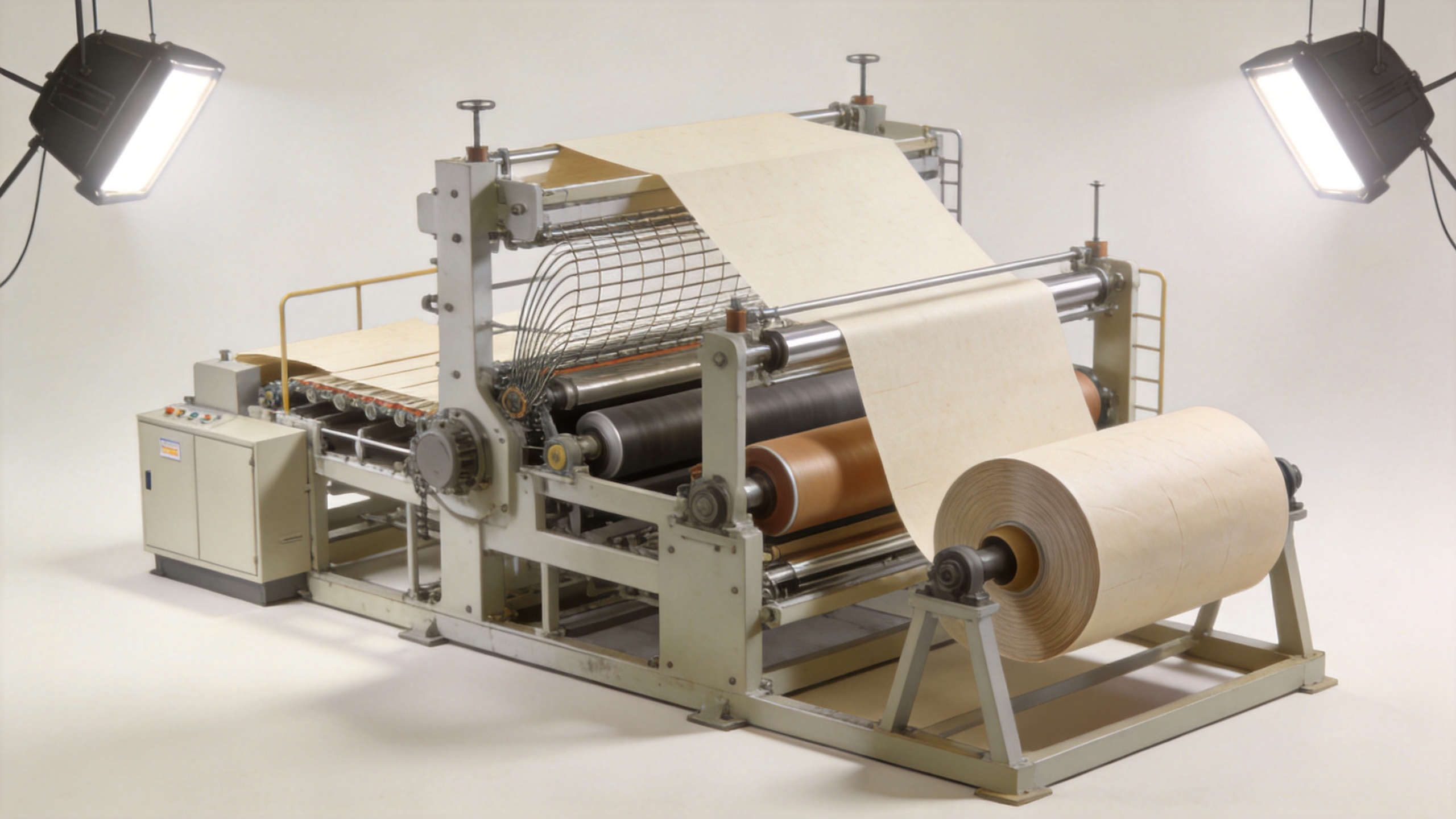
3. Press and dewatering equipment
After forming, the sheet still contains substantial water. Press sections use rolls, felts, and pressure zones to remove water mechanically while supporting the web. This is an important distinction in a paper machine: mechanical dewatering occurs before the dryer section removes much of the remaining moisture thermally.
Press configuration affects runnability, sheet bulk, and the load placed on later drying stages. Rather than treating “more pressure” as a universal upgrade, a project team should review grade requirements, sheet strength, operating speed, felt management, and the rest of the line.
4. Drying, surface-treatment, and finishing machinery
Drying equipment brings the web toward its final moisture condition, often using steam-heated cylinders and supporting fabrics. Depending on the product, the line may then include sizing or coating equipment, calenders for smoothing, slitters, winders, and reel systems. These machines determine how the finished web is prepared for shipment or for a converting process.
This group is especially important when a customer needs a particular surface, roll width, winding quality, or downstream print and forming behaviour. A visually smooth sheet is not automatically appropriate for every conversion step; coating, stiffness, moisture, and roll handling must be considered together.
5. Converting machinery
Converting machinery changes paper or paperboard into a specific intermediate or finished format. It includes slitting and rewinding systems, sheeters, printing equipment, die-cutters, laminating lines, folding and gluing equipment, and machines for cups, containers, bags, plates, or cartons. This is the category most relevant when a factory purchases paperboard rather than manufacturing base paper itself.
For food-packaging applications, paper cup forming equipment is a clear example. The workflow can involve feeding prepared blanks, shaping the sidewall, sealing the side seam, fitting and sealing the bottom, curling the rim, inspecting, counting, and packing. The appropriate paper machinery is therefore defined by cup diameter, height, paperboard and barrier system, tooling, output target, and quality-control method—not by speed alone.
6. Specialty and post-processing equipment
Some operations need a more focused machine category. A paper pasting machine may join paperboard layers, attach components, or support box and carton manufacture. A paper stamping machine may add an embossed pattern, press a feature, or make a die-based mark, depending on its tooling and application. Other specialty equipment may cover tissue converting, core winding, label processing, filter-media handling, or protective-paper production.
In these cases, the safest selection method is to define the substrate, finished geometry, adhesive or tooling requirement, acceptable tolerance, and inspection point before comparing suppliers. “Paper machinery” is too broad to serve as a final specification by itself.
How to classify paper machinery for a project
A useful way to classify equipment is by where it sits in the material flow:
- Make the sheet: stock preparation, forming, pressing, drying, and finishing.
- Prepare the roll or sheet: slitting, rewinding, sheeting, coating, and printing.
- Convert the substrate: die cutting, pasting, stamping, folding, sealing, and forming.
- Control and deliver: inspection, counting, packing, conveying, and pallet preparation.
This structure prevents a common mistake: comparing upstream paper-making equipment with downstream packaging machinery as though they solve the same problem. They are connected by material flow, but they have different inputs, operating controls, and acceptance criteria.
A practical selection checklist
- Start with the finished product. Describe the paper grade, roll, blank, cup, carton, or other output in measurable terms.
- Map the process boundary. Decide whether the project begins with fibre, purchased rolls, printed blanks, or pre-cut components.
- List material conditions. Include basis weight, coating or barrier system, moisture sensitivity, adhesive needs, and dimensional range where relevant.
- Set output and changeover expectations. Consider the normal production mix, not only a single maximum-speed case.
- Define quality checks. For formed paper containers, side-seam and bottom-seal consistency are examples of checks that should be built into the process plan.
- Confirm utilities and support needs. Space, power, compressed air, steam, extraction, operator skill, spare parts, installation, and commissioning all affect a workable line.
For ZheJiang RUIDA Machinery’s food-packaging focus, that last converting stage is often where an equipment conversation becomes concrete: the cup or container format, paperboard, sealing method, tooling, and inspection requirement provide a more reliable basis for evaluating an automatic paper cup machine or related packaging line.
Conclusion
Paper machinery is not one machine type. It is a family of equipment used to prepare fibre, make a paper web, finish rolls and sheets, and convert paperboard into practical products. The most useful classification follows the material flow: make the sheet, prepare it, convert it, then inspect and pack it. Once a project team identifies its starting material and finished output, it can narrow the conversation to the paper machinery that actually matches the process.
If you are planning a converting line, prepare a short requirement sheet before requesting quotations. Include the product drawing, paperboard or roll specification, expected production mix, output goal, quality checks, and site utilities. That gives suppliers a clearer basis for discussing configuration and helps buyers compare proposals on more than a headline speed.
 ONLINE