
 EN

What Pulping Features Define Paper Making Machine?
A paper making machine is often judged by its speed, finished grade, or drying section. Yet the quality of the sheet begins earlier, with the way the system receives, separates, cleans, and conditions fibre. For a mill planner, the pulping side of a paper making machine is not a stand-alone tank. It is the front end of a furnish-control system that determines how consistently the wet end can run.
This matters whether the target is packaging board, tissue, printing grades, or a converted product. A well-matched paper making machine begins with pulp that is sufficiently dispersed, protected from damaging contaminants, and prepared for the paper grade. The following features help define what the pulping section should do before stock reaches the headbox.
Start with fibre liberation, not just agitation
The first pulping feature of a paper making machine is controlled fibre liberation. Water, rotor action, and retention time must separate fibres without turning useful material into excessive fines or breaking contaminants into pieces that are harder to remove later. The appropriate approach depends on the raw material. Clean virgin pulp can tolerate a different pulping arrangement from recovered corrugated material, mixed wastepaper, or broke returned from the machine.
In practical terms, buyers should ask how the paper making machine handles bale pulp, recycled fibre, trim, and wet-strength-containing broke. The answer should describe the intended furnish and the reject path, rather than promise that one pulper configuration suits every grade. A line that preserves contaminant size during initial disintegration can make downstream screening more effective.
Consistency control is a defining pulping feature
Consistency is the fibre concentration in the water-fibre mixture. It influences how a paper making machine transfers energy to fibres, how readily contaminants separate, and how stable the flow remains as stock moves to cleaning and screening. The appropriate operating range is grade- and furnish-specific, so it should be treated as a process target rather than a universal number.
Useful pulping systems include dependable dilution points, agitation that avoids dead zones, and instrumentation that alerts operators when incoming furnish changes. If consistency drifts, cleaning efficiency, refiner response, and headbox stability can drift with it. For this reason, a paper making machine should be evaluated as a connected stock-preparation line, not as isolated equipment.
Protect the process with staged contaminant removal
Recovered-fibre production adds a second core feature: the ability to remove unwanted material in stages. Heavy debris, light plastics, string, grit, and unpulped fragments do not behave the same way. A capable paper making machine feeds stock through a suitable combination of cleaning and screening stages so that each downstream component sees a more uniform furnish.
Pulping itself should support this sequence. Coarse rejects should leave through a controlled route, while acceptable fibre continues toward cleaners and screens. The objective is not merely cleaner pulp; it is fewer interruptions, less wear, and more predictable sheet formation. Before selecting a paper making machine, confirm how rejects are handled, where dilution water is introduced, and how the process prevents useful fibre from being discarded unnecessarily.
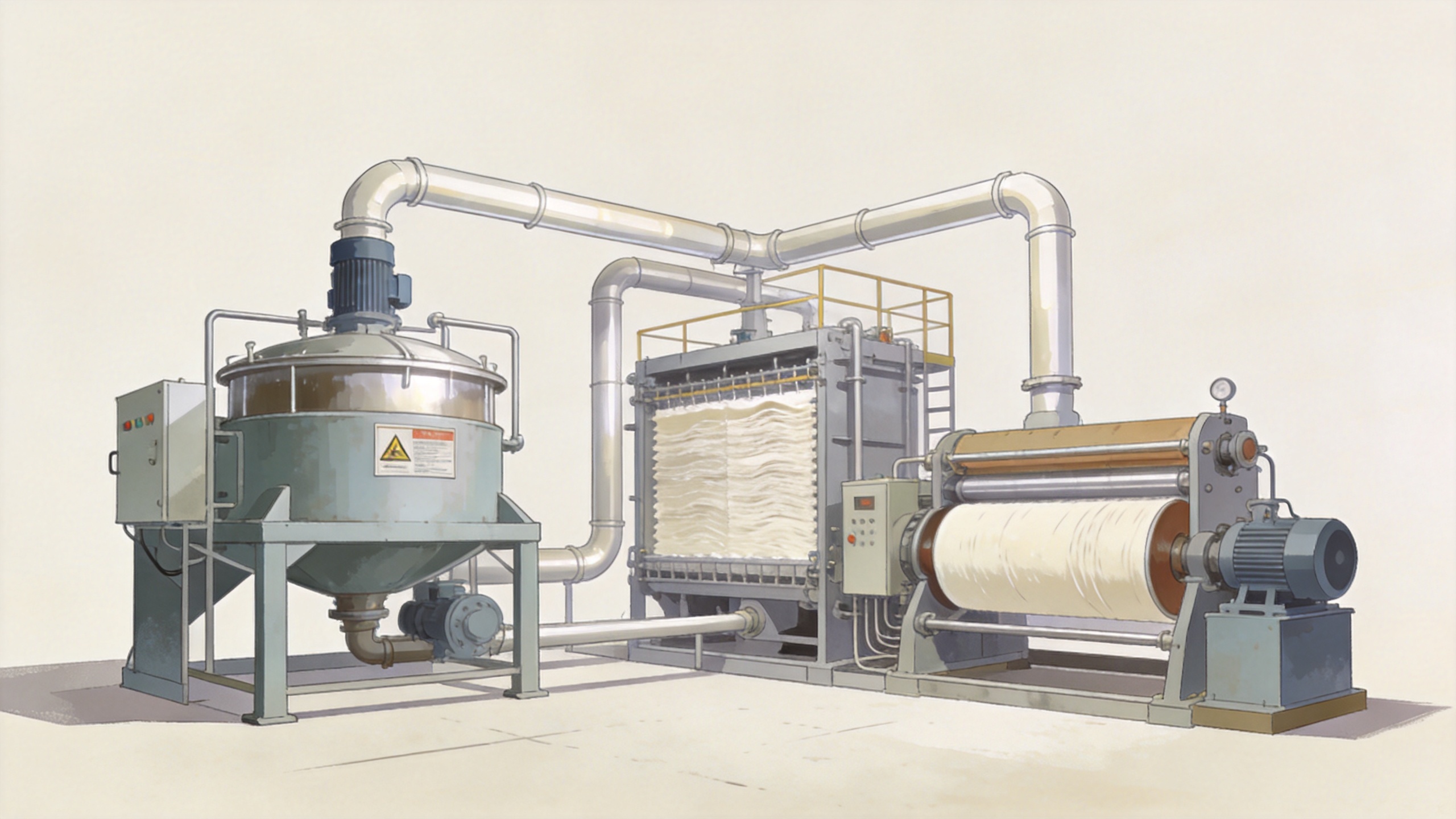
Screening and refining must match the paper grade
A pulper cannot complete stock preparation alone. After fibre liberation, screens remove remaining oversized contaminants and shives, while refiners develop fibre flexibility and bonding potential. The pulping features of a paper making machine should therefore make the later stages easier to control, not force them to compensate for unstable stock.
For packaging grades, the system may prioritize contaminant tolerance and robust fibre development. For tissue or lighter grades, excessive refining can reduce desirable bulk, so gentler treatment may be appropriate. This is also where the purchase conversation should separate a true paper-production line from equipment built for a different converting task. A paper core machine manufacturer, for example, may focus on winding and core-forming operations, whereas the pulping features of a paper making machine address fibre preparation before a sheet is made.
Flow stability links pulping to sheet formation
The most useful test of a pulping section is what happens downstream. Does the paper making machine receive furnish with repeatable cleanliness, consistency, and fibre condition? Stable stock lets operators tune the approach flow and wet end with less correction. Unstable stock can show up as formation variation, breaks, deposits, or unnecessary changes to chemical addition.
That is why storage, mixing, and level control belong in the evaluation. Chests and agitators are not glamorous components, but they provide time for blending and reduce sudden changes from batches of recovered fibre. A paper making machine designed around orderly stock flow gives operations teams a better chance to diagnose variation at its source.
Choose pulping features around the intended product
End use should guide the specification. A producer supplying material that will later be converted into food-service packs needs to distinguish upstream sheet making from downstream carton forming. A burger box making machine serves a converting role; it does not replace the pulping, cleaning, and refining functions that establish board furnish. Knowing that boundary prevents mismatched quotations and incomplete line planning.
When comparing a paper making machine, prepare a simple furnish brief: raw-material mix, contamination level, target basis-weight range, grade requirements, planned capacity, available water system, and expected broke volume. Then ask suppliers to explain the pulper type, consistency-management method, reject handling, screening sequence, refining approach, and control points in relation to that brief.
A practical review checklist
- Can the paper making machine liberate the planned fibres without excessive damage?
- Does the stock-preparation design control consistency from pulping through approach flow?
- Are heavy, light, and oversized contaminants addressed with appropriate stages?
- Can operators isolate, inspect, and maintain pulping and screening equipment safely?
- Does the refining plan support the required strength, bulk, surface, and runnability of the intended grade?
- Are the machine scope and downstream converting scope clearly separated?
Conclusion
The defining pulping features of a paper making machine are controlled fibre liberation, consistency management, staged contaminant removal, grade-appropriate refining, and stable flow to the wet end. Together, these features turn raw fibre into a furnish the rest of the line can use reliably. Instead of choosing a paper making machine from a short equipment list, assess how its pulping system fits the material, the paper grade, and the operating discipline of the mill.
 ONLINE