
 EN

Paper Making Machine Core Advantages
A paper making machine is valuable because it turns pulp preparation, sheet formation, water removal, drying, and winding into one coordinated production process. For a mill or converter, the benefit is not simply that paper can be made faster. The more important advantage is control: the line can be specified around a target grade, basis weight, roll format, and downstream process.
From a procurement perspective, a useful discussion of a paper making machine starts with the paper you need to deliver and the operating conditions needed to deliver it consistently. A line for parent rolls feeding a dining table paper roll making machine has different priorities from one supplying a till roll making machine. The two applications may both start with paper rolls, but their requirements for grade, winding, roll quality, and downstream conversion can differ.
1. Continuous production links the key papermaking stages
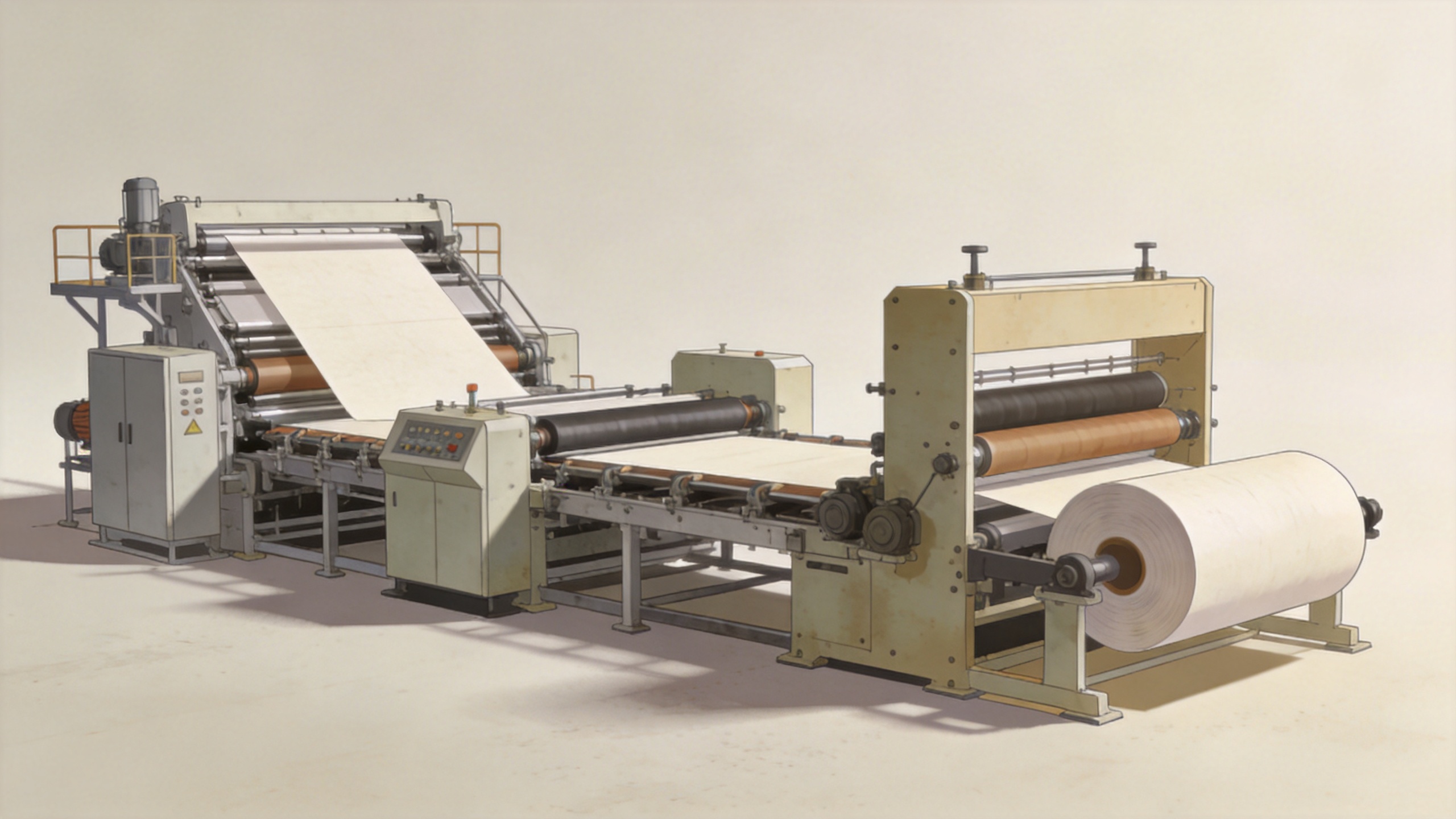
Its main advantage is that the process runs continuously from wet stock to a wound roll. Stock is prepared and delivered to the forming area, where a wet web is created. The web then moves through pressing and drying before it is wound. Each section has a distinct job, but the sections must work together. If the forming conditions, press loading, drying profile, or winding tension are poorly matched, a local issue can affect the finished roll.
That integration matters because a paper machine is not a collection of isolated units. It is a production system. When the system is configured around the selected furnish and product grade, operators can focus on stable process windows instead of repeatedly correcting symptoms at the reel.
2. Better dewatering can support a more balanced line
Water removal is one of the central process challenges in papermaking. The forming section begins separating water from the fiber suspension. The press section mechanically removes additional water from the wet web, while the dryer section completes drying through controlled heat transfer. A capable paper making machine balances these stages rather than treating drying capacity as the only answer.
For production planning, that distinction matters. Stronger or more uniform sheet handling through the wet end can reduce the burden placed on later sections, provided the furnish, grade target, fabrics, felts, and operating settings are all compatible. It would be misleading to promise the same result for every mill; the practical value comes from verifying the conditions as a whole.
3. Grade flexibility helps producers serve different roll applications
Paper producers often need flexibility, not just a single headline capacity. Depending on the design and supporting equipment, a paper making machine can be planned for different paper grades or roll applications. The decision should begin with the required end product: sheet properties, parent-roll dimensions, winding requirements, and the next manufacturing step.
For example, a dining table paper roll making machine usually relies on parent rolls that fit its converting process and expected paper use. A till roll making machine likewise depends on suitable base paper and roll consistency before slitting, rewinding, or other converting work begins. The paper machine does not replace those downstream machines. Its advantage is producing a controlled parent-roll input for them.
4. Process control improves operational visibility
Controls, sensors, and clear operating routines can make a paper making machine easier to manage. They do not eliminate the need for experienced operators, material checks, or maintenance. They do help teams see whether the line is moving toward or away from its intended process window.
When comparing configurations, ask how operators will monitor stock consistency, web stability, moisture-related conditions, winding behavior, alarms, and changeovers. That question can reveal more than a long feature list. A control function only creates value when it gives the team a clear action to take.
5. Integrated line planning can reduce handoffs and uncertainty
A paper making machine is usually part of a wider line that may include stock preparation, approach flow, finishing, rewinding, roll handling, and converting. Planning these interfaces together can make material flow and quality checkpoints easier to define. It also helps purchasing teams identify where responsibilities begin and end.
Do not assume that a quotation includes every interface. Confirm utilities, control boundaries, installation scope, commissioning support, spare parts, acceptance criteria, and the handoff to downstream converting. This is especially relevant when the parent roll will feed a dining table paper roll making machine or a till roll making machine, where the downstream team may have specific needs for roll width, diameter, or winding condition.
6. Lifecycle decisions matter as much as the initial machine choice
The real benefit emerges over the operating life of the machine, not on delivery day alone. Buyers should look beyond the initial configuration and discuss wear items, inspection points, cleaning access, maintenance records, fault-response procedures, and the availability of technical communication. A lower initial price can be difficult to evaluate if these operating boundaries are unclear.
For global projects, it is also sensible to confirm documentation, installation support, training expectations, and destination-specific requirements early. Zhejiang RUIDA Machinery focuses on paper cup and food-packaging equipment, with related automated paper-forming and flexographic-printing directions. That context can be useful when mapping a paper-roll supply plan to downstream food-packaging workflows, but the final equipment scope should be confirmed through technical discussion.
How to evaluate a paper making machine before purchase
- Define the end product first: specify grade, target roll format, and whether the output will feed a converter.
- Map the process: review stock preparation, forming, pressing, drying, winding, and handoff points as one line.
- Check verification conditions: identify the furnish, operating range, acceptance basis, and test method before interpreting output claims.
- Plan for downstream needs: document the input requirements of the dining table paper roll making machine or till roll making machine, if applicable.
- Review lifecycle support: include spares, maintenance access, commissioning, and responsibility boundaries in the comparison.
Conclusion
A paper making machine offers its strongest advantages when it is treated as a coordinated manufacturing system: it supports continuous production, structured water removal, grade-focused roll output, and clearer operating control. The biggest line or the longest feature list is not automatically the right choice. It is the configuration that matches the pulp, paper grade, parent-roll target, downstream conversion plan, and service expectations of the project.
Before requesting a proposal, prepare a concise brief covering the target paper, desired roll dimensions, intended converting route, utilities, and acceptance priorities. That gives suppliers a practical basis for recommending a paper making machine configuration rather than offering a generic comparison.
 ONLINE