
 EN

Paper Machinery Applications in Manufacturing
Paper machinery is often discussed as if it were one category, yet a manufacturing line is usually a chain of connected decisions. In food-packaging work, the useful question is not simply which machine has the highest advertised speed. It is which steps turn the chosen paper or paperboard into a consistent finished item, and whether those steps can hand work to one another without creating avoidable delays.
From a packaging-application perspective, paper machinery should be mapped from the finished format backward. A paper cup, bowl, carton, sleeve, or plate has different material behavior, forming requirements, print needs, and packing expectations. If the material and target format are already clear, equipment comparisons become more meaningful. If they are not, a speed comparison alone can send a project in the wrong direction.
Where paper machinery fits in a manufacturing workflow
In a broad sense, paper machinery can cover stock preparation and paper production, then finishing and converting. For many food-packaging manufacturers, the immediate concern is converting: taking supplied paperboard or preprinted stock through printing, cutting, forming, inspection, collection, and packing. The exact route changes with the product, but the handoffs are what determine whether a line is practical.
A typical paperboard-container workflow may include printing, die-cutting or blank preparation, forming, sealing, curling or rim finishing, collection, and packing. These are not universal machine specifications; they are a useful process map for asking where material, tooling, operators, and downstream handling meet. A reliable plan treats each handoff as part of the application rather than as an afterthought.
Key manufacturing applications
1. Printed paperboard preparation
Printing equipment prepares graphics and information before a blank becomes a package. Flexographic printing is commonly considered where repeatable designs are required on compatible paper-based substrates. The operational question is not only print quality. Teams should also check how ink, coating, drying, web handling, and later converting stages interact with the selected paperboard. Material compatibility deserves attention before a configuration is finalized.
2. Die-cutting and blank conversion
Die-cutting converts a printed sheet or web into blanks that can be formed into cups, bowls, cartons, or other shapes. This stage directly affects dimensional consistency and the way a later forming station receives material. When a project includes several formats, the practical comparison is often about tooling changes, blank tolerances, and how production staff will verify the output—not simply the nominal cycle rate.
3. Cup, bowl, and container forming
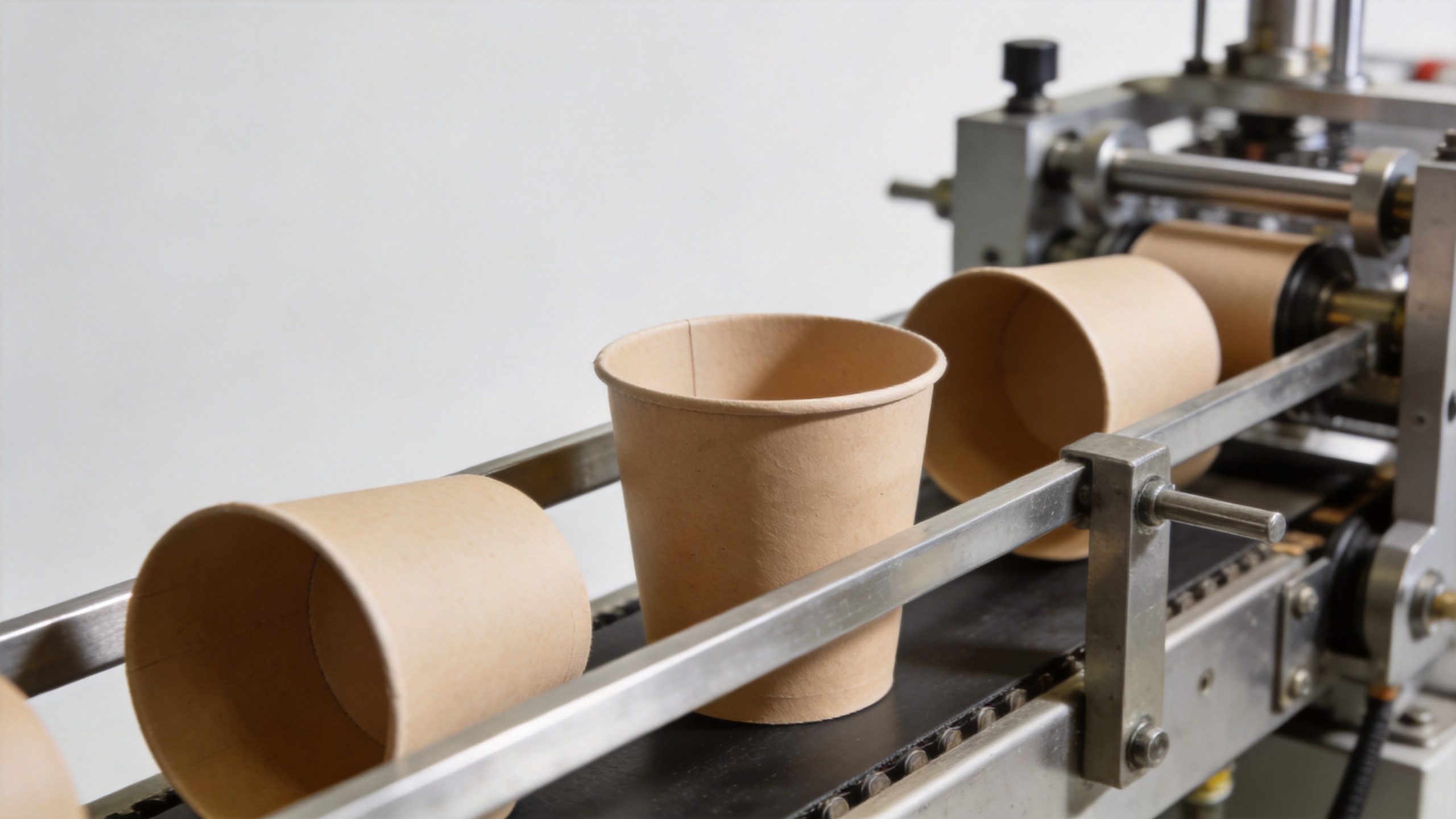
Forming machinery turns prepared blanks into usable packaging. Depending on the application, the sequence may involve feeding, side sealing, bottom forming, curling, and collection. A paper machine company should therefore discuss the target cup or container, paperboard condition, seam requirements, and planned production rhythm before presenting a single configuration as the answer. The appropriate fit depends on those conditions.
For buyers, it helps to shift the question from “What can one machine make?” to “What conditions must the line maintain to make the intended product consistently?” That shift brings tooling, paperboard supply, operator access, and quality checks into the same conversation.
4. Paper plate packing machine integration
A paper plate packing machine belongs at the downstream end of the conversation. Its role is to organize, count, wrap, or otherwise prepare finished plates for handling and shipment according to the project’s packing method. The packing interface should be reviewed with the forming output: product orientation, stack behavior, changeover needs, pack count, and the space available for accumulation. A fast forming station can still create inefficiency if packing cannot accept its output rhythm.
For that reason, a paper plate packing machine should be evaluated as part of the line, not as a detached add-on. Confirm what information the packing station needs from upstream production, how rejects are handled, and who verifies pack presentation and count during acceptance.
A practical comparison matrix for buyers
| Application | Primary decision | Questions to confirm before selection |
|---|---|---|
| Printed blanks | Substrate and print process | Paperboard compatibility, artwork changes, drying and downstream handling |
| Die-cut blanks | Format and tooling | Blank dimensions, tolerance expectations, changeover method, inspection point |
| Cups, bowls, or containers | Forming process | Target shape, material condition, sealing requirements, collection flow |
| Plates and packed products | End-of-line handoff | Stack stability, pack count, orientation, accumulation, acceptance checks |
This matrix is deliberately application-led. A buyer may need multiple paper machinery stages, but each stage should have a defined input, output, and acceptance boundary. From procurement discussions, unclear acceptance criteria often create more trouble than a missing headline feature. Write the conditions down before comparing quotations.
How to plan line capacity without overpromising
Capacity planning should start with the finished product mix, not a single maximum-rate figure. Consider expected formats, planned changeovers, material availability, inspection steps, operator tasks, and the time needed for packing or collection. More accurately, not every production issue is caused by the machine: paperboard variation, tooling setup, maintenance practice, and downstream accumulation can all affect a line’s usable rhythm.
That is why a technical and purchasing team should review the same checklist. The technical side can clarify the product and material conditions. Procurement can compare documentation, support scope, spare-part planning, and acceptance terms. Neither side needs to claim an unverified output figure to make a sound decision.
Questions to ask a paper machine company
- Which finished formats and material conditions are within the proposed application scope?
- What upstream preparation is required before blanks reach the forming stage?
- How are format changes, tooling changes, and quality checks planned?
- What downstream collection or packing conditions must be met?
- Which acceptance criteria should be agreed before installation or handover?
- What documentation, training, and maintenance responsibilities need to be confirmed for the project?
These questions do not replace a site-specific technical review. They help make the review more productive by separating confirmed requirements from items that still need verification.
Conclusion: select paper machinery by the finished application
Paper machinery supports manufacturing effectively when every stage is connected to a defined product application. For printed and formed food packaging, that means looking beyond an individual unit to the links among paperboard preparation, blank conversion, forming, collection, and end-of-line packing. Start with the product, document the material and acceptance conditions, and then compare the equipment around the production rhythm your operation actually needs.
 ONLINE