
 EN

What Is Paper Making Machine and How It Works?
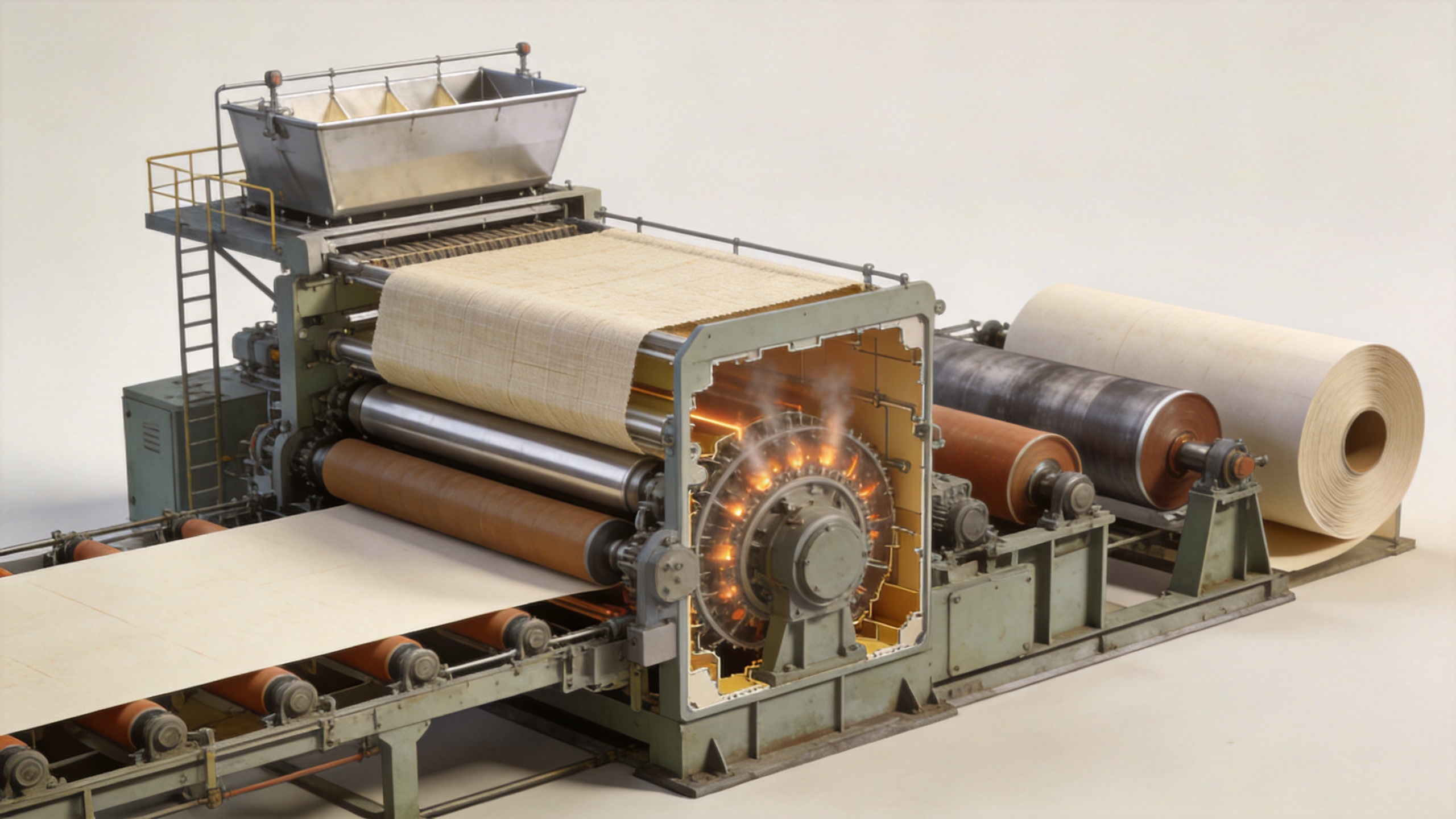
A paper making machine is a continuous production system that turns prepared fibre slurry into a finished paper web. Although the line may look like one very long machine, each section has a distinct job: prepare stock, form a wet sheet, remove water mechanically, dry the sheet, adjust its surface, and wind it for the next operation. Understanding the sequence helps buyers, operators, and converters ask better questions before comparing a paper making machine.
From an operator’s viewpoint, the useful question is not simply whether a paper making machine is automatic. It is whether its sections work together for the intended furnish, basis weight, width, and product grade. A line for packaging board, for example, can need a different wet-end and finishing arrangement from one that supplies tissue parent rolls. That is why a process explanation is more helpful than a list of machine names.
What a Paper Making Machine Does
At its core, a paper making machine spreads a dilute suspension of fibres into a controlled web and removes water in stages without losing the sheet’s formation and strength. The fibre source can be virgin pulp, recovered paper, or a blend. Fillers, starch, dyes, and functional additives may also be introduced when the specification calls for them. The final result is not determined by one component alone; stock preparation, drainage, pressing, drying, and finishing all affect the outcome.
A typical paper making machine includes stock distribution, a headbox, a forming section, a press section, a dryer section, a calender or other finishing equipment, and a reel. Not every grade uses the identical layout. Some machines add coating, sizing, surface treatment, or special drying equipment. The production principle is still the same: make a uniform web first, then remove water in a controlled way.
How the Process Works, Step by Step
1. Stock preparation and approach flow
Before the web reaches the paper making machine, fibres are dispersed in water and processed to suit the grade. Screening helps remove unwanted material; cleaning and refining can improve fibre development and sheet properties. The approach-flow system then delivers stock to the headbox at a stable consistency and pressure. If the furnish fluctuates, the rest of the paper making machine has less room to correct the problem. Good formation begins upstream.
2. Headbox and forming section
The headbox distributes the fibre suspension evenly across the machine width. From there, the jet meets a moving wire or fabric in the forming section. Water drains through the fabric while fibres begin to interlock into a wet web. On a modern paper making machine, the forming design is selected around grade requirements, speed, fibre mix, and quality targets. More drainage is not automatically better; drainage must support even formation and manageable retention of fines and additives.
This is one of the most sensitive stages of a paper making machine. Streaks, uneven basis weight, poor formation, or unstable edge conditions can be carried into later sections. More accurately, not every apparent paper defect starts at the machine: furnish preparation, chemistry, and operating practice may also need checking.
3. Press section
After forming, the web is still very wet and too weak to handle without support. The press section of a paper making machine removes additional water by passing the sheet through press nips, usually with felts that accept water and carry the web. Mechanical dewatering is valuable because it reduces the water that must later be evaporated. Yet press loading, felt condition, moisture profile, and sheet strength have to be balanced. A setting that looks favourable for dryness may not be suitable if it damages the web or creates a poor moisture profile.
4. Dryer section
The dryer section brings the paper making machine from a pressed web toward the target moisture content. In many conventional layouts, the sheet travels around a series of steam-heated cylinders while fabrics hold and guide it. Ventilation, condensate handling, draw control, and web support matter because the sheet changes as it dries. The exact drying arrangement depends on the grade and line design, but the operating aim is consistent: remove water without causing unnecessary breaks, curl, or unevenness.
For anyone evaluating a paper making machine, dryer capacity should be discussed with the intended production conditions rather than treated as an isolated headline specification. Furnish, incoming moisture, basis weight, grade, ambient conditions, and production rate all influence the practical requirement.
5. Finishing, calendering, and winding
After drying, a paper making machine may apply size, coating, or surface treatment before the web reaches a calender. Calendering can change smoothness, gloss, thickness, and printability, but the appropriate setup depends on the desired paper or board quality. Finally, the reel winds the finished web into a parent roll. Downstream slitting, rewinding, printing, converting, or packaging can then prepare the roll for its end use.
That distinction matters when discussing a paper towel making machine. In many commercial conversations, the term can refer to downstream tissue converting equipment rather than the full pulp-to-parent-roll process. A buyer should clarify whether the requirement is for a complete paper making machine, a tissue parent-roll line, or a converting line that cuts, embosses, perforates, and rewinds supplied material.
What Controls Paper Quality on the Line?
A paper making machine works as a system, so operators watch relationships rather than only individual readings. Important checks commonly include stock consistency, basis-weight profile, drainage behaviour, press felt performance, steam and condensate conditions, web tension, moisture profile, and reel build. The priority changes by product. A packaging grade may emphasize stiffness and strength, while a tissue application may place more emphasis on softness, absorbency, and converting behaviour.
One practical reminder is that more automation does not mean no maintenance. Sensors and controls can make a paper making machine easier to monitor, but cleaning, fabric and felt care, roll alignment, lubrication, and planned inspections still influence stability. If a production team is choosing a line, it helps to write down who will carry out these tasks and what support or spare-part plan is realistic.
How to Define the Right Machine Scope
Before requesting a proposal for a paper making machine, describe the intended product rather than asking only for a speed. Confirm the fibre source, paper grade, target basis-weight range, finished width, desired production rate, moisture target, available utilities, and downstream handling. Then ask how each section of the paper making machine supports those conditions. This creates a more useful discussion than comparing one headline capacity number.
- Specify whether the line starts with pulp, recycled fibre, or purchased parent rolls.
- Identify whether the goal is paper, board, tissue parent rolls, or a converted item such as a paper cover.
- Confirm the needed quality attributes: strength, bulk, smoothness, absorbency, printability, or surface finish.
- Ask how water, steam, power, ventilation, and effluent requirements fit the site.
- Clarify commissioning, operator training, maintenance documentation, and acceptance criteria before final selection.
A paper cover manufacturing machine, for instance, may be a converting or forming solution after the paper is already made, not a substitute for the wet-end and drying sections of a paper making machine. Separating the upstream paper-production task from the downstream conversion task prevents the scope from becoming unclear.
Key Takeaway
A paper making machine is a coordinated process line, not a single black box. It prepares fibre stock, forms a wet web, removes water through pressing and drying, finishes the surface when required, and winds the paper for further use. A practical way to evaluate a paper making machine is to begin with the grade and operating conditions, then check how every section supports the result. If the furnish and end use are clear, technical discussions about configuration become far more meaningful.
 ONLINE