
 EN

What Is Paper Production Machine?
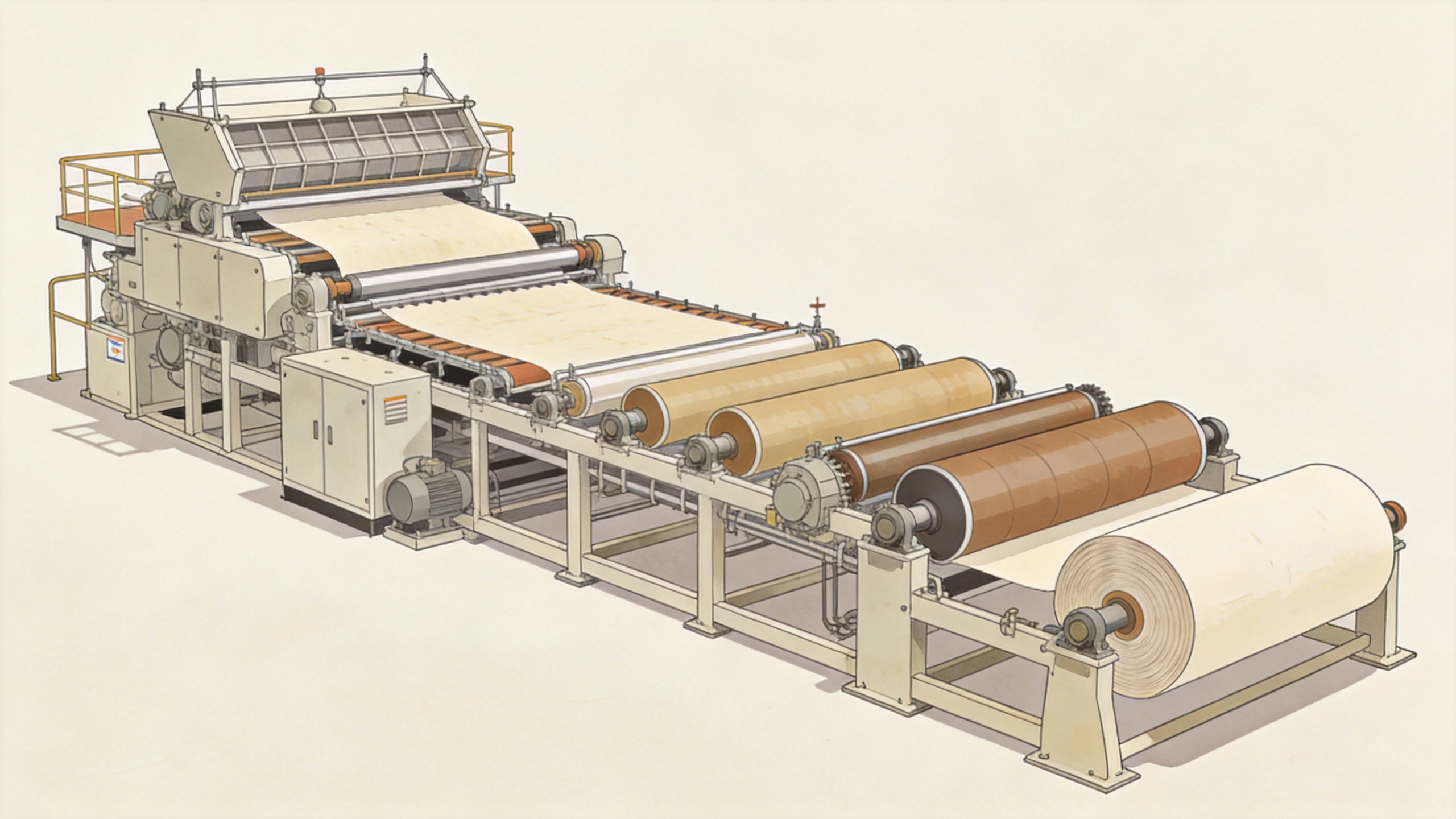
A paper production machine is the coordinated equipment used to turn prepared fiber stock into a continuous paper web and wind that web into a reel. In a mill, the phrase usually means more than one standalone unit: it describes a process line in which stock preparation, sheet forming, water removal, drying, finishing, and reel-up must work at compatible speeds. For a buyer, that distinction matters. A machine that cuts, rewinds, prints, or packs paper may be important downstream, but it is not automatically the paper production machine that makes the base sheet.
From a B2B procurement viewpoint, a useful first question is not “Which model is fastest?” It is “What paper grade, furnish, basis weight, width, and production rhythm must the line support?” Those conditions determine what a paper production machine needs at each process stage.
What does a paper production machine do?
Its core job is to distribute a fiber-and-water slurry, form it into a wet sheet, remove water in controlled stages, dry and finish the sheet, and collect it as a usable reel. The exact layout changes with the grade—tissue, packaging paper, printing paper, specialty paper, or board—but the functional sequence is similar. A complete paper production machine often connects upstream pulp or stock preparation to downstream winding, while optional coating, sizing, calendering, or quality-control modules are selected around the required finish.
That is why line scope should be written clearly in an inquiry. Two suppliers may both quote “paper machinery” while including very different boundaries: one may cover only the wet-end and dryer sections; another may include approach flow, electrical controls, ventilation, reel handling, or converting equipment.
The main sections of a paper production machine
1. Stock preparation and approach flow
Before fibers reach the machine, the furnish is prepared and delivered consistently. Depending on the project, this can include pulping, screening, cleaning, refining, blending, dilution, and pumping. The purpose is to send stock with suitable cleanliness and consistency to the headbox. A paper mill pulper belongs to this upstream side of the process: it helps disperse pulp or recovered fiber into slurry. It is valuable equipment, but it should be specified as part of the stock-preparation scope rather than confused with the entire paper machine.
2. Headbox and forming section
The headbox distributes the fiber suspension across the machine width. It feeds a controlled jet onto a moving forming fabric or wire, where drainage starts and fibers form a continuous wet web. Forming design has a strong effect on sheet uniformity and on what grades the line can make. Buyers should discuss grade targets, fiber mix, layer requirements, and quality expectations before choosing a forming concept. A general-purpose configuration is not automatically the right answer for every board or tissue application.
3. Press section
After initial drainage, the fragile web moves through press nips with supporting felts. Mechanical pressing removes additional water before thermal drying. This stage is worth attention because improved dewatering can reduce the burden placed on later dryer sections. However, press selection is not just a question of pressure. The sheet grade, desired bulk, surface properties, felt arrangement, runnability, and maintenance practice all affect the appropriate configuration.
4. Dryer section and surface treatment
The dryer section uses heated cylinders and air-management systems to evaporate much of the remaining moisture. Some grades then receive sizing, coating, or other surface treatment before further drying. Since drying depends on steam, condensate removal, ventilation, and web control, it should be reviewed together with the mill’s available utilities. Rather than accepting a generic energy claim, ask the supplier which assumptions are being used for furnish, final moisture target, production rate, and ambient conditions.
5. Calender, reel, and quality control
Finishing equipment can smooth or control the surface, while the reel section winds the finished web for storage or the next operation. Quality-control systems may monitor variables such as basis weight, moisture, or profile, depending on the line. At this point the output is a reel of paper or board. The next steps—slitting, sheeting, printing, cup forming, bag making, or core processing—are converting operations and should be quoted separately when needed.
Paper production versus paper converting: why the difference matters
Search results often place many unrelated machines under the same “paper” label. A paper production machine creates the base web from fiber slurry. Converting machinery changes the size, form, or end use of an already-made web. For example, a paper tube cutting machine is intended to cut paper tubes or cores to a required length; it does not replace the forming, pressing, and drying stages needed to manufacture paper.
This distinction makes budgeting more accurate. A new mill project may need stock preparation, a paper machine, utilities, automation, roll handling, and selected converters. A converter that buys finished jumbo rolls may only need the downstream equipment. Both businesses use paper machinery, but their process risks and capital priorities are different.
How to assess a paper production machine for a project
Start with the production requirement, then work toward the configuration. A practical inquiry package should address the following points:
- Product definition: target grade, basis-weight range, width, roll diameter, and surface or strength expectations.
- Furnish and process: virgin fiber, recovered fiber, mixed furnish, required cleaning, and any coating or sizing steps.
- Capacity and flexibility: desired output, grade changes, planned operating schedule, and future expansion needs.
- Site utilities: steam, power, water, compressed air, drainage, building space, and ventilation constraints.
- Control and service scope: automation boundary, operator training, commissioning responsibilities, spare parts, and acceptance criteria.
It is also sensible to map the interfaces between sections. For example, a high-capacity forming and press arrangement only delivers value when drying, winding, drives, and material handling can sustain the same operating plan. In other words, evaluate the line as a system, not as a list of isolated machines.
Common questions buyers should resolve early
Is a paper production machine one machine or a full line?
In ordinary B2B usage, it can mean either, so the quotation scope must define it. For a complete project, the term generally refers to the linked production line from prepared stock through reel-up. Individual modules can also be supplied or upgraded separately.
Can one line make every kind of paper?
Usually not without trade-offs. The target grade, furnish, forming method, press design, drying capacity, and finishing requirements influence what a line can produce reliably. If multiple grades are planned, list each grade and its priority rather than relying on a broad “multi-purpose” label.
What should be verified before comparing prices?
Compare like with like: design basis, included sections, utility assumptions, automation level, delivery boundary, installation support, and performance test conditions. A lower headline price may omit equipment or services needed to run the paper production machine as an integrated line.
Final takeaway
A paper production machine is the process system that transforms prepared fiber slurry into a continuous paper web and then into reels. Its central stages are stock delivery, forming, pressing, drying, finishing, and winding. A paper mill pulper supports upstream stock preparation, while a paper tube cutting machine serves a separate converting task. Keeping those roles separate helps buyers define scope, compare proposals fairly, and build a line around the paper grade and operating conditions that actually matter.
 ONLINE