
 EN

Where Is Paper Glass Machine Headed in Industry?
As a B2B buyer, you may notice that a paper glass machine is no longer evaluated only by the number printed on a speed chart. The next direction for a paper glass machine is shaped by material variation, cup formats, labor planning, food-contact documentation, and the way one machine fits the rest of a packaging line. That shift matters because output is useful only when the cups remain consistent and the operating conditions are clear.
Search results for a paper glass machine still emphasize automatic operation, stated cup sizes, and pieces per hour. Those are sensible starting points, but they do not tell a buyer whether the result will hold with a specific paper stock, coating, cup geometry, operator routine, or changeover schedule. For that reason, the industry is moving toward more evidence-led conversations rather than simply larger headline figures.
1. The paper glass machine is becoming part of a connected production decision
In the past, a buyer might have compared a paper glass machine as a stand-alone asset: price, rated speed, and basic cup range. Today, the more practical question is how the equipment connects to paper preparation, printing, forming, inspection, collection, packing, and downstream sealing. A single use paper glass equipment plan has to work at the pace of the entire line, not just at the fastest point in the process.
This does not mean every factory needs a fully integrated line. It means the supplier and buyer should identify the handoff points early. For example, a quoted forming rate should be discussed together with cup collection, packing labor, reject handling, and the ability of upstream material supply to keep a stable rhythm. Where formats change frequently, changeover time and the verification method may be more important than a peak output claim.
For a paper glass machine, the useful direction is therefore better visibility: operators need to know what has changed, what the expected operating condition is, and which variable should be checked first when consistency moves. That can support clearer training and less guesswork during startup.
2. Automation will be judged by repeatability, not by labels alone
Automatic is a broad label. A paper glass machine may automate several motions while still requiring careful human checks for material loading, tooling changes, quality sampling, or recovery from a fault. Buyers should ask which motions are automated, which settings are recipe-based, and which checks remain operator-dependent. This is more useful than treating “automatic” as a promise of identical results under every condition.
The direction of the industry is toward automation that helps teams repeat a validated setup. That can include easier adjustment records, alarms that guide a check rather than merely stop the machine, and clearer handovers between shifts. In a plant producing several formats, the practical value is not simply fewer manual actions. It is the ability to return to an agreed process window after a changeover.
When reviewing a paper glass machine, ask for the conditions behind any capacity figure: cup size, paper grade, coating, tooling, accepted reject criteria, and sampling method. Market listings may show a capacity range for a particular model, but these figures are model-specific rather than a universal benchmark. A trial plan or technical confirmation sheet gives the buyer a more usable basis for comparison.
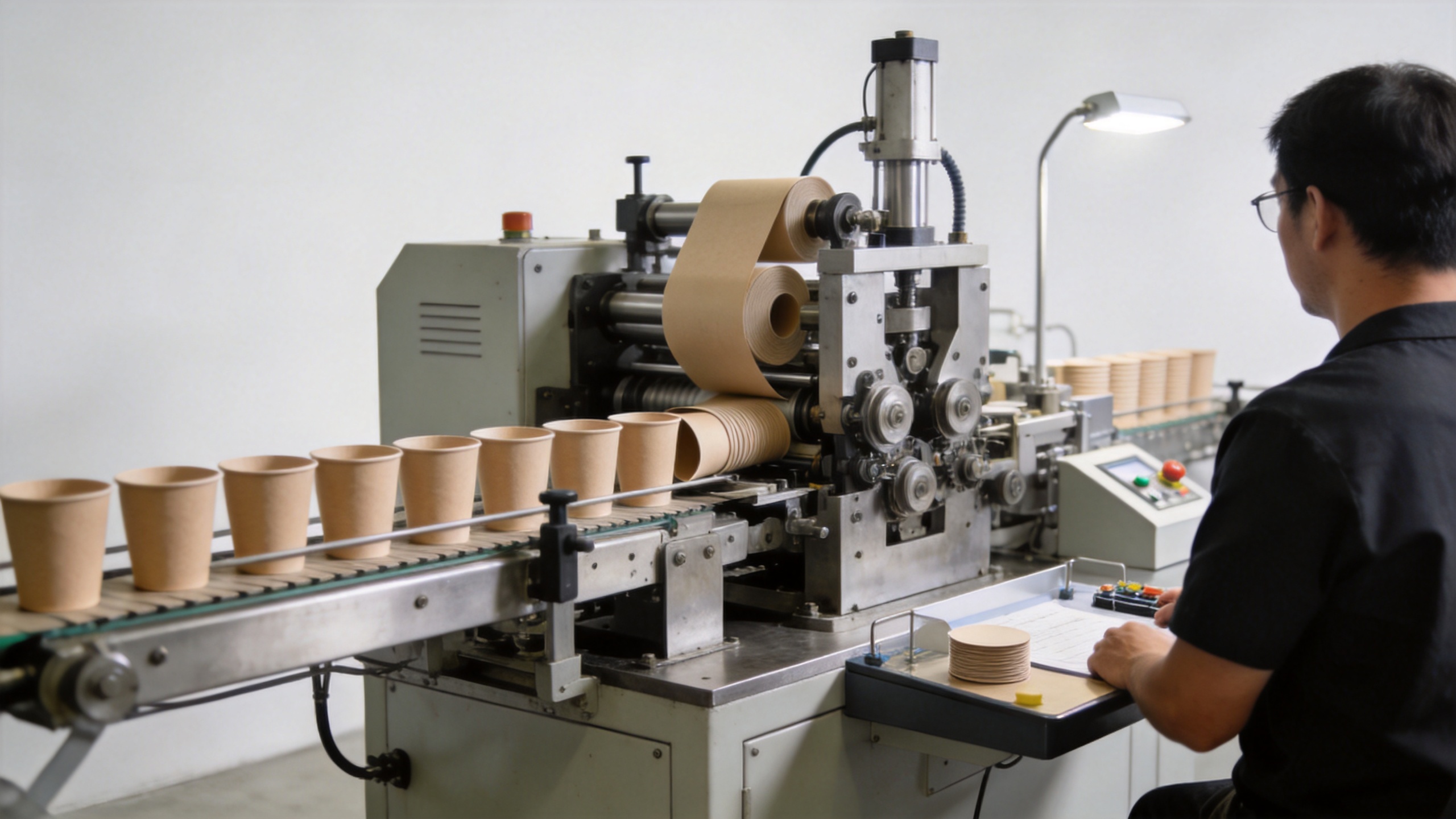
3. Material compatibility will have a stronger place in machine selection
Paper stocks, coatings, printing, and storage conditions can influence forming behavior. As packaging applications diversify, a paper glass machine is increasingly discussed together with the paper material rather than separately from it. This is especially relevant when an operation expects to change suppliers, introduce new artwork, or move between cup formats.
That is why a supplier discussion should include sample material, target cup dimensions, sealing expectations, and the range of acceptable variation. It is not enough to say that a machine can make a given cup volume. A buyer can gain a clearer answer by sharing representative blanks and asking how the forming process will be checked. The goal is not to make a universal material-compatibility claim; it is to define what needs validation before a production decision.
For export-oriented food packaging, process documentation is also becoming more relevant. In the European market, food-contact materials are subject to Regulation (EC) No 1935/2004, and good manufacturing practice is addressed by Regulation (EC) No 2023/2006. These rules do not certify a particular paper glass machine by themselves. They do, however, make traceability, material records, process controls, and responsible communication more important when the finished cups are intended for food contact.
4. Flexible cup formats will raise the value of a structured changeover plan
Demand for differentiated drinks, sampling sizes, and food-service formats can lead buyers to request more than one cup specification. A paper glass machine designed around a single, stable format may suit one operation well, while a mixed-format plan needs a different conversation. The critical point is to define the changeover scope: tooling, settings, material feed, inspection points, operator tasks, and the acceptance criteria after restart.
Rather than assuming every paper glass machine should be configured for maximum flexibility, compare the likely production mix with the number of changes per week or month. A high-volume, single-format program may prioritize production rhythm. A lower-volume program with frequent format shifts may prioritize repeatable setup and a manageable operator workflow. Both choices can be reasonable when the operating conditions are explicit.
This is also where single use paper glass equipment needs a broader planning view. The cup-making stage must match printing, blank supply, packing, and any later product-handling step. If finished cups are part of a beverage service workflow, the downstream interface may include a milk tea sealer machine. The two machines are not interchangeable, but their output and handling assumptions can affect the overall line layout and staffing plan.
5. Quality discussions will move closer to evidence and acceptance conditions
Future paper glass machine projects are likely to give more attention to how quality is defined before delivery. That means agreeing on the cup sample, visual checks, forming integrity, leak-related test approach where applicable, dimensional expectations, and a record of the operating conditions used during trial runs. A buyer should not expect a zero-defect promise, but should ask how observations are recorded and how an issue is separated into material, tooling, setting, or maintenance questions.
For a paper glass machine, this approach improves both procurement and operation. It gives purchasing teams a clearer comparison basis and gives production teams a practical route to investigate variation. In particular, it helps avoid a common mistake: comparing only a nominal speed while leaving quality conditions undefined.
How to prepare for the next paper glass machine purchase
The direction of the paper glass machine industry is not a single feature or a single speed number. It is a move toward better alignment between machine configuration and real production requirements. Before requesting a quotation, prepare a short fact sheet covering cup drawings, paper samples, coating details, target output by format, expected changeovers, available utilities, operator plan, and downstream handling.
Then use that information to ask focused questions: What conditions support the stated capacity? Which items change with a new cup format? What evidence will be reviewed during trial production? Which maintenance and spare-parts topics should be agreed before startup? A supplier such as ZheJiang RUIDA Machinery can use those inputs to organize a more relevant technical discussion around paper cup and food-packaging equipment, while the buyer keeps the final configuration tied to verified needs.
In short, the paper glass machine is headed toward more connected, documented, and condition-aware production. Buyers who define their material, format, and acceptance requirements early will be in a stronger position to compare options responsibly.
 ONLINE