
 EN

When Will Paper Cup Making Machine Tech Evolve?
For a buyer planning capacity beyond the next order, the better question is not whether a paper cup making machine will change overnight. It is which parts of the forming process are likely to become easier to control, inspect, and adapt. From a packaging-equipment selection perspective, future progress should be tied to cup format, paper stock, coating behavior, and the production rhythm a plant actually needs.
That distinction matters because a paper cup making machine is only one part of a wider production system. Print quality, material preparation, forming, heating, bottom sealing, rim processing, collection, and verification all interact. A feature that looks impressive on a specification sheet may add little value if it does not fit the factory’s changeover pattern or operator workflow.
Why “future technology” is often framed the wrong way
Many discussions focus first on headline speed. Speed will remain important, but it is not the only direction in which a paper cup making machine can evolve. Search results for this market commonly emphasize automation, forming capacity, and fully automatic operation. The more useful gap is to ask what helps a line make repeatable decisions when paper, cup size, artwork, or production schedules change.
In practice, the next useful improvement may be a clearer control interface, better synchronization between stations, or more useful fault information rather than a dramatic redesign. Servo motion and PLC-based coordination are already common themes in automation discussions. Their practical value depends on whether they improve positioning, make settings easier to repeat, or help the team identify where a variation began. Those outcomes must still be verified with the intended cup and material.
Where paper cup making machine technology is likely to evolve
1. More coordinated motion, not simply more motion
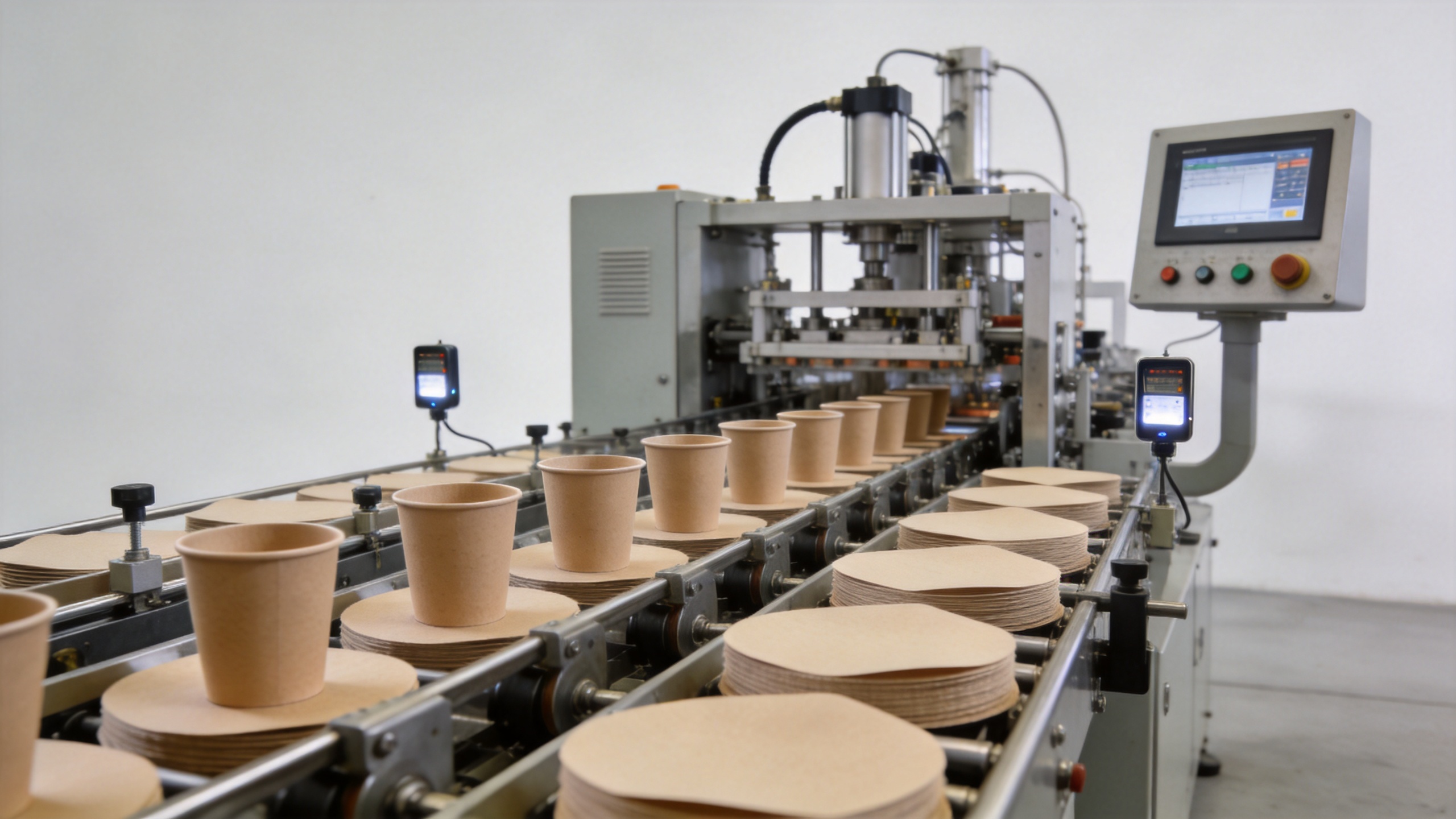
A paper cup making machine has multiple timed actions. Feeding, side-seam work, bottom insertion, heating, knurling, curling, and cup collection need to remain coordinated. A future-ready design is likely to give technicians more control over that coordination and more visibility into deviations. Rather than accepting a generic claim of “full servo,” ask which stations are controlled, which settings can be stored, and how the system responds when material behavior shifts.
This is especially relevant when a plant runs several cup formats. The key benefit is not that automation removes every adjustment; it may make repeatable adjustments easier to document and restore. Before treating the function as an upgrade, confirm the expected changeover frequency, the available training time, and the conditions under which the supplier validated the sequence.
2. Better material-aware settings
Paper stocks, barrier coatings, inks, and blank geometry influence how a paper cup making machine performs. Technology will likely move toward more structured recipe management: a way to record the settings associated with a material and cup design, then use those records as a starting point for the next run. That is more credible than assuming one fixed configuration will suit every disposable-cup program.
For buyers of disposable cup production equipment, the important question is whether a recipe can be reviewed alongside the material information. Quality-control discussions often point to raw material testing, coatings, printing ink, sealing temperature, and pressure as relevant control points. A better control system can make those points easier to monitor, but it does not by itself prove food-contact compliance or finished-cup performance.
3. Inspection information that people can act on
One of the most valuable changes in a paper cup making machine may be the quality of its feedback. Sensors, photoelectric tracking, and alarm histories can be helpful when they connect a warning to a station, a material condition, or a documented corrective step. Operators need information that supports a decision, not just a larger number of alerts.
For example, a plant may want to compare rejects by cup format, shift, or paper batch before changing settings. That kind of traceability can help distinguish a material issue from a mechanical or operating issue. It also encourages a more disciplined review of stable output: not “the line is fine,” but “the specified cup, paper, and process settings were running within the agreed checks.”
4. A closer link between printing and forming
An automatic cup printing machine is relevant to the future conversation because printed blanks and forming operations need to work together. Registration, ink behavior, blank handling, and changeover planning can affect the downstream process. But buyers should not assume that adding an automatic cup printing machine automatically solves forming consistency. It creates another interface to define and test.
For a paper cup making machine project, treat printing-to-forming coordination as a workflow question. Confirm artwork tolerances, blank orientation, storage conditions, and the handoff method between stages. This approach turns an attractive automation story into a usable acceptance checklist.
What will not change: the need to validate conditions
Technology can improve the way a paper cup making machine is adjusted and observed, but it cannot erase the need for validation. Cup geometry, paper grade, coating, production volume, utilities, maintenance access, and operator practice still shape actual results. That is why claims about output, defect reduction, or energy use should be discussed as project-specific targets, not universal promises.
Buyers comparing disposable cup production equipment can keep the discussion grounded by requesting a clear test plan. Define the cup size, paper specification, blank design, target rhythm, inspection points, and acceptance criteria before interpreting a demonstration. If a control feature is important, ask to see the information it records and the recovery steps it supports after a planned disturbance.
A practical future-readiness checklist
- Which stations of the paper cup making machine are independently controlled, and why?
- Can approved settings be documented by cup format and material rather than remembered informally?
- What alerts, histories, or trend data can an operator use to investigate variation?
- How will an automatic cup printing machine or other upstream process coordinate with blank handling?
- Which cup samples, paper stocks, and acceptance conditions will be used for validation?
- What training, routine inspection, and spare-parts planning are needed to keep the technology useful?
When should you expect the next meaningful upgrade?
The answer is usually tied to your project timeline, not a calendar prediction. A paper cup making machine becomes more future-ready when the control approach, material-handling plan, and service process can accommodate credible changes in your own product mix. If your work is stable and single-format, simplicity and repeatability may matter more than a broad feature list. If you expect frequent format changes or tighter traceability demands, a more flexible architecture may deserve closer evaluation.
In other words, paper-cup technology is likely to evolve steadily through better coordination, clearer data, and more structured validation. Build your comparison around those practical outcomes. RUIDA Machinery can use the starting checklist—cup format, paper material, output rhythm, changeover needs, and acceptance expectations—to structure a technical discussion for a paper cup making machine inquiry. Final configuration should be confirmed against the actual production conditions.
 ONLINE