
 EN

How Plants Integrate Paper Cup Making Machine Systems?
Integrating a paper cup making machine is not simply a matter of placing a former on the factory floor and switching it on. A dependable line connects material preparation, cup forming, inspection, collection, and—where the application needs it—filling or sealing. From a packaging-equipment selection perspective, the starting point is the cup specification, paperboard construction, and production rhythm; the machine configuration comes after those conditions are clear.
That sequence matters because a paper cup making machine can perform well in isolation yet create avoidable stoppages when its infeed, discharge, utilities, or quality checks do not match the surrounding process. This article lays out a practical integration path for plants building a new line or upgrading a section of an existing one.
Map the Process Before You Define the Machine Interface
Paper-cup production is usually organized as a chain of distinct operations. Public process descriptions commonly place printing and cutting ahead of forming, followed by body forming, bottom sealing, rim curling, and quality inspection. A plant does not need one fixed layout, but it does need to document where each operation begins and ends before selecting interfaces for a paper cup making machine.
Start with a simple material-and-product map:
- Incoming material: identify the approved paperboard, coating or barrier construction, blank dimensions, storage conditions, and batch-identification practice.
- Prepared blanks: define how sidewall blanks and bottoms arrive at the paper cup making machine, including stack orientation, tolerances, and replenishment access.
- Forming zone: record the forming, heating, bottom-sealing, curling, and ejection stages that require stable timing or utility support.
- Outfeed and inspection: decide how cups are collected, sampled, counted, rejected, packed, or handed to downstream equipment.
This map turns broad goals such as “higher output” into checkable interface questions. It also prevents a frequent error: comparing only nominal speed instead of confirming whether the material and downstream process can keep pace.
Set Integration Requirements at the Infeed
The infeed is where material variability often becomes a production issue. Before installation, verify the cup range, paperboard or coated-stock specification, blank geometry, stack presentation, and the expected changeover frequency. If a plant runs several cup sizes, the changeover route deserves the same attention as the maximum output target. A fast paper cup making machine may be unsuitable if frequent tooling changes interrupt the wider schedule.
Run a trial plan that connects each approved material to the intended cup format. The aim is not to claim that every stock behaves identically; it is to define which material, tooling, and process settings must be validated together. Observe blank feeding and material travel during trials, then document the conditions under which the line produces acceptable cups. This gives production and maintenance teams a common reference when a later paperboard batch behaves differently.
Coordinate Forming, Utilities, and Controls
A paper cup making machine sits inside a control environment, not outside it. The installation review should identify the electrical supply, air demand where applicable, guarding approach, floor access, heat-management needs, and alarm-handling responsibilities. Exact requirements depend on the selected configuration, so they should be confirmed against the machine documentation and the plant’s local standards rather than assumed from a generic specification.
Control coordination is equally important. Agree on how operators see a fault, who clears a jam, how a restart is authorized, and what information should be retained for troubleshooting. Clear alarm language and accessible cleaning points can make an integration easier to operate without implying that automation is maintenance-free. A practical commissioning question is: can the production team distinguish a forming issue from an upstream blank issue or a downstream collection issue quickly enough to protect the next shift?
Design the Outfeed Around Cup Stability, Not Just Machine Speed
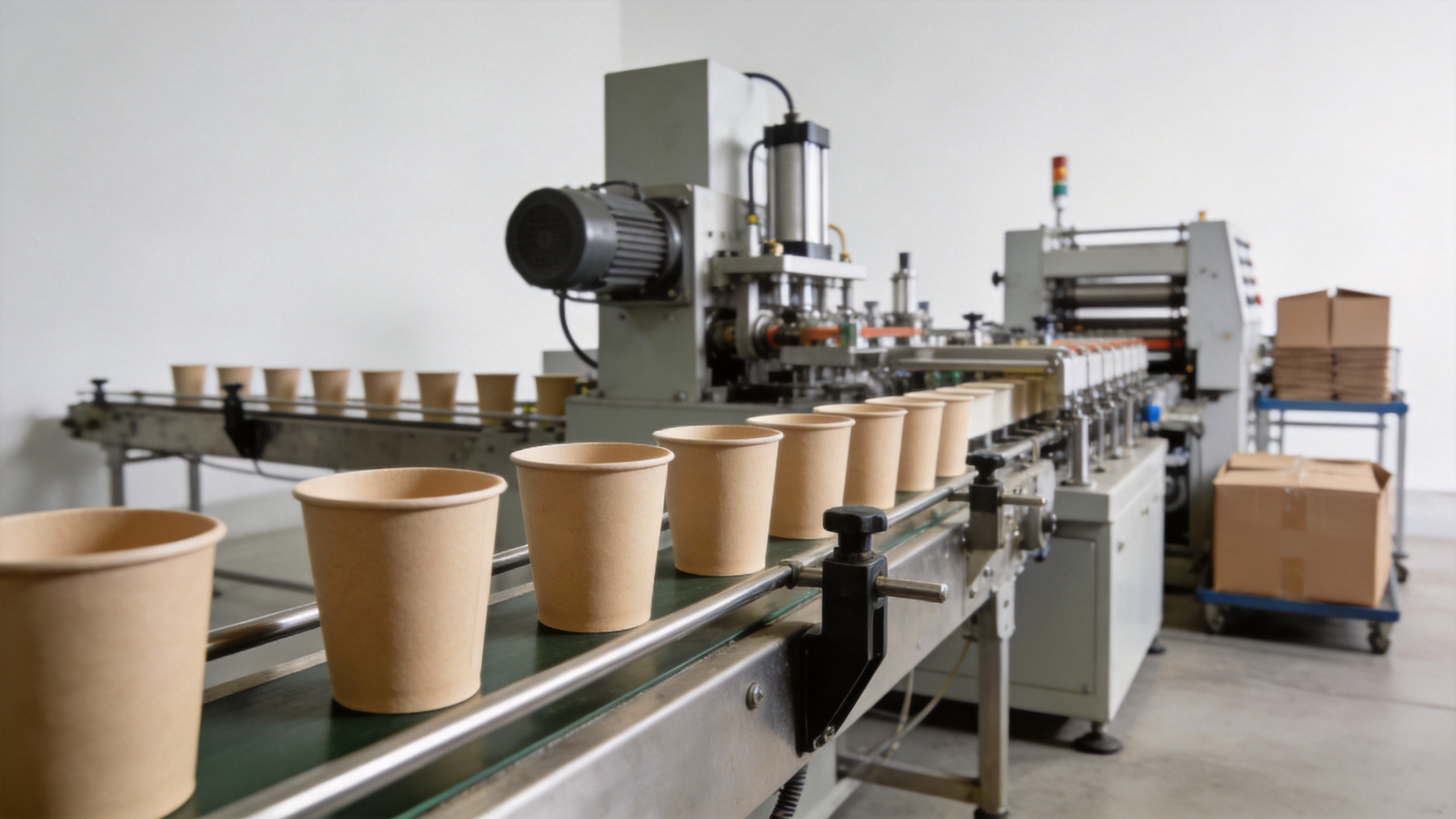
The outfeed is often treated as an afterthought. In practice, the cup collection method, accumulation capacity, inspection station, and packing handoff must all absorb normal variation without damaging or mixing products. Check whether cups remain stable from ejection through transfer, whether a rejected cup can be isolated, and whether the collection path leaves space for an operator to inspect rim and seam condition.
For a line that also uses an automatic cup filling and sealing machine, make the handoff a separately validated project point. The forming line’s cup orientation, accumulation pattern, and release timing should be tested against the filling and sealing machine’s infeed behavior. It is better to identify a mismatch during a staged trial than to rely on manual intervention as a permanent bridge between two automated sections.
Use Quality Gates That Match the Product’s Intended Use
Integration should include a defined quality-gate plan. Typical checks may cover cup shape, seam appearance, bottom attachment, rim condition, print alignment where relevant, and traceability of the material batch. The right checks depend on the product and customer requirements, so a plant should define acceptance criteria before routine production rather than after defects appear.
For food-service applications, material documentation and intended-use requirements should be part of the conversation. For example, U.S. buyers may need to consider the applicable framework for paper and paperboard food-contact materials, including references such as 21 CFR 176.170 or 21 CFR 176.180 when relevant to the use case. That is a material and compliance review—not a machine certification claim—and the appropriate requirements vary by market, material construction, and finished-cup application.
Plan a Pilot Run and an Acceptance Checklist
A staged pilot is the most useful way to integrate a paper cup making machine. Begin with the approved material and one cup format, then introduce planned speed increases only after feeding, forming, discharge, and inspection are stable. Record observations rather than relying on a single outcome: supply continuity, material travel, formed-edge condition, reject handling, alarm recovery, and operator access all provide evidence for the next adjustment.
- Confirm the cup formats, blank drawings, and material samples to be used for acceptance.
- Define the upstream replenishment method and the downstream accumulation limit.
- List the utilities, safety checks, and startup sequence for each shift.
- Agree on visual and functional acceptance criteria before the trial.
- Document changeover steps, cleaning access, routine checks, and spare-parts questions.
This approach moves the discussion from a single machine parameter to the rhythm of the whole line. It also gives procurement, engineering, and operations teams a shared way to evaluate trade-offs between automation level, maintenance capability, initial scope, and future expansion.
Apply the Same Framework to Tea-Cup Production
A tea paper cup making machine should be integrated through the same discipline, but the plant should pay particular attention to the specific cup size, intended beverage conditions, material documentation, print requirements, and the route from forming to packing or filling. A standard configuration may still need validation for the actual use case. The most reliable decision is therefore based on confirmed samples and agreed acceptance conditions, not on a broad promise that one setup fits every tea-cup program.
Final Takeaway
Plants integrate a paper cup making machine successfully when they treat it as one coordinated production node. Map the material flow, validate the infeed, align utilities and controls, engineer the outfeed, and test quality gates before scaling output. If the line will connect to an automatic cup filling and sealing machine, test that transfer under realistic operating conditions. With a written pilot and acceptance plan, the plant has a clearer basis for commissioning, training, maintenance, and future capacity decisions.
 ONLINE