
 EN

What Makes a Paper Glass Machine Ideal for Drinks?
Choosing a paper glass machine is not simply a matter of asking for the highest stated output. For drink-cup production, the right machine has to match the cup format, paperboard and lining, beverage temperature, and the way operators will run the line. A machine that looks suitable on a specification sheet can still create avoidable work if the forming process, sealing conditions, or changeover routine have not been discussed first.
From a food-packaging application perspective, a paper glass machine is ideal when it helps a producer make the intended drink cup consistently under verified operating conditions. That means starting with the cup and material, then evaluating the configuration. It is a more useful route than treating one speed figure as the entire answer.
Start with the drink and cup requirement
A drink cup is a finished package, not just a paper shape. Cold beverages, iced drinks, juices, water, and other applications can place different demands on the paperboard, barrier layer, rim, bottom seal, and final cup profile. Before comparing a paper glass machine, define the volume range, top and bottom diameters, height, sidewall profile, intended beverage, and whether one format or several formats will be produced.
This first check matters because cup geometry influences the forming tooling and the stability of the process. Paperboard and coating choices also matter. A paper cup production line should be reviewed with the actual material sample or a documented material description where possible, rather than assuming every paperboard or coating behaves the same way. Differences in stiffness, coating, print coverage, and storage condition can affect feeding, heating, curling, and sealing behavior.
For food-contact applications, destination-market requirements should be verified as part of the material and documentation discussion. For example, U.S. 21 CFR 176.170 addresses components of paper and paperboard intended for contact with aqueous and fatty foods. It does not certify a machine by itself, but it is a useful reminder that equipment selection and food-contact material verification are related yet separate tasks.
Look for forming and sealing control, not only automation
An automatic paper glass machine can reduce repeated manual handling, but automation alone does not prove that it fits a drink-cup project. Buyers should ask how the machine sequence manages blank feeding, body forming, side sealing, bottom insertion, heating or sealing, knurling, rim curling, cup discharge, and detection of abnormal conditions. Each stage contributes to the appearance and functional integrity of the final cup.
In practical trials, attention often returns to a few visible details: whether paper feeding remains coordinated, whether the formed side seam is even, whether the bottom area is well formed, and whether the rim is consistently curled. These observations are not a substitute for a defined acceptance plan. They are prompts for asking what process conditions will be recorded and how the supplier and buyer will evaluate samples together.
A cold drink paper glass device should therefore be discussed with the beverage use case in mind. Cold use may involve condensation and liquid-retention expectations; a supplier should confirm the relevant material, cup design, and validation approach rather than make a blanket performance promise. If hot drinks, coated papers, or different cup sizes may be added later, state that early so the configuration conversation includes the appropriate boundaries.
Match output to the whole paper cup production line
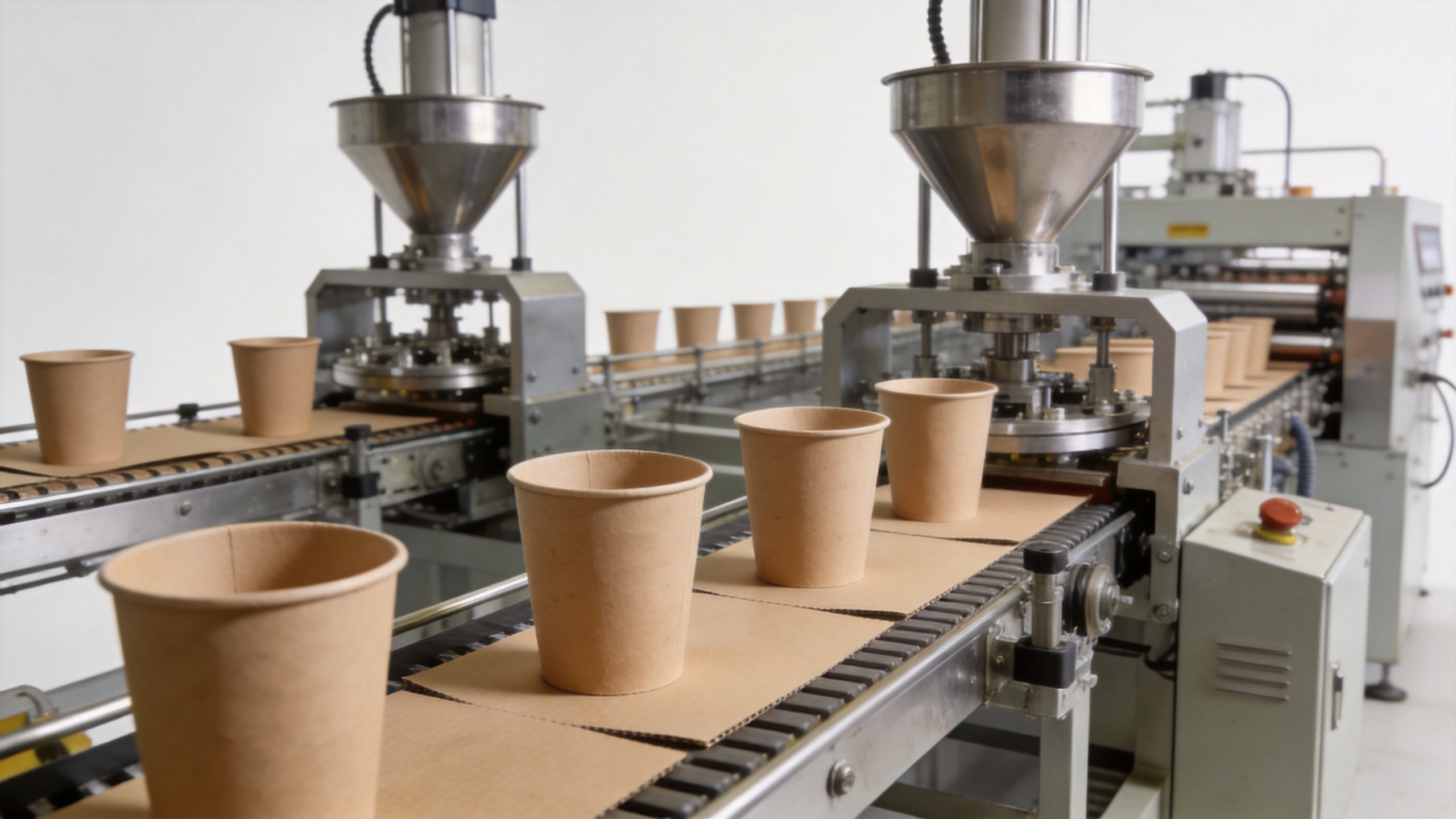
Output is important, but a paper glass machine should be evaluated as part of a paper cup production line, not as an isolated number. The practical production rhythm depends on paper blank preparation, material supply, inspection, collection, packing, operator availability, planned maintenance, and format changes. A line can be limited by any one of those handoffs.
Ask for the conditions behind an output figure: the tested cup size, paperboard specification, lining, operating duration, scrap definition, operator involvement, and quality-check method. A stated rate is easier to interpret when those conditions are visible. This approach helps buyers avoid treating a headline capacity as a guarantee for every cup format and every working environment.
| Question to confirm | Why it matters |
|---|---|
| Which cup sizes and profiles are planned? | Tooling and changeover needs follow the cup geometry. |
| What paperboard and lining will be used? | Material behavior affects feeding, heating, and sealing discussion. |
| What beverage conditions apply? | Cold and other drink applications should be validated with the intended cup construction. |
| How often will formats change? | Changeover steps and training time influence usable production time. |
| How will samples be accepted? | Clear criteria make a paper glass machine trial more informative. |
Make changeover and operator work visible
For a single, stable cup format, a paper glass machine may be judged mainly on repeatability and day-to-day access for inspection. For a factory producing several sizes, changeover can become equally important. The relevant questions are straightforward: what parts change, what settings must be confirmed, what trial cups are needed after a change, and who is trained to make the adjustment?
Do not assume that more functions automatically mean an easier operation. A more elaborate configuration may bring additional checkpoints, maintenance requirements, or training needs. An ideal machine is one whose controls and routine checks fit the team that will use it. It should make normal operating information and abnormal signals understandable enough for operators to respond methodically instead of guessing.
Plan verification before the purchase decision
A well-run machine review ends with a verification plan. Send cup drawings or samples, material details, beverage-use information, desired output rhythm, utility conditions, and any destination-market documentation requirements. Then ask the supplier to identify what can be confirmed during a sample discussion or trial and what remains conditional on material and site conditions.
For the buyer, that is the real advantage of approaching a paper glass machine as an application match. It turns a generic equipment inquiry into a shared checklist. The list can cover cup dimensions, paperboard, lining, forming quality, sealing observations, collection, format changes, operator training, routine maintenance, spare-parts planning, and acceptance criteria.
Conclusion: ideal means verified fit
The most suitable paper glass machine for drinks is not necessarily the one with the most impressive isolated claim. It is the one that matches the target cup, material, beverage use, production rhythm, and operator workflow, with those conditions checked before acceptance. When a paper cup production line is evaluated in that order, the decision becomes clearer: verify the application first, assess the process second, and compare configurations against the same documented requirements.
 ONLINE