
 EN

How Enterprises Benefit from Modern Cup Machine?
For an enterprise that produces food-service packaging, a modern cup machine is not simply a purchase for making more cups. It is a production decision that can affect planning, labor coordination, quality checks, maintenance routines, and the way a business responds to changing orders. The useful question is not “Which cup machine has the highest advertised speed?” but “Which production approach fits our cup formats, paper materials, workflow, and verification process?”
From a B2B procurement perspective, the most dependable gains come from matching the cup machine to real operating conditions. That means defining the business goal, listing the conditions that affect output, and agreeing on the checks required before configuration and acceptance. This article focuses on paper-cup forming equipment; a cup sealer or boba cup sealer serves a different packaging step and should be evaluated separately.
1. A cup machine can turn production goals into a clearer operating plan
Enterprises often begin with a target volume. That is a valid starting point, but it is not a complete specification. A cup machine has to work with the intended cup size, shape, paper stock, coating, printing condition, changeover pattern, downstream collection, and staffing plan. When these inputs are documented early, production, purchasing, and quality teams can compare configurations using the same baseline.
This planning discipline is itself a benefit. Instead of debating isolated features, teams can organize decisions around a shared checklist: what cups will run, what materials must be validated, which formats change most often, how will operators hand off shifts, and what evidence is needed at acceptance. A modern cup machine is more valuable when it supports that coordinated process than when it is treated as a stand-alone asset.
2. Better workflow visibility helps teams manage variability
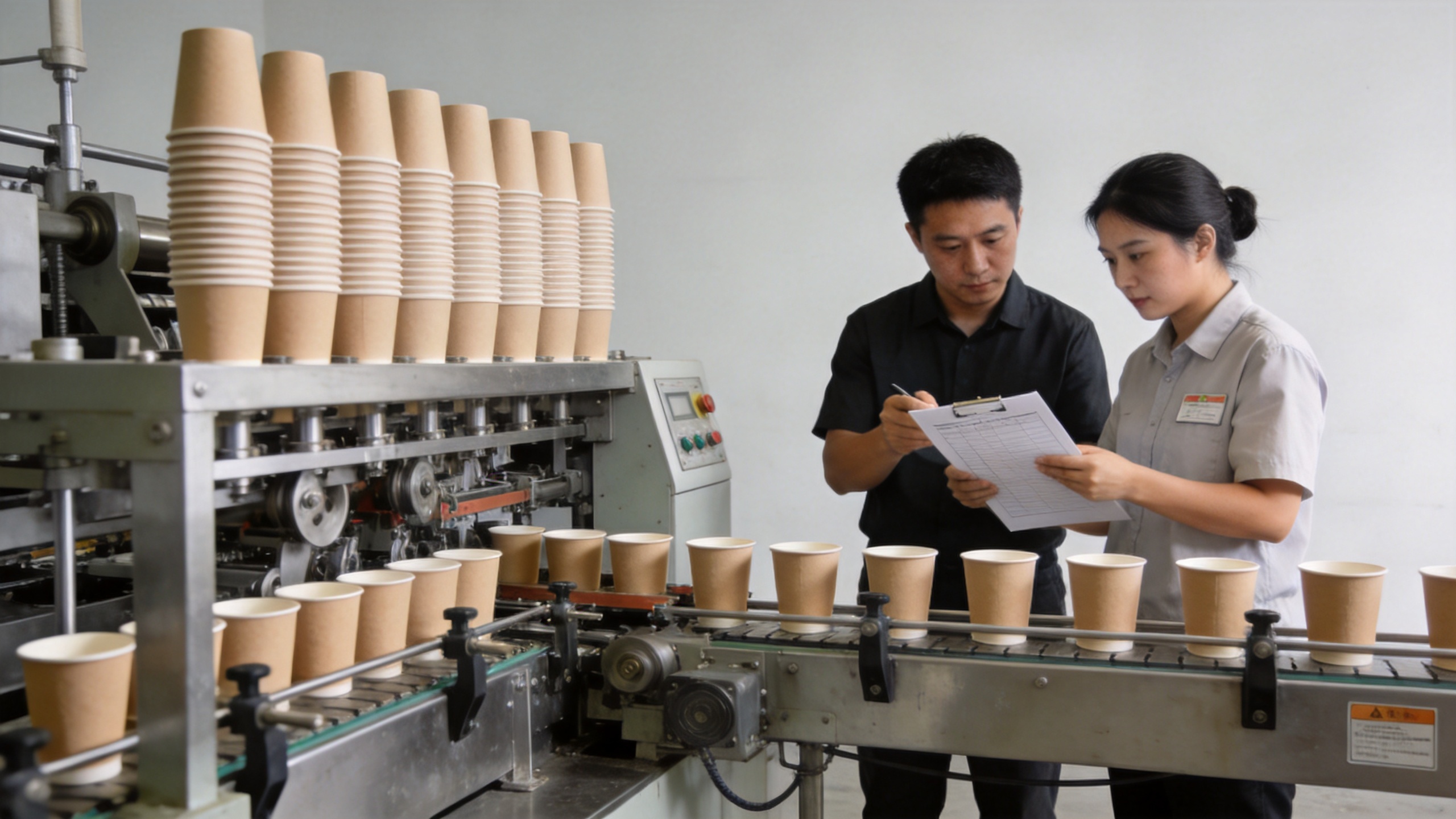
Paper-cup production involves linked stages rather than a single button press. Feeding, forming, heating, inspection, collection, packing, and material replenishment each influence the working rhythm. A cup machine should therefore be assessed as part of a line: can operators understand the sequence, reach relevant adjustment points, and communicate an issue clearly during a shift?
In practical reviews, it helps to move from single-machine parameters to line rhythm. For example, a production team can observe feeding continuity, the condition of formed cup edges, collection behavior, and whether status messages are understandable. Those observations are not performance guarantees; they are discussion points for a trial plan. Still, they make a cup machine evaluation more concrete and help enterprises identify where a process may need training, material controls, or layout changes.
3. A cup machine can support more disciplined quality decisions
Consistency matters in food-service packaging, yet consistency depends on more than equipment alone. Paper batches, cup geometry, tooling condition, heating settings, and operator practice can all affect the result. For that reason, a modern cup machine benefits an enterprise when it is included in a documented quality routine rather than expected to eliminate every source of variation.
The routine should define what will be checked before and during production, how observations are recorded, and when an issue is escalated. If the cups will be used in food-contact applications, the relevant paper and paperboard documentation should also be verified for the destination market and intended use. In the United States, for example, 21 CFR §176.170 addresses components of paper and paperboard in contact with aqueous and fatty foods. That regulation is a material-compliance reference, not a claim that any particular cup machine or finished cup is compliant.
4. Modern automation can make labor deployment more deliberate
Automation does not mean “no people required.” It can, however, help enterprises place people where judgment is most useful: monitoring material supply, checking cup appearance, confirming changeovers, documenting exceptions, and coordinating packaging. The right cup machine can make these duties easier to structure when responsibilities and training are defined in advance.
This is especially relevant when a business runs several cup formats or expects seasonal changes. Before selecting a cup machine, ask whether the production plan prioritizes stable output for one format or flexibility across multiple formats. Higher speed is not automatically better if frequent changeovers or material adjustments create avoidable disruption. In the same way, advanced functions should be balanced against the team’s ability to maintain and use them confidently.
5. A cup machine can improve cost conversations beyond the purchase price
Enterprise buyers benefit when the evaluation shifts from initial price to total operating considerations. A cup machine affects not only capital cost but also tooling discussions, spare-parts planning, training time, planned maintenance, utilities, material waste investigation, and the impact of interruptions on the wider line. The exact economics depend on the project, so no generic saving figure should replace a site-specific calculation.
What a modern cup machine can provide is a stronger framework for that calculation. Procurement can request a clear scope; operations can describe expected production rhythm; maintenance can identify inspection and spare-parts needs; and management can review the assumptions together. This reduces the risk of comparing quotations that include different boundaries. Do not compare only the headline price: support scope, acceptance criteria, and the availability of technical information also influence the long-term decision.
6. Safety and acceptance planning should be part of the benefit case
A well-managed cup machine project includes safety before installation, not after the first run. Guarding, emergency procedures, training, and site-specific responsibilities should be reviewed with the applicable local requirements. OSHA’s general machine-guarding rule, 29 CFR 1910.212, is one useful U.S. reference and states that guards should be affixed to the machine where possible. Local rules and the actual installation still need independent verification.
Acceptance should be equally explicit. Rather than relying on a vague expectation of “good output,” enterprises can agree on the cup formats, materials, sampling approach, operating observations, documentation, and outstanding actions to be checked. A cup machine then becomes part of a transparent project handoff, which is often more useful than an unqualified promise about capacity.
Questions to answer before choosing a cup machine
- Which cup sizes, shapes, paper grades, coatings, and print conditions must the cup machine handle?
- Is the priority steady production of one format, or regular multi-format changeovers?
- What must be verified for food-contact material documentation in the target market?
- How will the team inspect formed cups, record exceptions, and escalate process questions?
- What training, maintenance access, spare parts, and acceptance details need to be included in the project scope?
- Is a cup sealer or boba cup sealer required downstream, and how will that separate step connect with cup supply?
Conclusion: use the cup machine as a decision framework
The enterprise benefit of a modern cup machine is not a universal speed or savings claim. It is the ability to build a more deliberate production system around defined formats, materials, people, safety checks, and cost assumptions. If your project has confirmed cup requirements, start by turning them into a shared technical and commercial checklist. Then compare each cup machine option against those conditions, validate the open points with the supplier, and use the result to guide a practical acceptance plan.
 ONLINE