
 EN

Why Paper Cup Glass Making Machine Is Unique?
A paper cup glass making machine is distinctive because it turns flat, coated paper components into a leak-resistant drinking container through a tightly linked series of forming actions. It does more than feed paper and cut blanks. The machine must coordinate the side seam, bottom insertion, heat or other sealing method, knurling, rim curling, inspection, and discharge so that each stage supports the next.
From a packaging-equipment selection perspective, the useful question is not whether a paper cup glass making machine has a long feature list. It is whether its forming path fits the intended cup, paperboard, barrier coating, production rhythm, and changeover plan. That difference matters to operators, converters, and paper coffee cup manufacturers.
What Makes the Forming Process Different?
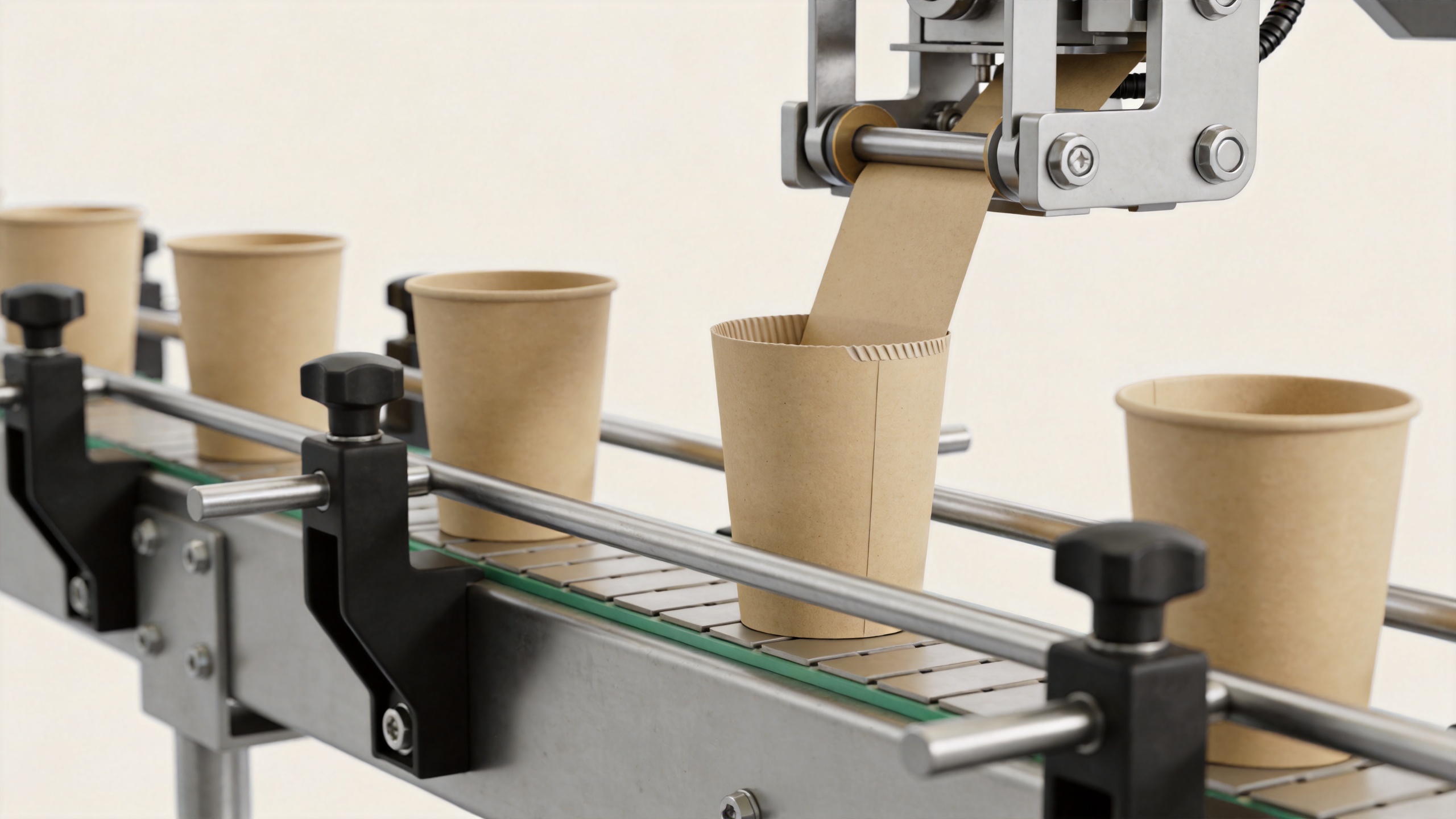
A paper cup glass making machine begins with prepared cup-wall blanks and bottom stock rather than a rigid container. The wall blank is shaped into a cylinder and joined at its side seam. A bottom disc is then inserted, attached, and mechanically worked at the lower edge. The top edge is curled to create a drinking rim and support lid fit where the cup design calls for one.
Each operation is connected. If the paperboard, coating, temperature, pressure, timing, or tooling condition is unsuitable, the effect may show up later as a weak seam, an inconsistent bottom, an uneven rim, or difficulty maintaining a stable production run. This is why a paper cup glass making machine should be assessed as a forming system rather than as a collection of isolated stations.
Why the Side Seam, Bottom, and Rim Deserve Equal Attention
In a liquid-service cup, the side seam and bottom seal are functional zones, while the rim affects user comfort and lid interaction. Quality-control guidance for paper cups commonly examines the barrier system, side seam, bottom seal, rim geometry, and packing condition. The same checklist is useful when comparing equipment: a high output target has value only when these features remain within the project’s acceptance criteria.
For example, a clean-looking side seam is not by itself proof of a suitable seal. The relevant conditions include the paper specification, coating type, cup geometry, tooling setup, and the forming method used by the machine. Likewise, a rounded rim can look acceptable but still require checks for diameter, roundness, and curl consistency when a lid is part of the final application.
How Automation Creates Value—and Where It Does Not
The automation in a paper cup glass making machine can link feeding, forming, bottom processing, curling, counting, and discharge into a repeatable sequence. That coordination can reduce the number of manual handoffs and make routine operating checks easier to define. However, automation is not the same as a hands-off process. Material variation, tooling wear, changeover discipline, cleaning access, and operator response to alarms still affect the result.
A useful shop-floor observation is to watch the connection between feeding and material travel, the appearance of the formed cup edge, and the stability of cup collection. These observations do not replace a formal trial, but they turn a vague claim about “smooth operation” into questions that can be tested with the buyer’s own materials.
Why High Speed Is a Configuration Question
A high speed paper cup glass making machine may be appropriate when the target format, material, tooling, staffing, and downstream packing arrangement are aligned. Still, speed alone does not describe the whole production outcome. A frequent change in cup sizes or paper grades can change the importance of changeover work, setup verification, and operator training. In other words, the highest stated rate is not automatically the most suitable rate for every factory.
Paper coffee cup manufacturers can make the comparison more useful by writing down four conditions before asking for a proposal:
- the cup sizes, top diameters, and heights required;
- the paperboard and barrier system planned for each format;
- the expected mix of long runs and short, frequent changeovers; and
- the acceptance checks for seams, bottoms, rim shape, packing, and documentation.
With those conditions visible, a supplier can discuss a configuration rather than trying to infer the project from a nominal output figure.
Material Compatibility Is Part of Machine Uniqueness
Because the starting material is a coated paperboard blank, material behavior is inseparable from machine behavior. Thickness, stiffness, moisture condition, coating consistency, print registration, and blank-cut accuracy can influence feeding, forming, and sealing. A paper cup glass making machine is therefore unique in that it must manage both mechanical movement and a material that bends, heats, seals, and retains a food-service shape.
For destination markets, buyers should separately verify the food-contact requirements that apply to the finished cup and its materials. In the United States, paper and paperboard additives for food-contact use are addressed in 21 CFR Part 176; the relevant provision depends on the intended use. Project teams should treat this as a verification item, rather than as evidence that a particular machine or cup meets a market requirement.
Where the Real Selection Work Happens
The distinctiveness of a paper cup glass making machine becomes clearest during a trial and technical review. Rather than stopping at a general demonstration, request a defined evaluation path. Run the intended blank and bottom material, confirm the chosen cup format, inspect the seam and bottom area, assess rim form, and document the settings and acceptance observations. If multiple formats are planned, include a changeover discussion rather than treating it as an afterthought.
| Question to clarify | Why it matters |
|---|---|
| Which cup sizes and shapes will run first? | Tooling and format scope influence the practical configuration. |
| Which paperboard and coating will be used? | Material behavior affects forming and sealing conditions. |
| How often will formats change? | Changeover requirements affect workflow and training needs. |
| What will be inspected at acceptance? | Clear criteria keep quality discussions tied to the intended product. |
| What support, spare parts, and documents are included? | The delivered scope should be clear beyond the machine itself. |
Why This Matters for a Production Plan
For a new line or an upgrade, the machine’s value lies in how reliably the forming route supports the production plan. ZheJiang RUIDA Machinery focuses on paper-cup and food-packaging equipment directions, including automatic paper cup machines and servo paper cup formers. A technical conversation is most productive when it starts with cup samples, material details, target rhythm, and the checks the buyer needs to complete before commissioning.
The paper cup glass making machine is unique not because one feature can define it, but because many forming decisions must work together: material feeding, seam formation, bottom processing, rim curling, handling, inspection, and the surrounding operating routine. Start by confirming the intended use, then compare configurations against those conditions. This approach gives paper coffee cup manufacturers a firmer basis for evaluating a high speed paper cup glass making machine, without treating a catalog figure as a substitute for process validation.
 ONLINE