
 EN

Why Paper Cup Making Machinery Boosts Workflow?
For a cup producer, workflow is more than the number displayed on a machine panel. It is the repeatable movement from a prepared cup blank to a formed, inspected, collected cup that can move to the next operation without creating a backlog. That is why paper cup making machinery can improve workflow: it brings several forming tasks into one coordinated sequence. Still, the useful question is not simply whether a machine is fast. It is whether its feeding, forming, sealing, finishing, collection, and operator routines fit the cup, paper, and production plan.
From an operator-workflow perspective, a practical review starts with the work that happens between stations. A machine may be able to run continuously, but the line benefits only when materials arrive consistently, controls are understandable, and finished cups leave the forming area in an orderly way. This distinction helps buyers evaluate paper cup making machinery as a workflow tool rather than a standalone speed claim.
Workflow improves when forming steps have a clear sequence
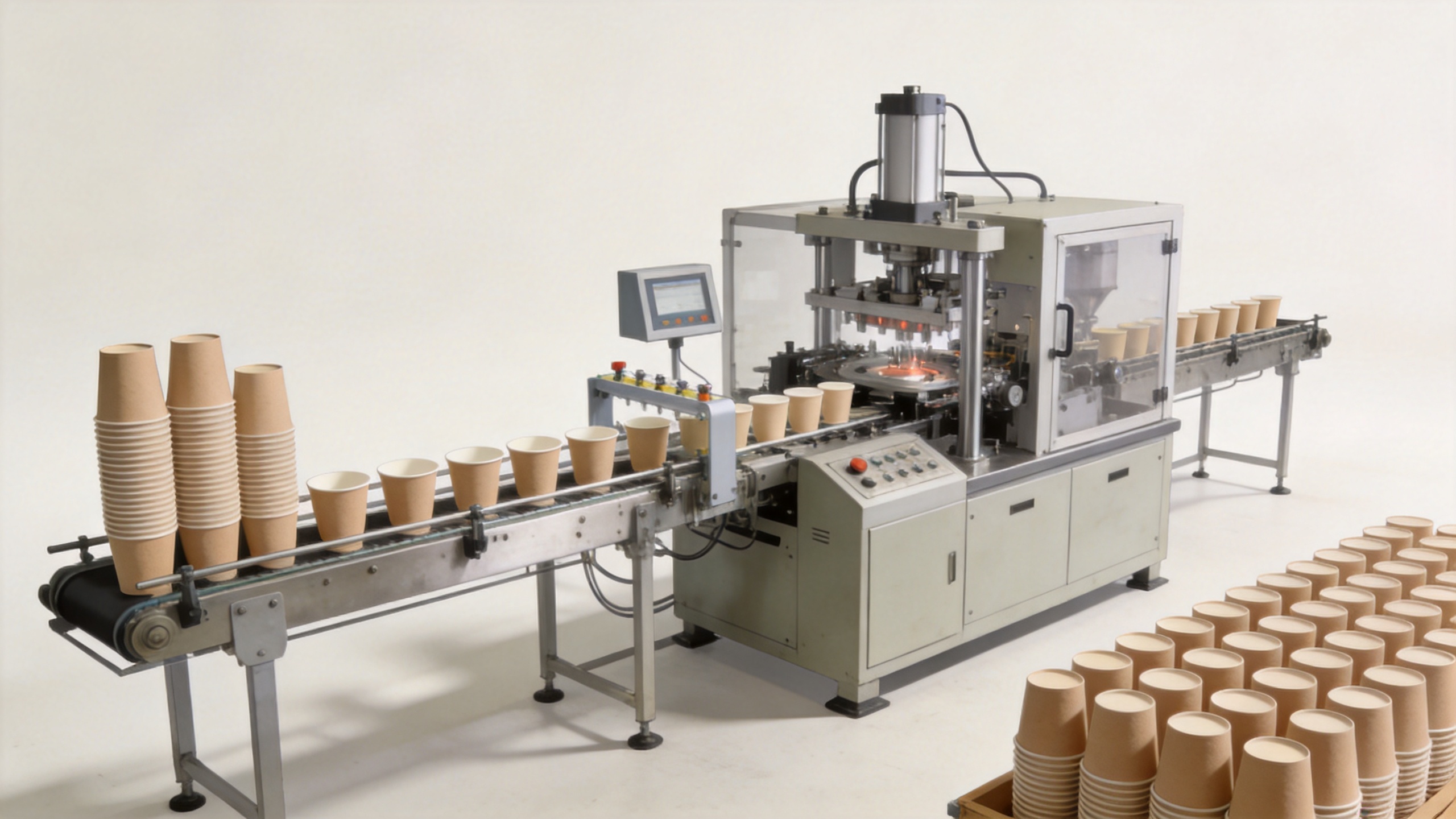
A typical paper-cup forming process is described as feeding, forming, side sealing, bottom sealing, knurling, rim curling, and finished-cup collection. The exact arrangement varies by machine and application, but the workflow lesson is consistent: each downstream stage depends on a stable handoff from the stage before it. When the paper blank is fed consistently, the forming stage can keep its timing; when the side seam and bottom process are set correctly for the material, later finishing steps have a more reliable starting point.
This is the first reason paper cup making machinery boosts workflow. Instead of asking operators to coordinate several disconnected tasks, it establishes a repeatable route for the cup through the machine. It does not remove the need for supervision. Rather, it gives supervision a clearer focus: paper supply, heating or sealing conditions, forming quality, collection, and the response to an abnormal signal.
Stable output matters more than a headline speed
Search results for this equipment often lead with cups per minute or a “high-speed” label. Those figures can be useful comparison points, but they should not be treated as a production promise. The usable rhythm of paper cup making machinery depends on the selected cup size, blank quality, paper characteristics, tooling condition, changeover frequency, and the people who run and inspect it.
More accurately, the highest listed speed is not automatically the most appropriate workflow choice. A line that has to pause frequently for adjustments, material checks, or unclear fault handling may create more work than a configuration matched to its actual production rhythm. During an evaluation, observe whether paper feeding and material travel stay coordinated, whether the forming edge is visually consistent, and whether the finished-cup collection point allows the next team to work without congestion. These observations are discussion prompts, not performance guarantees.
How automation changes the operator’s work
Well-matched paper cup making machinery changes the operator’s role from repeatedly handling every cup to monitoring critical conditions. That can make a shift easier to organize because routine forming actions follow the machine sequence. The operator can spend more attention on confirming paper supply, checking cup appearance, recording exceptions, and preparing for a planned changeover.
An ultrasonic paper cup machine may be relevant when a buyer is reviewing sealing methods and material compatibility. It should be assessed through the intended paper structure, cup application, and validation process rather than assumed to be suitable in every case. Similarly, a single paper cup machine can support a straightforward production rhythm when a plant prioritizes one established format. If the business frequently changes cup sizes or shapes, the time and training required for each change should be part of the workflow calculation.
Workflow gains begin before the first cup is made
The strongest gains from paper cup making machinery often start in preparation. Before commissioning or purchasing, put the operating conditions into a simple shared checklist:
- Cup and paper details: confirm the target cup formats, blank dimensions, paper structure, and coating conditions that need to be discussed.
- Production rhythm: define expected operating hours, batch sizes, planned changeovers, and the handoff from cup collection to packaging.
- Quality checks: agree on which visual and functional checks will be made at start-up, during a run, and after a material change.
- Operator actions: identify who replenishes material, records abnormalities, performs routine cleaning, and decides when a condition needs escalation.
- Support and spares: clarify access, training, wearing-part preparation, and the information needed for troubleshooting.
This checklist reduces avoidable interpretation gaps. It also shifts the conversation from “What is the maximum speed?” to “What conditions help this process run predictably?” For food-contact cup applications, material and destination-market requirements should be verified separately; for example, U.S. requirements for paper and paperboard food-contact components are addressed in 21 CFR Part 176. That reference is not a compliance claim for any particular cup, paper, or machine.
Where bottlenecks can remain
Automation does not solve every workflow issue by itself. Paper blanks that vary, an unplanned format change, delayed material replenishment, or unclear responsibilities at collection can interrupt even capable paper cup making machinery. That is why buyers should look at the entire route: preparation, machine operation, inspection, collection, packing, and feedback to the operator.
A useful review question is: where would a cup wait if the machine ran at the planned pace? The answer may point to material staging, finished-cup handling, an inspection step, or communication between shifts. Addressing that constraint can improve real workflow more than adding an isolated feature. It also makes training more focused because the team can practice the decisions that actually affect continuity.
A practical way to compare options
When comparing paper cup making machinery, use the same questions for every option. First, confirm the cup range and paper conditions. Next, map the forming sequence and the operator touchpoints. Then ask how the equipment supports a stable collection and packaging rhythm. Finally, document which performance points require a sample run or technical confirmation.
If your project values reliable output for one proven format, a single paper cup machine may simplify planning. If you are considering an ultrasonic paper cup machine, include material and sealing verification in the discussion. In either case, paper cup making machinery is most useful when it is selected as part of a complete workflow: conditions first, configuration second, and ongoing checks throughout production.
Conclusion
Paper cup making machinery boosts workflow by organizing forming work into a repeatable sequence and making operational checkpoints easier to see. The benefit is not a universal output number. It comes from a fit between cup format, paper, production rhythm, operator practices, and downstream handling. Start by documenting those conditions, then use them to guide a technical discussion and a realistic verification plan.
 ONLINE