
 EN

Why Paper Machinery Is Important for Mills?
A mill does not succeed because one machine runs quickly. It succeeds when stock preparation, forming, pressing, drying, finishing, and material handling work as a controlled system. That is why paper machinery matters: it turns fiber, energy, operator effort, and production time into a repeatable paper product. For a mill manager or buyer, the useful question is not simply which unit is fastest. It is whether the line can maintain quality, recover from variation, and support the grade mix the mill needs to produce.
Paper machinery connects the entire production rhythm
Paper production is a chain of dependent stages. Pulp and additives must arrive at the forming section in a consistent condition; the web then has to pass through dewatering, pressing, drying, winding, and finishing without a weak link dictating the pace. Effective paper machinery gives each stage a defined job while allowing operators to coordinate the line as one process.
This coordination matters because a bottleneck rarely stays isolated. Unstable stock preparation can affect sheet formation. A problem in drying can force a lower line speed. Poorly matched winding or handling equipment can turn otherwise saleable output into damaged rolls or delayed dispatches. In practice, mills benefit from looking beyond a single nameplate capacity and reviewing how capacity, controls, material flow, and maintenance access fit together.
It helps mills protect paper quality
Customers judge paper by the properties that matter to their application: basis weight, moisture, formation, surface condition, roll build, cut accuracy, and consistency from batch to batch. Paper machinery provides the process control needed to manage these variables, but the results depend on the grade, furnish, operating method, and equipment condition. No machine specification alone guarantees the same outcome in every mill.
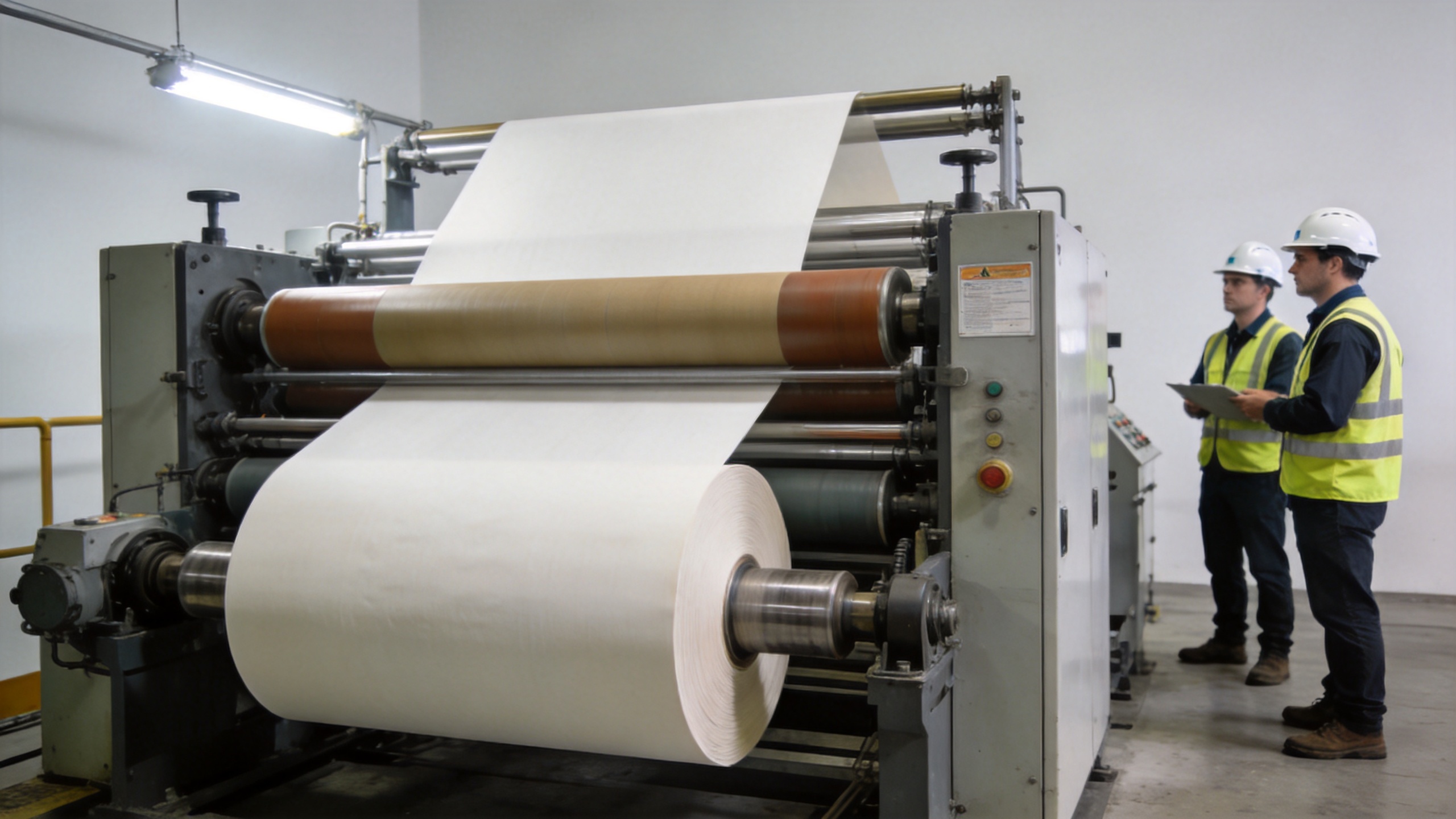
For example, an integrated production line can make it easier to observe changes before they reach the finished roll. Operators can compare incoming material behavior with forming stability, press performance, dryer response, and winding quality. That process view is more valuable than treating quality inspection as a final checkpoint. It helps a team locate the stage where variation begins and decide what to verify next.
Reliability is an output issue, not just a maintenance issue
When a critical unit stops, the effect spreads across the mill. Material may wait, crews may lose production time, and the restart can create additional waste or quality risk. Well-chosen paper machinery therefore needs practical maintenance features as well as production capability: access for inspection, understandable fault information, sensible spare-parts planning, and clear alignment between rotating equipment and line conditions.
A pulp-and-paper energy efficiency guide notes that precision maintenance can raise equipment uptime and, in the cited application, may reduce electricity use for equipment by up to 10%. That figure should not be read as a promise for every mill. It does, however, illustrate why maintenance quality and machine condition belong in the same conversation as throughput. Before comparing speeds, it is often wiser to clarify inspection intervals, bearing and roll alignment practices, vibration monitoring, and the consequences of a planned versus unplanned stop.
Safety must be built into the process
Paper lines involve moving webs, rotating rolls, nip points, cutters, conveyors, and material-handling areas. Good paper machinery supports safer work through guarding, accessible emergency stops, predictable operating procedures, and controls that make unsafe conditions easier to identify. Requirements vary by jurisdiction and machine type, so a mill should validate its own obligations with qualified safety personnel.
As one example, the U.S. OSHA rule for pulp, paper, and paperboard mills includes provisions for paper machines to have devices that stop the machine quickly in an emergency, along with guards for specified hazards. The broader lesson applies everywhere: safety cannot be left to training alone. It should influence equipment layout, guarding design, lockout procedures, and the way operators interact with the line.
Why downstream equipment deserves the same attention
Many mills focus first on the main paper machine, yet downstream handling can determine whether production reaches the customer in usable condition. A paper collecting machine, for instance, may support orderly transfer, accumulation, or collection after a converting step when it is correctly matched to speed, sheet or roll format, and available floor space. The purpose is not merely to add automation; it is to prevent handling from becoming the next constraint.
The same caution applies to the term paper paper machine, which is sometimes used loosely in searches to describe a paper-production or paper-processing machine. Buyers should replace broad labels with a precise process map. Are they evaluating stock preparation, a paper-making line, rewinding, slitting, sheeting, printing, or collection? Once the job is clear, it becomes possible to compare the right variables rather than assuming all paper equipment solves the same problem.
A practical framework for evaluating paper machinery
- Start with the product and demand profile. Define paper grade, basis-weight range, roll or sheet format, planned output, and expected changes in the mix.
- Map the full material flow. Review upstream and downstream interfaces, not only the central machine. Include broke handling, storage, transfer, finishing, and collection.
- Check controllability. Ask how operators monitor key conditions, diagnose deviations, and make adjustments without creating instability elsewhere in the line.
- Evaluate lifecycle support. Compare service access, documentation, recommended spares, training needs, and downtime implications alongside the purchase price.
- Verify safety and acceptance criteria early. Record guarding, emergency-stop, electrical, layout, and commissioning requirements before finalizing configuration.
The business value comes from coordinated decisions
The importance of paper machinery is ultimately commercial as well as technical. A line that matches the mill’s process can help stabilize quality, reduce avoidable interruptions, make labor easier to organize, and support more dependable delivery planning. But the right choice is conditional. A high-capacity configuration may not be the most suitable fit for frequent grade changes, limited utilities, constrained space, or a team that needs a simpler maintenance routine.
For that reason, mills should turn equipment discussions into a documented review of material, target product, operating rhythm, maintenance resources, and safety boundaries. When those conditions are clear, paper machinery becomes more than a collection of machines: it becomes the operating foundation that allows a mill to produce consistently and improve with confidence.
 ONLINE