
 EN

Behind Cup Machine Manufacturers Global Success
Global success in cup-forming equipment rarely comes from a machine catalog alone. For buyers comparing cup machine manufacturers, the more useful question is whether a supplier can turn a stated production need into a clear, testable project plan. That means connecting cup format, paper or board, output rhythm, quality expectations, documentation, and after-sales communication before an order is placed.
From a B2B procurement perspective, a credible manufacturer makes those connections visible. The goal is not to rank one supplier above every other supplier. It is to recognize the habits that help cup machine manufacturers serve different markets reliably and help buyers reduce uncertainty before equipment arrives.
Success starts with application clarity, not a generic speed claim
Experienced cup machine manufacturers begin a serious discussion with the finished cup and the operating context. Cup diameter, height, rim shape, material construction, print requirements, anticipated changeovers, and downstream packing all affect the right equipment conversation. A headline speed number is useful only after these conditions are understood.
This is especially relevant for buyers assessing food packaging machines for small business. A smaller operation may value a manageable workflow, realistic staffing, practical changeover routines, and a serviceable configuration over maximum nominal output. For a larger project, the priority may shift toward coordination with printing, inspection, collection, packing, and export documentation. In both cases, the manufacturer’s ability to ask precise questions is an early indicator of project discipline.
Global manufacturers build a repeatable verification process
Strong suppliers do not ask buyers to accept every capability statement at face value. Instead, they organize verification around the actual job: sample specifications, material details, a proposed configuration, trial or acceptance discussion, and a record of what remains to be confirmed. This helps separate a general product description from a solution that is appropriate for a specific production line.
Quality-system documentation can support that process, but it should be interpreted carefully. ISO describes ISO 9001 as a standard that specifies requirements for a quality management system; it is not, by itself, proof that every machine will fit every cup program. Buyers should request current documents where relevant and then ask how the supplier applies control points to the quoted project.
- Which cup formats and materials are included in the quoted scope?
- What samples, drawings, or process conditions must be confirmed before production?
- How will output, forming quality, and acceptance criteria be discussed?
- Which documents will travel with the equipment, and which destination requirements still need buyer confirmation?
These questions make it easier to compare cup machine manufacturers on evidence rather than on marketing language.
Engineering communication has to cross borders cleanly
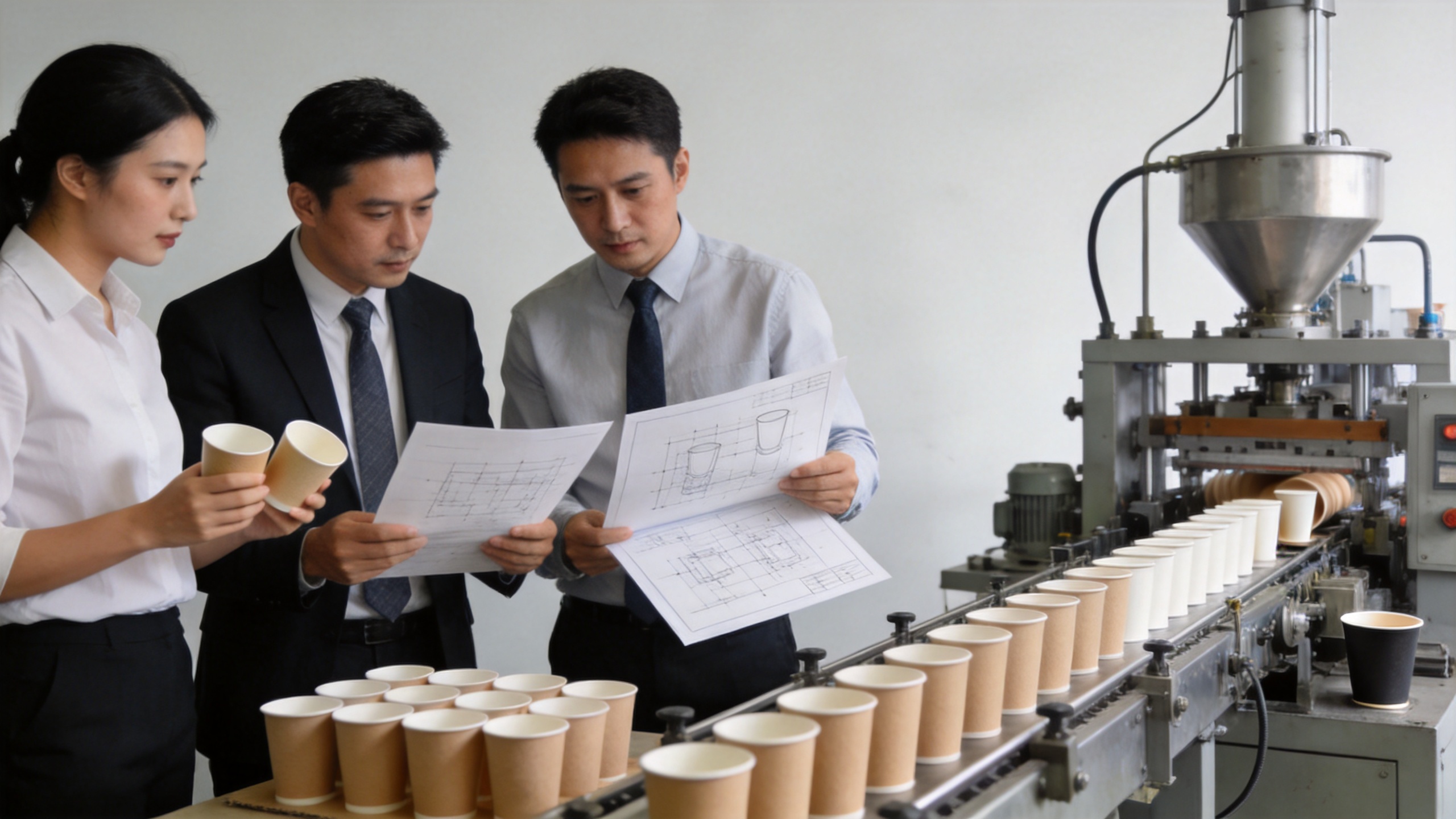
International projects introduce distance, time zones, and multiple decision-makers. A globally capable supplier therefore needs more than technical knowledge. It needs a communication method that keeps commercial, engineering, production, and logistics information aligned. Clear quotations define inclusions and exclusions. Drawings and material information are versioned. Open questions are visible rather than buried in message threads.
A capable packing machine manufacturer uses the same discipline when equipment must work alongside cup-forming, collection, or packaging steps. The important issue is not whether one supplier claims to solve every line problem; it is whether interfaces, handoffs, and responsibilities are identified early enough to be checked. For buyers, that reduces the chance that a downstream requirement emerges after a machine is already in transit.
Operational maturity shows up in the details buyers can inspect
When evaluating cup machine manufacturers, look for practical signals rather than broad promises. Useful signals include a structured inquiry checklist, a transparent description of the proposed configuration, a plan for discussing cup samples, an explanation of commissioning support, and a realistic spare-parts conversation. None of these guarantees a specific result. Together, they show whether the supplier has a process for managing variation.
| What to compare | Why it matters | What a buyer can ask for |
|---|---|---|
| Application fit | Cup geometry and material conditions influence configuration choices. | A written summary of the cup, material, output, and changeover assumptions. |
| Quality controls | General certificates do not replace project-level verification. | Relevant current documents and an explanation of acceptance checkpoints. |
| Communication method | Cross-border projects need traceable decisions. | Named contacts, document versions, and a list of outstanding confirmations. |
| Lifecycle support | Maintenance and parts planning affect continuity after delivery. | A discussion of training, recommended spares, and support boundaries. |
Why smaller buyers should evaluate the whole workflow
Buyers researching food packaging machines for small business often compare equipment on price first because the investment is visible and immediate. A more complete comparison also considers operator familiarity, routine inspection, material availability, planned product changes, and the time required to resolve an issue. This is not an argument for the highest-priced solution. It is an argument for comparing quotations on the same assumptions.
Ask each supplier to explain what is included in the base offer, what site conditions are expected, what information is still needed, and what may require separate planning. The answers reveal whether the seller is helping build a usable project definition or simply moving quickly to a price.
Trust grows through boundaries, not exaggerated claims
The most durable global relationships are built when cup machine manufacturers state both what they can support and what requires further confirmation. Paper characteristics, cup design, local requirements, operator experience, and production schedules can all influence final results. Treating these as discussion points is more credible than promising universal performance.
For example, a supplier can explain the questions normally used to assess a forming project without claiming that a particular setup will automatically meet every future demand. Likewise, a packing machine manufacturer can clarify packaging-line interfaces without representing unverified downstream conditions as settled facts. This restrained approach protects buyers and strengthens long-term confidence.
A practical next step for comparing manufacturers
Before shortlisting, send every candidate the same concise brief: target cup formats, material details, planned output, changeover expectations, available utilities, destination, and any packaging interface. Then compare not only the proposed machine but also the quality of the questions, documents, assumptions, and follow-up plan you receive.
That comparison is the real story behind global success. The cup machine manufacturers that earn repeat international business are typically the ones that turn a complex purchase into a documented sequence of confirmations, tests, and responsibilities. Buyers gain a clearer basis for selection, while suppliers gain the information needed to recommend equipment responsibly.
 ONLINE