
 EN

When to Invest in New Cup Manufacturing Machine?
A new cup manufacturing machine is not automatically the right answer when orders become harder to schedule. The better question is whether current equipment can still deliver enough saleable cups at the right mix, quality level, and delivery rhythm. From a B2B procurement perspective, a cup manufacturing machine investment should be based on verified operating data, not only on a quoted speed or a competitor’s catalog.
For a plant making food-service cups, the decision often sits between three paths: stabilize the existing line, add capacity with a new cup manufacturing machine, or redesign the product mix and changeover plan. Each path can be sensible. The choice depends on demand, usable capacity, changeover losses, maintenance exposure, and the conditions your team can actually support.
Start with saleable capacity, not the nameplate speed
Before budgeting for a cup manufacturing machine, calculate how many acceptable cups your present line produces in a normal production week. Start with scheduled hours, then subtract planned changeovers, cleaning, routine maintenance, material adjustments, stoppages, and rejects. This gives a more useful capacity baseline than a machine’s theoretical output.
For example, a line can appear fully loaded because it runs for long shifts while still losing meaningful time to short stops, paper feeding adjustments, or slow restarts after a format change. A new cup manufacturing machine may be justified when verified saleable output is consistently below committed demand even after the controllable causes have been addressed. If the shortfall is mainly caused by poor scheduling or avoidable downtime, improving the current line can be the lower-risk first move.
A helpful decision rule is to compare two scenarios on the same basis: the extra saleable cups expected from improving current effectiveness and the extra saleable cups expected from an additional cup manufacturing machine. An OEE-style calculation can make this visible. As a simple mathematical illustration, moving effectiveness from 40% to 50% represents a 25% relative increase in output on the same line; it is not a promise that any specific plant can achieve that result. It simply shows why measured losses deserve attention before a capital purchase is approved.
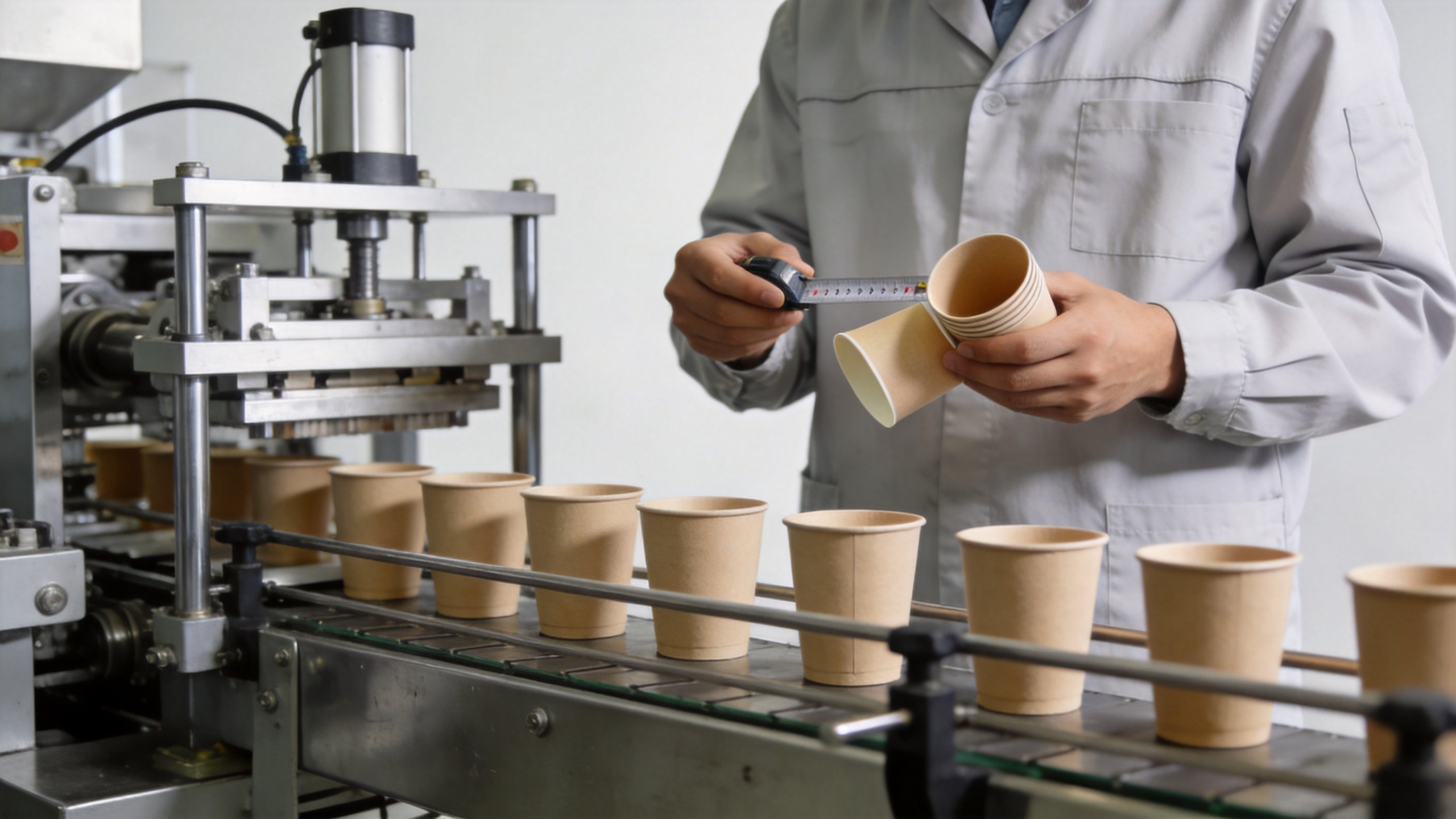
Five signals that a new cup manufacturing machine may be timely
1. Demand exceeds verified available capacity for a sustained period
One busy month is rarely enough evidence. Look for a repeated gap between confirmed orders and available saleable capacity across several planning cycles. The case for a cup manufacturing machine becomes stronger when overtime, subcontracting, or extended lead times are becoming normal ways to protect deliveries rather than short-term exceptions.
2. Your product mix no longer fits the current production plan
A factory may have adequate total output but insufficient capacity for the cup sizes, wall structures, or customer-specific formats it now sells. Frequent format changes can consume the production time that looks available on paper. If demand for insulated cups is growing, a double wall cup manufacturing machine may deserve separate evaluation rather than forcing that work through a general schedule. Ask whether the demand is durable enough to support dedicated capacity and whether the required tooling, paper specification, and operator workflow have been confirmed.
3. Quality losses are limiting the output you can ship
Reject trends should be separated by material, cup format, shift, and process condition before they are assigned to the equipment. More accurately, not every cup-quality problem is caused by the machine. Paper variation, tooling condition, heating settings, and operating practice can all matter. Still, a new cup manufacturing machine is worth considering when repeatable quality limits persist after the production team has checked these factors and documented the response.
4. Maintenance is crowding out planned production
Maintenance cost is not only a spare-part invoice. It also includes the lost production window, the time needed to restart safely, and the effort to recover the schedule. Review the frequency and duration of unplanned stops, the availability of wearing parts, and the time required for corrective work. If a current cup manufacturing machine repeatedly disrupts customer commitments, its operating burden may be a stronger investment signal than its age alone.
5. Growth requires a different production model
Sometimes the problem is not insufficient speed but a mismatch between the line and a changing business model. A buyer expanding into food-service cup formats, more frequent small orders, or higher-value formats may need a cup manufacturing machine with a different changeover, forming, or collection workflow. A paper vessel production apparatus should be evaluated against the specific products and support resources it will serve, not treated as a generic upgrade.
When improving the current line is the better first investment
Delay a new cup manufacturing machine purchase if you cannot yet explain where present capacity is being lost. Start with a short review of availability, running speed, quality yield, format-change time, and maintenance events. This creates a reliable comparison point for every equipment quote.
- Fix recurring stoppages: identify the few loss categories that occur most often and assign a practical corrective action.
- Standardize changeovers: record the current sequence, tools, settings, and material checks so the team can see where time is being consumed.
- Separate material issues from equipment issues: track paper batches, cup sizes, and process settings alongside defects.
- Plan maintenance windows: a scheduled inspection and spare-part plan can be easier to manage than repeated emergency repairs.
These actions do not eliminate the need for a new cup manufacturing machine; they make the eventual decision more defensible. They also help establish the acceptance conditions that the new line should meet.
Build the investment case around total ownership cost
A purchase comparison should include more than the initial price of a cup manufacturing machine. Include tooling and format requirements, installation preparation, operator training, spare parts, planned maintenance, utilities, commissioning time, and the capacity impact during the transition. If financing is involved, the cash-flow timing and the amount of inventory required to protect deliveries also deserve review.
Do not assume that the fastest quoted cup manufacturing machine is the most suitable one. If your business frequently changes cup formats, reliable changeover and repeatable setup may be more valuable than peak speed. Conversely, a stable, high-volume single-format program may justify a configuration optimized for steady throughput. The relevant trade-off is not speed versus quality in the abstract; it is which capability protects your actual customer commitments.
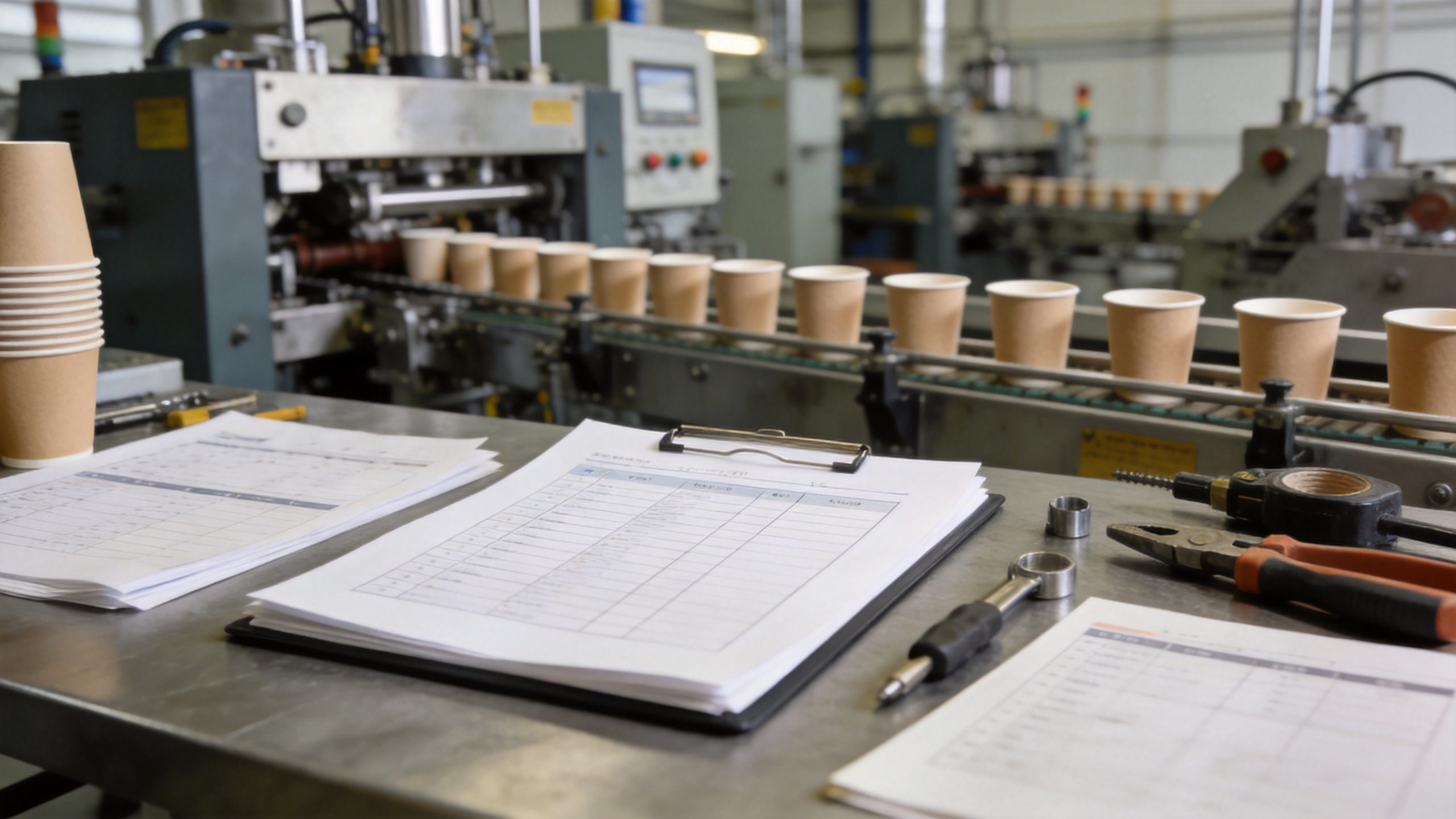
What to confirm before requesting proposals
- List target cup sizes, materials, wall structures, and monthly demand by format.
- Document current saleable output, planned hours, downtime categories, rejects, and changeover time.
- Define the capacity gap you need an additional cup manufacturing machine to cover.
- Set acceptance criteria for cup appearance, forming consistency, startup, changeover, and operator training.
- Ask suppliers to clarify scope for tooling, commissioning, wearing parts, documentation, remote support, and delivery.
- Review whether a double wall cup manufacturing machine is justified by a stable product opportunity or whether flexible capacity is more appropriate.
Make the decision with evidence, not urgency
Invest in a new cup manufacturing machine when demand, usable capacity, quality performance, maintenance burden, and product-mix requirements all point in the same direction. If those signals conflict, collect another planning cycle of operating data before committing. The goal is not to buy equipment because it is new; it is to choose a cup manufacturing machine that fits the formats, production rhythm, and support plan your operation can verify.
For an informed supplier discussion, prepare your target cup specifications, paper information, projected volumes, and current loss data. That gives both technical and purchasing teams a clearer basis for comparing options and defining the next step.
 ONLINE