
 EN
EN
Paper Bowl Machine:Smart Automation and PLC-Networked Control Systems
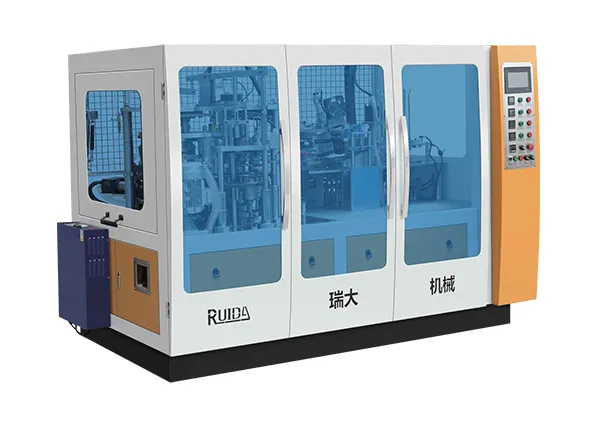
Real-Time Process Optimization via IoT-Enabled PLC Monitoring
Today's paper bowl manufacturing equipment relies on smart PLC systems connected through IoT technology to get really accurate results during production runs. These controllers keep an eye on important factors like heat levels, pressure settings, and how materials are fed into the machine, making adjustments almost instantly to keep everything running smoothly. Take moisture detection for instance. Modern sensors can spot changes in paper dampness down to just half a percent, then automatically recalibrate the system. According to the Packaging Efficiency Report from last year, this kind of adjustment cuts down on wasted materials by around 12 to 15%. The ability to respond so quickly means manufacturers can maintain wall thickness within about 0.1 millimeter tolerance while keeping the base of each bowl stable enough for proper stacking. What makes these PLC systems particularly valuable is their flexible design that works well with various sensor types from different vendors. As factories grow and change their output requirements, they can simply add new monitoring points without overhauling the entire control setup.
Industry 4.0 Integration: Edge Computing, Cloud Data Aggregation, and Remote Diagnostics
Paper bowl machines connected through PLC networks have become essential parts of modern manufacturing setups under Industry 4.0 principles. These systems rely on edge computing that handles local data processing with just 20 milliseconds delay, which means they can react almost immediately when something goes wrong during production, like when glue isn't applied properly or molds get out of alignment. At the same time, all sorts of performance numbers get collected too - think about how much energy it takes to make a thousand bowls or how efficiently motors are running - and these stats travel to cloud servers where manufacturers analyze trends over time. What makes this setup so powerful is the ability to diagnose problems remotely. According to Smart Manufacturing Journal from last year, tech support teams actually fix around three out of every four issues simply by looking at virtual representations of the machinery, cutting down unplanned stoppages by roughly forty percent compared to older methods. When edge computing meets cloud technology, what starts as basic sensor readings turns into real business value, helping predict when bearings might fail or making those frustrating shift changeovers between different product runs go smoother than ever before.
Precision Mechanical Engineering for Food-Grade Paper Bowl Production
Today's paper bowl manufacturing equipment gets really precise thanks to some serious mechanical engineering work behind the scenes. These machines make sure the bowls hold together well and meet all those important food safety standards. The secret weapon? High dynamic servo motors that can form bowls with almost pinpoint accuracy down to fractions of a millimeter. This matters a lot when producing thousands of identical bowls at once. Well made bowls can handle pressure of over 500 grams per square centimeter without losing their shape. That kind of strength is necessary whether the bowls will contain piping hot soup or ice cream straight from the freezer.
Hygienic Sealing and Coated-Paper-Compatible Forming Mechanisms
Producing food grade items requires special equipment designed specifically for handling coated paper materials without messing up the hygiene standards. The machines have antimicrobial seal surfaces that stop bacteria from growing on them. At the same time, the forming molds can be adjusted precisely to work with different paper thicknesses ranging between 180 and 350 grams per square meter. What makes these systems really effective is their ability to create completely leak proof seals that have been tested and proven to hold up across a wide temperature range from minus 20 degrees Celsius all the way up to 100 degrees Celsius. This testing has been done by independent food safety experts too. When there's no need for workers to touch the product during formation, it cuts down on potential contamination problems. This helps manufacturers stay within the strict guidelines set by both the FDA and European Union regulations for food packaging.
AI-Powered Quality Assurance and Predictive Maintenance
Modern paper bowl machines incorporate AI-driven quality control systems that significantly reduce production errors. By fusing visual inspection with sensor technology, manufacturers achieve high-speed, high-accuracy flaw detection.
Vision AI and Multi-Sensor Fusion for Real-Time Defect Detection
When computer vision systems work alongside infrared sensors and laser scanners, they can check things like bowl shape, wall thickness, and how even the coatings are applied. These machines process hundreds of items each minute, sometimes going beyond 200 units in just one minute. The combination of different sensing technologies spots tiny flaws that would otherwise go unnoticed. We're talking about microscopic issues such as air pockets trapped within layers or problems with seals that aren't quite right. The detection rate is really impressive, probably around 99% or better. Once identified, faulty items get rejected instantly by automated systems. This helps cut down on wasted materials and makes sure that only good quality products move forward through the production line.
Predictive Analytics for Component Lifespan and Downtime Prevention
Modern machine learning systems look at all sorts of data points when it comes to predicting equipment problems. They track things like vibrations, heat patterns, and changes in motor current to spot potential issues long before anything actually breaks down. The numbers tell an interesting story too. Factories using predictive maintenance instead of regular checkups see about a third to almost half less downtime according to recent industry reports from 2024. When manufacturers can predict when parts like forming dies or those complicated servo mechanisms will start showing signs of wear, they can manage their spare parts better. Best of all, maintenance gets scheduled around normal slowdowns in production rather than causing unexpected shutdowns that mess up entire schedules.
Sustainable Performance: Energy Efficiency, Waste Reduction, and Customization Flexibility
Today's paper bowl manufacturing equipment incorporates green engineering concepts in several key areas: saving energy, cutting down on waste, and offering flexible customization options. The machines now come equipped with high performance servo motors that work alongside smart power control systems to manage electricity consumption throughout different stages of production. Some models even have regenerative braking features that capture energy when the machine slows down. For quality control, these machines maintain tight material specifications around +/- 0.5 mm accuracy, and their AI monitoring systems help keep scrap levels below 2%, which is pretty impressive for this type of manufacturing. What really stands out though are the modular tooling setups that let operators switch between different bowl sizes and styles quickly, sometimes changing in just a few minutes. This means companies can produce smaller batches as needed rather than running large volumes all at once. Manufacturers benefit from this adaptability since they can match production to actual customer orders instead of guessing what might sell. Lower energy bills combined with less wasted materials translate into both environmental benefits and cost savings over time.
FAQ
What is PLC in paper bowl manufacturing?
PLC stands for Programmable Logic Controller. In paper bowl manufacturing, PLC systems manage and optimize various production parameters like heat levels, pressure settings, and material feed for precision manufacturing.
How does IoT technology help in optimizing paper bowl production?
IoT technology connects PLC systems to smart sensors that monitor real-time manufacturing conditions. This enables instant adjustments and optimizations, reducing waste and ensuring product quality.
What role does AI play in manufacturing paper bowls?
AI-driven systems assist in quality control by employing vision AI and multi-sensor fusion for real-time defect detection. AI also aids in predictive maintenance, improving equipment lifespan and reducing downtime.
Why is Industry 4.0 integration crucial in paper bowl manufacturing?
Industry 4.0 integration enhances manufacturing through edge computing and remote diagnostics, allowing for quick responses to production issues and efficient data aggregation & analysis.
How do advanced sealing mechanisms ensure food safety?
Advanced sealing mechanisms use antimicrobial surfaces and precise molds to prevent bacterial growth and create leak-proof seals, meeting stringent food safety regulations.