
 EN
EN
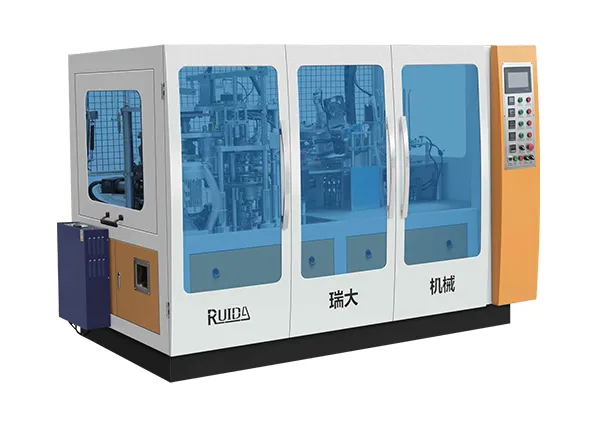
Match Production Capacity and Scalability to Actual Demand About Paper Bowl Machine
Why Rated CPM Often Overstates Real-World Throughput
A lot of manufacturers tend to think they know what their paper bowl machines can do based just on those nice round numbers for cycles per minute (CPM). But real world operations tell a different story. Throughput drops somewhere between 30 and 45 percent because of all sorts of things getting in the way. About 15 percent goes out the window during scheduled maintenance periods. Then there's another 8 to 20 percent lost every shift when switching materials around. And don't forget about the rejects caused by inconsistent fibers in the raw stock, which eats up roughly 5 to 12 percent of materials. All these little losses add up fast. Companies end up losing around $740,000 each year due to this gap between theory and reality. That's why looking only at the rated CPM spec sheet numbers makes no sense when it comes time to buy new equipment.
How to Calculate Effective Output Using Uptime, Changeover, and Defect Rate
To determine true production capacity, use this formula:
Effective Hourly Output = Rated CPM × 60 × Uptime % × (1 − Changeover %) × (1 − Defect Rate %)
For example: A machine rated at 50 CPM with 85% uptime, 15% changeover time, and 7% defect rate yields:
50 × 60 = 3,000 units (theoretical)
3,000 × 0.85 × 0.85 × 0.93 ≈ 2,015 units/hour (realistic)
Track these metrics regularly using production monitoring systems—not just for validation, but to proactively adjust staffing, scheduling, and preventive maintenance before scaling operations.
Verify Material Compatibility for Reliable Paper Bowl Machine Performance
PE-Coated Board Feeding Issues Caused by Moisture-Induced Fiber Swelling
When PE-coated paperboard absorbs moisture, the fibers actually swell up, which can make the material thicker by around 3% when humidity levels go above 60%. What happens next? The increased thickness messes with feeding mechanisms on production lines, leading to all sorts of issues like misfeeds and jammed equipment during fast-paced operations. Another problem comes from those swollen fibers reducing the board's rigidity. This makes it harder to maintain proper alignment in automated conveyor systems, something plant managers know all too well from experience. To avoid these headaches, keep storage areas under 50% relative humidity at all times. Invest in good quality vapor barrier packaging for materials that sit around longer than needed. And don't forget to precondition paper stock for at least two full days prior to running it through production machinery. These steps might seem basic but they save countless hours of downtime across the industry.
Three-Point Compatibility Test: Coating Adhesion, Tensile Retention, and Thermal Stability
Validate material performance through these essential checks before purchasing your paper bowl machine:
| Test Parameter | Failure Threshold | Production Risk |
|---|---|---|
| Coating Adhesion | >5% surface peel | Delamination during forming |
| Tensile Retention | >15% strength loss | Bowl collapse under pressure |
| Thermal Stability (100°C) | Visible warping | Leakage with hot liquids |
Execute adhesion tests via cross-hatch scratch analysis, tensile measurements after 120°C exposure, and boiling water immersion for thermal validation. Materials passing all three criteria maintain structural integrity across the full bowl-forming process—including heat sealing, rim curling, and stack consolidation.
Align Automation Level with Your Operational Reality
The Hidden Cost of Over-Automation: Idle Time in Labor-Constrained Facilities
Paper bowl machines that are heavily automated tend to sit idle quite a bit when there are breakdowns or running low on materials. This isn't because they're poorly designed, but rather because the specific maintenance these machines need simply takes longer than what technicians can handle. Plants that run around 300 hours each day end up losing about 18 percent of what they could produce whenever their automation systems demand more attention than workers can give according to Ponemon's 2023 report. And for factories struggling with staffing issues, all those lost production hours add up fast. We're talking roughly seven hundred forty thousand dollars worth of missed opportunities every year just sitting there waiting for someone to fix them while money continues flowing out for equipment that sits unused most of the time.
Tiered Automation Strategy: Matching Paper Bowl Machine Complexity to Staffing and Shifts
Adopt a graduated approach that evolves with your team—not the reverse:
- Single-shift operations: Prioritize semi-automated machines with manual loading/unloading and intuitive HMI interfaces
- Multi-shift facilities: Integrate automated conveyors and vision-guided stacking, but retain manual final-inspection stations
- 24/7 production: Justify full automation only after validating 95%+ first-pass yield and securing certified maintenance coverage
Factor Total Cost of Ownership (TCO) rigorously: highly automated systems require 40% more maintenance labor per output unit than semi-automated alternatives. Bridge capability gaps with modular upgrades—such as adding predictive diagnostics or robotic palletizing—as workforce capacity and skill maturity expand.
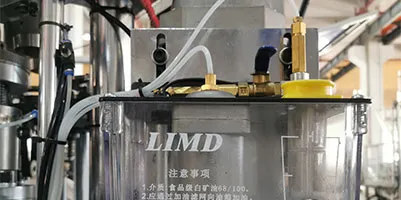
Confirm Regulatory Compliance Before Purchase
When companies overlook regulatory requirements, their paper bowl machine operations might never get off the ground at all. Non compliant equipment leads to product recalls, hefty fines that often top $700k according to industry reports from last year, and serious harm to brand reputation especially within food contact sectors. The main standards everyone should know about are FDA regulation 21 CFR Part 176.170 covering material safety issues, along with EU Regulation (EC) No 1935/2004 which sets similar parameters across Europe. For machinery safety there's ISO 22000 certification plus CE markings required for electrical components. Manufacturers need to prove their machines actually comply with local chemical migration limits and microbial resistance standards too. This isn't something that can be claimed on a spreadsheet alone. Real validation comes from third party testing with proper documentation backing it up. Always ask suppliers for those audit ready compliance certificates when buying new equipment because self declared certifications don't hold water legally speaking in both American and European markets where most exports go. Skipping this step costs money later on when retrofitting becomes necessary instead of simply getting things right from day one and maintaining smooth market access for all those paper bowls.
Calculate True Total Cost of Ownership for Your Paper Bowl Machine
Beyond the Sticker Price: How Energy, Maintenance, and Downtime Multiply 5-Year Costs
When looking at the real costs of owning a paper bowl machine, the initial purchase price only covers around 30 to 40 percent of what companies actually spend over five years. Running costs pile up fast from day one thanks to electricity bills, regular maintenance needs, and those unexpected breakdowns that shut operations down completely. Newer models designed for energy efficiency typically eat up 23% less power compared to older machines, which can translate into savings of nearly $18,700 each year according to recent industry data. Take mid-sized equipment making roughly 250 thousand bowls per day - these systems bring in about $740,000 annually, but constant stoppages and wasted materials really cut into profit margins. Before finalizing any purchase decision, manufacturers should run the numbers through their own version of a total cost of ownership calculation to get a clearer picture of long term financial impact.
TCO =
[Purchase Price] + [Energy Costs] + [Maintenance Contracts] + [Downtime Losses] − [Residual Value]
| Cost Factor | Low-Quality Machine Impact | High-Efficiency Advantage |
|---|---|---|
| Energy (5 yrs) | +45% above baseline | 23% reduction vs. 2019 models |
| Unscheduled Downtime | 15−20% production loss | <5% with predictive maintenance |
| Material Waste | 8−12% defect rate | 3−5% through precision controls |
FAQ
What are the main factors that affect the actual throughput of paper bowl machines?
Main factors include regular maintenance, material changes, and raw material inconsistencies which can all reduce throughput by 30 to 45 percent from the rated CPM.
How can I calculate the real production capacity of my machine?
Use the formula: Effective Hourly Output = Rated CPM × 60 × Uptime % × (1 − Changeover %) × (1 − Defect Rate %).
What should I consider for reliable paper bowl machine performance regarding materials?
Verify material compatibility with moisture levels, ensure proper storage conditions, and conduct a three-point compatibility test focusing on coating adhesion, tensile retention, and thermal stability.
Why is regulatory compliance important for paper bowl machines?
Lack of compliance can lead to product recalls, fines, and damage to brand reputation. It's essential to verify equipment meets FDA, EU, and ISO standards.
Table of Contents
- Match Production Capacity and Scalability to Actual Demand About Paper Bowl Machine
- Verify Material Compatibility for Reliable Paper Bowl Machine Performance
- Align Automation Level with Your Operational Reality
- Confirm Regulatory Compliance Before Purchase
- Calculate True Total Cost of Ownership for Your Paper Bowl Machine
- FAQ