
 EN
EN
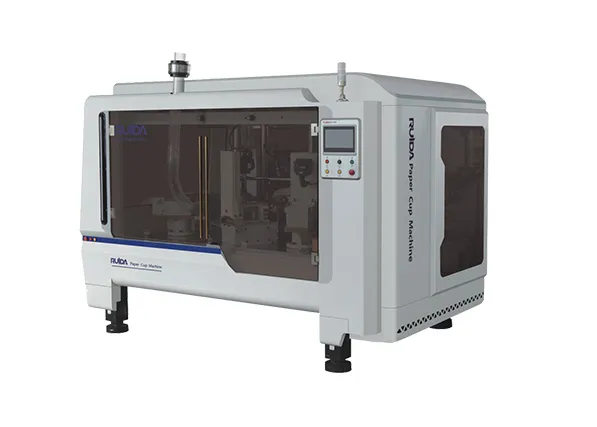
Emergency Stop Systems for High-Speed Paper Bowl Machines
How emergency stop systems prevent injury during rapid-forming cycles
Paper bowl machines running at speeds exceeding 60 cycles per minute pose serious risks during the forming process, including crushing and entanglement dangers. Emergency stop systems help reduce these threats by shutting down all moving parts almost instantly when activated. When someone hits the E-stop button, the servo motors come to a halt right away and the hydraulic pressure plummets to nothing. This quick stop action keeps operators' hands and fingers safe from getting pulled into dangerous areas like mold cavities, cutting stations, or conveyor belts. According to safety regulations, E-stop buttons need to be placed where workers can reach them easily at each workstation. They also have to be part of proper safety circuits that meet ISO 13850 standards for Category 3 systems. Regular checks are necessary too, with monthly tests recommended to keep everything working properly. Companies that follow through on these requirements tend to see significant improvements in workplace safety, with studies showing around 76% reduction in crush injuries according to recent findings published in Manufacturing Safety Journal last year.
ISO 13850 compliance: Response time requirements for paper bowl machine safety circuits
According to ISO 13850 standards, safety circuits must bring machines to a complete stop within half a second after someone hits the emergency stop button. This really matters because some hazards move faster than two meters per second in those high speed manufacturing setups. The standard calls for what's known as a dual channel system rated at Category 3, along with ongoing checks to make sure signals stay intact all the time. When something goes wrong in these circuits, the whole system shuts down automatically. Companies need to check their compliance every year through special light-based timing tests. Machines that don't meet these requirements typically take an extra 300 to 500 milliseconds to stop, which makes workplace injuries much more likely. Getting third party certifications isn't just paperwork either it actually gives manufacturers concrete proof that their emergency response times and overall circuit designs are up to snuff.
Machine Guarding at Critical Hazard Zones in Paper Bowl Machines
Pinch Point Identification in Rotary Die-Cutting, Thermoforming, and Stacking Stations
Pinch points—where moving parts converge—represent the most frequent source of severe injury in paper bowl production. High-risk zones include:
- Rotary die-cutting stations, where precision blades meet rotating rollers to shape paper stock
- Thermoforming sections, where hydraulic presses mold pulp at temperatures above 150°C
- Stacking mechanisms, where robotic arms handle multiple bowls in rapid succession
Hazard mapping must account for the full machine cycle—including feeding, forming, and ejection—to identify entanglement and compression risks during routine tasks like jam clearing or tool adjustment. Without robust guarding, operators face amputation-level hazards when working near these zones.
Interlocked Fixed Guards vs. Light Curtains: Selecting the Right Solution for Paper Bowl Production Lines
Effective guarding balances protection with operational access across the production line:
| Guard Type | Best Application | Key Limitation |
|---|---|---|
| Interlocked Fixed Guards | Permanent hazard zones (e.g., drive trains, gearboxes) | Requires tools for maintenance access |
| Light Curtains | High-frequency access points (e.g., stacking output, manual loading stations) | Reduced reliability near reflective or steam-laden surfaces |
Fixed guards serve as physical barriers that stop workers from touching moving parts inside machinery. Light curtains work differently they actually stop machines from running when someone breaks the beam. When dealing with servo-driven systems that mix linear movements, rotating components, and pneumatic actuators, it makes sense to layer different types of protection. Putting fixed guards around drive mechanisms and installing light curtains at exit points creates what many safety experts consider the best approach for reducing risks. According to ANSI standards B11.19, light curtains placed close to thermoforming presses need at least 14mm resolution so they can spot fingers getting too close. The fixed guards themselves have to hold up under pretty serious stress tests about 40 Newtons of force without bending or breaking. Before anyone removes these protective measures, proper LOTO training is essential to ensure all energy sources are properly isolated first. Safety isn't just about following rules it's about creating a culture where everyone understands why these protections matter in real manufacturing environments.
Lockout/Tagout (LOTO) Protocols Tailored to Paper Bowl Machine Architecture
Addressing multi-axis servo drive hazards during maintenance of paper bowl machines
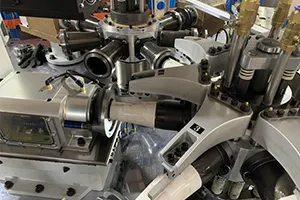
Working with multi axis servo drive systems that coordinate forming dies, trimming blades and indexing conveyors brings specific LOTO challenges. Even when main power gets shut off, these drives still hold dangerous energy forms. Think about electrical charge stored in capacitors, kinetic energy from spinning flywheels or moving actuators, plus potential energy in vertically positioned press parts. Proper lockout tagout means cutting off every possible energy source first electrical, pneumatic, hydraulic and mechanical before anyone opens those drive compartments. Techs need to check for zero energy state with proper voltage testers and put individual locks on each servo cabinet. When dealing with complex machine setups where different axes are spread apart, we need zone specific isolation so workers can't reach into adjacent drives without taking off their locks first. Following standardized procedures based on OSHA 1910.147 cuts down accidents from unexpected movement during calibration work by around 80 percent according to BLS data from 2022. Always do thorough hazard analysis for each machine type, especially looking out for capacitor backfeed issues and gravitational drops in vertical actuators. And remember the golden rule test before touching anything and visually confirm all locks are properly applied.
Integrated Safety Management: Training, Maintenance, and PPE for Paper Bowl Machine Operators
Preventive maintenance aligned with OSHA 1910.212 and ANSI B65.1 for paper bowl machines
Preventive maintenance prevents 23% of unplanned failures in paper bowl manufacturing (2023 industrial safety data). OSHA 1910.212 requires physical guarding to remain in place during maintenance, while ANSI B65.1 prescribes lubrication schedules, alignment tolerances, and torque specifications for rotary forming systems. Key activities include:
- Daily inspection of cutting dies, hydraulic pressure, and guard integrity
- Monthly calibration of thermoforming temperature controls and sensor feedback loops
- Quarterly replacement of high-wear components (e.g., sealing gaskets, feed rollers, light curtain emitters)
These practices reduce unplanned downtime by 40% and significantly lower pinch-point injury rates during setup and adjustment. Maintenance logs must explicitly reference compliance with both OSHA 1910.212 and ANSI B65.1 to satisfy regulatory audits.
Bilingual operator training and competency verification for consistent safety adherence
Multilingual training programs reduce safety violations by 31% in facilities with linguistically diverse workforces (Manufacturing Safety Report 2024). Effective programs integrate visual demonstrations, translated quick-reference guides, and scenario-based drills covering:
- Start-up/shutdown sequences for varying bowl sizes and material types
- Correct E-stop activation during material jams—without reaching into hazard zones
- Proper selection, fit, and limitations of PPE, including cut-resistant gloves and ANSI-rated hearing protection
Competency verification requires hands-on assessment—e.g., performing full LOTO on a servo drive module under supervision. Quarterly refresher sessions reinforce retention across shifts and ensure consistent application of safety protocols—especially during changeovers and maintenance handoffs.
FAQ
What is the role of emergency stop systems in paper bowl machines?
Emergency stop systems in paper bowl machines help prevent injuries by instantly shutting down all moving parts when activated, thereby protecting operators from getting pulled into hazardous areas.
How do machine guarding solutions differ?
Machine guarding solutions can include interlocked fixed guards, which act as permanent barriers, and light curtains, which halt machine operation when the beam is broken. These solutions can be layered to enhance safety in complex systems.
How can safety in paper bowl production be maintained?
Safety can be maintained through preventive maintenance, compliance with standards, proper training, and regular checks and updates to safety systems.
Why is Lockout/Tagout (LOTO) important in maintaining paper bowl machines?
LOTO is crucial to ensure all potential energy sources are deactivated during maintenance, reducing the risk of accidental machine activation which can cause injury.