
 EN
EN
Preventive Maintenance Scheduling for Paper Bowl Machine Reliability
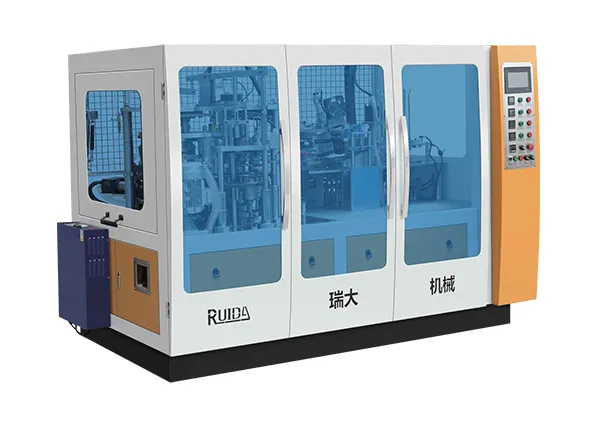
Daily Checks: Visual Inspections and Operational Readiness Tests
Before starting any production shift, take a good look around and check things visually so problems can be caught before they cause bigger headaches later on. Make sure those emergency stop buttons work when pressed, confirm that all the safety guards are in place where they should be, and double check that every electrical connection looks solid according to what the ISO 13849 guidelines say about safety requirements. Run the machine through a test cycle at slower speeds just to see if anything feels off track. Watch out for strange vibrations that shouldn't be there, especially if they exceed about 4 mm/s RMS measurement, and listen carefully for odd sounds coming from unexpected places. Keep records on how belts line up with their tracks and whether rollers spin smoothly without catching. Getting these details right matters because fixing alignment issues early actually stops roughly three quarters of the defects that show up further down the forming process chain.
Weekly Deep Cleaning and Lubrication of Molds, Rollers, and Belts
Getting rid of pulp residue buildup on forming molds is essential for quality control since it actually accounts for around 34 percent of those pesky surface flaws we see in finished goods. The best approach? Use food grade solvents for degreasing these molds thoroughly. When it comes to keeping everything running smoothly, don't forget to apply NSF H1 registered grease to those roller bearings and chain drives, especially at those spots where friction tends to be highest. And let's talk about conveyor belts too. Proper calibration matters a lot here. Aim for between 35 and 40 Newtons per millimeter when adjusting tension. Why does this matter so much? Well maintained tension stops slippage problems and can really extend how long components last before needing replacement. Some shops report getting almost double the life out of their equipment just by doing regular maintenance instead of waiting until something breaks down.
Monthly Calibration and Performance Benchmarking Against OEM Standards
Checking the dimensional accuracy at bowl forming stations needs good laser alignment tools to stay within those tight ±0.3 mm tolerances. Operators should also verify hydraulic pressures between 150 to 200 bar while making sure vacuum seals hold at least 90 kPa as specified by manufacturers. Looking at production stats matters too - things like how consistent cycle times are and how much energy gets used for every thousand parts produced should match what the equipment makers claim. Plants that stick to regular monthly calibrations tend to cut down on waste materials by around 28 percent and keep their machines running smoothly about 99.2% of the time according to industry reports.
Critical Component Care for Consistent Paper Bowl Machine Output
Mold Surface Maintenance to Prevent Defects and Ensure Forming Precision
Keeping those mold surfaces clean saves money on expensive defects such as warped edges and bowls that don't form properly. Daily cleaning with non woven wipes makes a big difference since around three quarters of all forming problems come from tiny bits of grit getting stuck in there. Give molds a good polish once a week to keep those sharp details intact. For calcium buildup, stick with food grade descaling products they work best without damaging the surface. Check for wear every three months with digital profilometers. When roughness goes above Ra 0.8 microns, mold life drops by about 40%. Staying within plus or minus 0.1 mm tolerance helps distribute paper fibers evenly throughout the forming process. Regular maintenance cuts down on rejected parts caused by dimensional issues roughly 9 out of 10 times according to industry reports.
Belt Tension & Bearing Health Monitoring Using Vibration and Wear Indicators
Regular inspection of belts and bearings can stop major breakdowns from happening mid-production run. Tension testing should happen about every two weeks with those sonic meters most shops have these days. The industry generally looks for readings between 150 to 200 N/mm to get good power transmission across the system. When it comes to vibrations, watch out for those sudden jumps over 7 mm/s because that usually means bearings are starting to fail. Thermography checks work best if done roughly every 500 hours of operation. If any spot gets 20 degrees warmer than surrounding areas, that's a red flag for bad lubrication somewhere. Pre-tensioned belts need replacing once they stretch past 0.3%, while bearings should go when oil samples show more than 350 parts per million of metal particles. Shops that stick to this kind of maintenance schedule tend to see around a 60% drop in unplanned shutdowns each year according to plant managers who've been tracking their own data.
Precision Calibration of Paper Bowl Machine Forming and Cutting Systems
Alignment Verification and Tolerance Adjustment for Dimensional Accuracy (±0.3mm)
Keeping within a 0.3 mm tolerance range demands regular checks and adjustments to both forming molds and cutting blades. We recommend checking everything monthly with laser alignment equipment to ensure the molds stay concentric and blades remain parallel. Experience shows that when deviations go beyond 0.15 mm, about a quarter of production runs end up with problematic seams. Blades need sharpening roughly every 50 thousand operations, and it's important to cross-check cutting depths against manufacturer specs. The hydraulic pressure should be set between 12 and 15 MPa depending on what kind of paper stock is being used, while infrared sensors keep an eye on tolerances as things happen. Getting these details right makes all the difference in preventing those annoying rim warps and bottom seal issues that waste so much material over time.
Digital Maintenance Tracking and OEM Compliance for Paper Bowl Machine Longevity
Moving away from handwritten maintenance records to digital systems has been shown to cut down on mistakes made by people around 32%. These systems also bring together all the important information in one place, including when machines need oil changes and what their vibration levels look like. With cloud based software, technicians get instant notifications about things that need attention before they become problems, which helps everyone working on maintenance stay on the same page. Following the manufacturer's recommended schedule for maintenance checks is super important too. Most companies use these digital tools to make sure they're sticking to those schedules so warranties remain valid and expensive breakdowns don't happen early. Take mold alignment as an example. When manufacturers specify certain parameters for how aligned molds should be during production runs, keeping track of this ensures products come out consistently good, usually staying within about half a millimeter difference either way. Companies that adopt this kind of comprehensive maintenance strategy typically see roughly half as much unexpected downtime compared to traditional methods, plus their equipment tends to last anywhere between four and seven extra years in service.
- Predictive scheduling of belt tension checks
- Automated audit trails for regulatory compliance
- Lifecycle analytics to prioritize high-wear component upgrades
Leading manufacturers report 22% higher output consistency when combining digital logs with OEM-guided servicing.
People, Processes, and Parts: Building a Sustainable Paper Bowl Machine Maintenance Culture
Operator Training, Real-Time Troubleshooting Guides, and Genuine Parts Procurement
Building a good maintenance culture really comes down to three main things working together: having trained people, solid procedures, and real parts from the factory. When operators aren't properly trained, they end up causing problems that stop production unexpectedly. Studies show around 23% of these unplanned shutdowns happen because workers don't know what they're doing with converting machines. Training programs need to teach folks how to operate safely, spot simple issues when they arise, and do regular maintenance checks. This helps them catch problems early before they become big headaches, like noticing strange vibrations or when something starts drifting out of alignment. Digital guides on tablets or through control panels can help fix everyday issues such as material jams or inconsistent shapes much faster than traditional methods, sometimes cutting down problem solving time by nearly half. Getting parts directly from the manufacturer matters a lot too. While cheaper alternatives might seem attractive at first glance saving about 15%, they often lead to breakdowns seven times more frequently. The whole package works best when companies invest in proper training, quick response systems, and original components. Machines run better for longer periods, products stay consistent, and there's less waste overall across manufacturing operations.
FAQ
Why is preventive maintenance important for paper bowl machines?
Preventive maintenance is crucial for paper bowl machines to ensure reliability and efficiency. It helps catch potential problems early, which reduces downtime and prevents costly repairs.
How often should belt tension be checked?
Belt tension should be checked every two weeks using sonic meters to ensure proper power transmission across the system.
What tools are recommended for calibration?
Laser alignment tools are recommended for calibration to maintain tight tolerances and dimensional accuracy.
How can digital maintenance tracking improve efficiency?
Digital maintenance tracking reduces human errors and consolidates maintenance information, providing instant notifications for timely attention. It helps adhere to schedules and maintain OEM compliance.
Table of Contents
- Preventive Maintenance Scheduling for Paper Bowl Machine Reliability
- Critical Component Care for Consistent Paper Bowl Machine Output
- Precision Calibration of Paper Bowl Machine Forming and Cutting Systems
- Digital Maintenance Tracking and OEM Compliance for Paper Bowl Machine Longevity
- People, Processes, and Parts: Building a Sustainable Paper Bowl Machine Maintenance Culture